

A stylish soup plate should do more than match your table. Its depth, rim, interior shape, weight, and finish all affect how comfortably you can serve and eat from it. Wide, shallow plates create room for garnishes and work well for creamy soups, while deeper designs offer better containment for broths and generous portions.
The five soup plate designs below cover different aesthetics and everyday needs, helping you choose one that looks good and works for the way you eat.

What Makes a Soup Plate Stylish and Practical?
Soup plates usually combine a recessed center with the wider profile of a dinner plate. However, small design differences can change how they perform.
A wide, shallow well gives ingredients and garnishes more visual space, making it suitable for bisques, puréed soups, and thick stews. A deeper profile is easier to carry when serving thin broths, noodle soups, or larger portions. It also exposes less liquid to the air, which can help slow heat loss.
The rim has a different purpose from the well. A wide rim provides a place to hold the plate, rest a spoon, or add a small piece of bread, but the depth and capacity of the center are what keep liquid contained. A smooth, gently curved interior also makes it easier to collect the last spoonful than a flat bottom with sharp corners.
Material and finish matter too. Porcelain often creates a smooth, refined appearance, while stoneware tends to feel thicker and more handcrafted. Actual weight, durability, and care requirements vary by product, so always check the manufacturer’s specifications before buying.

Quick Comparison of Soup Plate Designs
| Design | Best For | Main Advantage | Consider Before Buying |
| Minimalist white or neutral | Everyday meals and modern tables | Easy to coordinate | Light colors may show utensil marks |
| Rustic reactive glaze | Stews, chowders, and casual gatherings | Warm, handcrafted appearance | Pieces may vary slightly in color |
| Bold and colorful | Casual entertaining and expressive tables | Strong visual impact | Can be harder to mix with patterned linens |
| Classic rimmed porcelain | Formal dinners and coordinated place settings | Timeless, polished look | Metallic decoration may affect microwave use |
| Asymmetrical or sculptural | Statement table settings | Distinctive shape | May be harder to stack or store |
Five Stylish Soup Plate Designs
1. Minimalist White and Neutral Plates
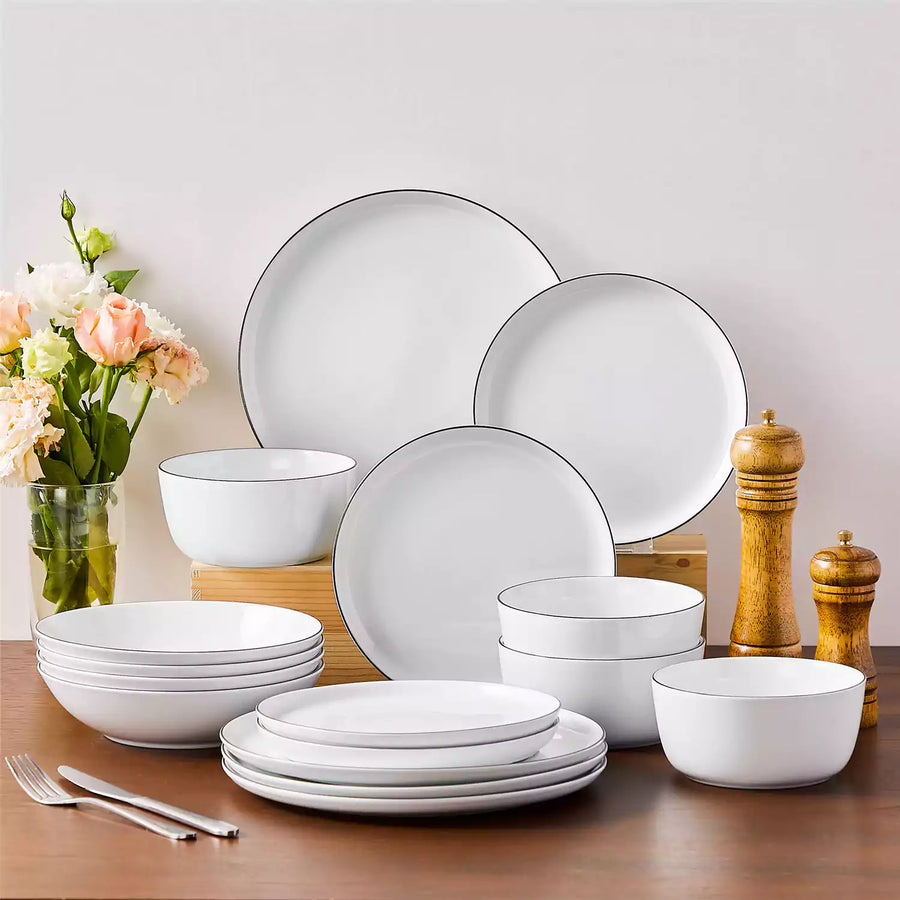
Minimalist soup plates use simple silhouettes, restrained colors, and limited decoration. White, ivory, beige, gray, and other neutral tones allow the soup and its garnishes to remain the visual focus.
This style works particularly well in homes where dinnerware needs to serve several purposes. A simple porcelain soup plate can move easily from a weekday lunch to a more formal dinner without competing with other plates, flatware, or table linens.
Look for a smooth interior and a shape that stacks securely. A glossy food-contact surface is generally easier to clean than a heavily textured one, while a matte exterior can add visual contrast without affecting spoon use.
2. Rustic and Reactive-Glaze Plates
Rustic soup plates often feature warm earth tones, visible glaze variation, softly irregular rims, or a handcrafted finish. Reactive glazes can make each piece look slightly different, which is part of their appeal rather than necessarily a defect.
These plates complement hearty dishes such as chowder, bean soup, lentil soup, and stew. Their stronger texture and color can make a casual meal feel warmer and more considered without requiring an elaborate table setting.
Rustic stoneware is often heavier than thin porcelain, so check the product weight if you need plates that are easy to carry. Also consider how securely the irregular rims stack, especially if cabinet space is limited.
3. Bold, Colorful, and Patterned Plates
Colorful soup plates can use solid colors, geometric designs, floral motifs, or hand-painted details. They work best when the rest of the table provides some visual breathing room.
If the plates have a strong pattern, pair them with plain napkins, simple glassware, and restrained flatware. Alternatively, repeat one color from the plate in the table linens to make the setting feel coordinated rather than busy.
Consider how the food will contrast with the plate. Pale soups stand out against darker colors, while tomato, pumpkin, and vegetable soups are often more visible against white, cream, blue, or other contrasting backgrounds. The color changes the presentation, not the flavor, so choose according to the visual effect you want.
4. Classic Rimmed Porcelain Plates
Classic soup plates often combine a white or light-colored center with a defined rim. Some use subtle relief patterns or thin decorative lines, while more formal designs may include gold or silver accents.
The broad rim gives creamy soups, bisques, and carefully arranged garnishes a polished presentation. It also makes the plate easier to lift from the table without touching the recessed center.
Metallic decoration requires extra attention. Plates with gold, silver, or other metallic accents should not be placed in a microwave unless the manufacturer explicitly labels them microwave-safe. Dishwashers may also damage delicate decorative finishes. Before heating or cleaning the plate, follow its care mark and the relevant microwave and dishwasher care instructions.

5. Asymmetrical and Sculptural Plates
Asymmetrical, square, softly curved, or sculptural soup plates create a stronger visual statement. They suit contemporary dining rooms and table settings that use dinnerware as part of the decoration.
Function should still guide the choice. Rounded internal corners make soup easier to collect with a spoon than sharp angles. Raised sides improve containment, while handles can make a plate easier to carry but require more storage space.
Before buying an unusual shape, check whether it fits comfortably in your dishwasher, microwave, and cabinet. Sculptural pieces may look striking individually but can be less practical if they do not stack securely.
How to Match Soup Plates With Your Table Setting
A coordinated table does not require every piece to come from the same collection. It needs one or two visual elements that connect the setting.
Use these simple guidelines:
- Pair patterned soup plates with plain dinner plates or table linens.
- Repeat one color across the plates, napkins, or glassware.
- When mixing shapes, keep the material or finish consistent.
- Use neutral plates when you want colorful ingredients and garnishes to stand out.
- Leave enough space around a sculptural or colorful plate instead of adding several competing decorations.
The soup spoon should also be comfortable to hold and proportionate to the plate. A very large spoon can feel awkward in a small recessed well, while a deep bowl may be easier to use with a spoon that has a more rounded shape.

What to Check Before Buying Soup Plates
Before choosing a design, consider how the plates will work in your kitchen:
- Usable depth: Check the capacity of the recessed well, not only the overall diameter.
- Interior shape: A smooth curve is generally easier to use than a flat base with sharp corners.
- Weight and grip: Make sure the plate is comfortable to carry when filled with hot soup.
- Stackability: Wide rims, handles, and irregular shapes may require more cabinet space.
- Care instructions: Confirm whether the specific product is suitable for a microwave, dishwasher, oven, or freezer.
- Set size: Choose enough plates for your household and the number of guests you usually serve.
- Replacement options: A continuing collection is easier to expand if you need additional pieces later.
Choose a Soup Plate That Fits Your Table and Routine
The best soup plate design depends on both your preferred style and how you plan to use it. Minimalist porcelain is easy to coordinate, reactive-glaze designs bring warmth to casual meals, and colorful or sculptural plates create a stronger focal point. Classic rimmed plates work well when you want a more formal presentation.
Once you have chosen a style, compare the depth, interior shape, weight, stackability, and care instructions. You can explore our collection of porcelain soup plates to compare different shapes, finishes, and set sizes.
FAQs About Stylish Soup Plates
Q1. Can Soup Plates Be Used for Pasta and Salad?
Yes. Wide, shallow soup plates also work well for sauced pasta, risotto, grain bowls, and composed salads. Their recessed centers hold dressing or sauce better than flat dinner plates. Avoid overfilling them with very liquid dishes if the well is relatively shallow.
Q2. What Is the Difference Between a Soup Plate and a Pasta Bowl?
A soup plate usually has a broad rim surrounding a defined well, while a pasta bowl often has a wider bowl-like interior and little or no flat rim. The names sometimes overlap, so compare usable depth, capacity, and interior shape rather than relying only on the label.
Q3. Should You Preheat Soup Plates Before Serving?
Yes, if the manufacturer allows it. Preheating can slow the initial temperature drop when hot soup enters a cold plate. Use warm water or another approved method, dry the plate before serving, and avoid sudden temperature changes that could cause thermal shock.
Q4. How Do You Remove Gray Utensil Marks From Soup Plates?
Start with mild dish soap and a soft sponge. Gray lines are often metal transfer from flatware rather than deep scratches. If regular washing does not remove them, use only a nonabrasive cleaner approved for the plate’s finish and follow its care instructions.
Q5. Should You Keep Using a Chipped Soup Plate?
No. Stop using a soup plate for food if it has a sharp chip, spreading crack, or damaged food-contact surface. The defect may worsen during heating or washing and can make the plate harder to clean safely. Replace it instead of trying to hide the damage.