

Macarons are more than just confections—they are miniature works of art. Whether you are having afternoon tea, setting up a dessert table at a party, or creating content for a luxury food display, the way you plate macarons can make them more than just a sweet bite.
This blog discusses two sophisticated plating methods: the minimalist linear layout and the dramatic pyramid stack. Every style creates a different visual atmosphere, and the right choice depends on your event, your table setting, and, most importantly, your dinnerware. Combined with beautiful dinnerware, particularly white dessert plates with careful detailing, macarons are the focus of a luxurious display and not an afterthought.

The Art of Serving Delicate French Macarons
Macarons are infamously delicate. Their hard outer and tender inner parts demand special attention, and presentation is as significant as taste. Plating is not aimed at overwhelming but to emphasize their craftsmanship.
A fine serving plate must be a neutral platform, one that does not interfere with the macaron's color, texture, or symmetry. That is why the best dinnerware sets are usually used to serve desserts in high-quality stoneware or porcelain. The lightness and smoothness of high-quality plates provide stability and contribute to visual balance.
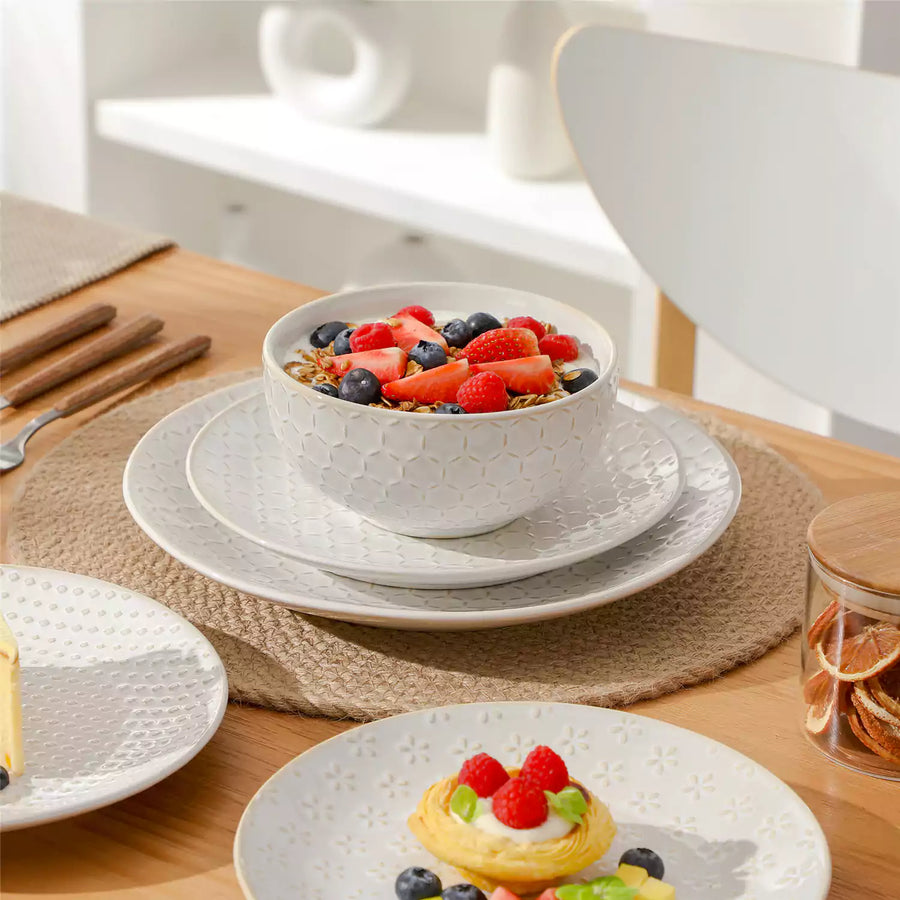
French-inspired dinnerware provides an additional layer of storytelling. Its lace-embossed rim and old white color reflect the Parisian roots of macarons, which brings harmony between the dessert and the dish. The outcome is a calm, deliberate display that is luxurious and classic.
Producing a Clean Look using Linear Arrangements
Linear plating is the embodiment of modern elegance. This is a setup where the macarons are arranged in a straight line or a slight curve across a serving plate so that each piece can stand on its own.
This style is ideal in small groups, tasting menus, or formal tea, where discretion is paramount. The rhythm and calm are achieved by spacing the macarons evenly, inviting the eye to move slowly across the plate. Linear arrangements are also easier to display various flavors, particularly when alternating colors to produce a slight contrast.
White dessert plates are ideal for this approach. Their smooth surface adds to the pastel colors of the macaron and makes the whole appearance light and elegant. A decorated rim on a plate, such as the Giselle Collection, is interesting without interfering with the simplicity. The embossed border softly outlines the row of macarons, making negative space a component of the design.
Linear plating is evidence that minimalism, when done well, can be as luxurious as excess.

Building Height with a Dramatic Pyramid Stack
The pyramid formation provides drama and grandeur in events that require visual effects. The height of the macarons is immediately achieved by piling them into a pyramid shape, which makes the dessert look festive and bountiful.
This style is especially useful in dessert tables, bridal showers, festive teas, or holiday gatherings where the presentation must be impressive at first sight. Symmetry and balance are the keys to a successful pyramid: bigger macarons on the bottom, lighter colors on the top, and a stable structure that will not fall.
A well-chosen serving plate is essential here. The plate should be broad enough to hold the base and, at the same time, be classy. Premium collections of stoneware serving plates are stable and elegant. The vintage white finish of the Giselle Collection is a perfect match to the pastel layers, and the ornate rim provides a romantic frame to the towering arrangement.
Pyramid plating, in contrast to the restrained linear style, celebrates abundance. It welcomes visitors to gaze and feast, making dessert the centerpiece rather than an afterthought.
Matching Plate Colors to Your Pastel Treats
One of the least considered aspects of dessert presentation is color harmony. Macarons are soft-colored, blush pinks, pistachio greens, lavender purples, and buttery yellows, which should be given a backdrop that complements them, not makes them dull.
White or ivory neutral plates are universally flattering. White dessert plates are light reflectors, and colors are brighter and textures more pronounced. That is why they are still a part of the best dinnerware sets to serve desserts.
Plates with bold patterns or strong colors should be avoided, as they may clash with the delicate palette of macarons. Instead, choose subtle detailing, such as an embossed rim or a soft, understated glaze that adds decorative beauty without disturbing the calm, neutral canvas.
When plate and pastry collaborate, the outcome is deliberate, refined, and easily luxurious.

Simple Etiquette for Serving Tea and Sweets
The presentation does not stop at plating; it extends to the way desserts are served. Etiquette will make the experience better and make sure that your well-plated macarons are consumed as you want.
Macarons should be served at room temperature to showcase their flavors and textures. In serving on a common plate, serve with small tongs or dessert forks to keep the plate clean and elegant. It is also possible to provide individual white dessert plates so that guests can choose their macarons without disturbing the overall composition.
Placement matters, too. Place macarons and teacups not behind but in front of the guests to enjoy their display before they taste. The combination of coordinated, elegant dinnerware to serve tea and sweets brings unity, which supports the impression of a carefully designed table.
Good etiquette is subtle—it supports the visual story without drawing attention to itself. Thoughtful placement, graceful serving tools, and well-chosen, elegant dinnerware work quietly in the background, allowing the macarons to remain the star. When guests can effortlessly admire, select, and enjoy each piece, the experience feels refined rather than staged. Just as with plating, true sophistication in serving is never loud; it’s felt in the ease, harmony, and care that bring the entire table together.
Conclusion
Plating macarons is an art form that is based on balance, purpose, and craft, whether you prefer the clean precision of a linear arrangement or the bold elegance of a pyramid stack. The correct solution is based on the mood of your event, but in all situations, dinnerware is a defining factor.
Macarons are served on high-quality serving plates and white dessert plates, which serve as canvases and turn them into edible art. Lines such as Giselle, with their French-vintage influence and elegant detailing, complement both minimalist and dramatic presentations. You can take the dessert to the next level by investing in the finest dinnerware collections and treating the process of plating desserts with seriousness, which will not only enhance the dessert but also the whole meal.
Ready to turn your macarons into edible art? Elevate every arrangement—whether sleek and linear or beautifully stacked—with elegant dinnerware that lets your desserts shine. Explore refined serving plates, timeless white dessert plates, and thoughtfully crafted pieces from the Giselle Collection to create presentations that feel luxurious, intentional, and unforgettable. Because when you choose the right canvas, even the smallest dessert makes a grand impression.