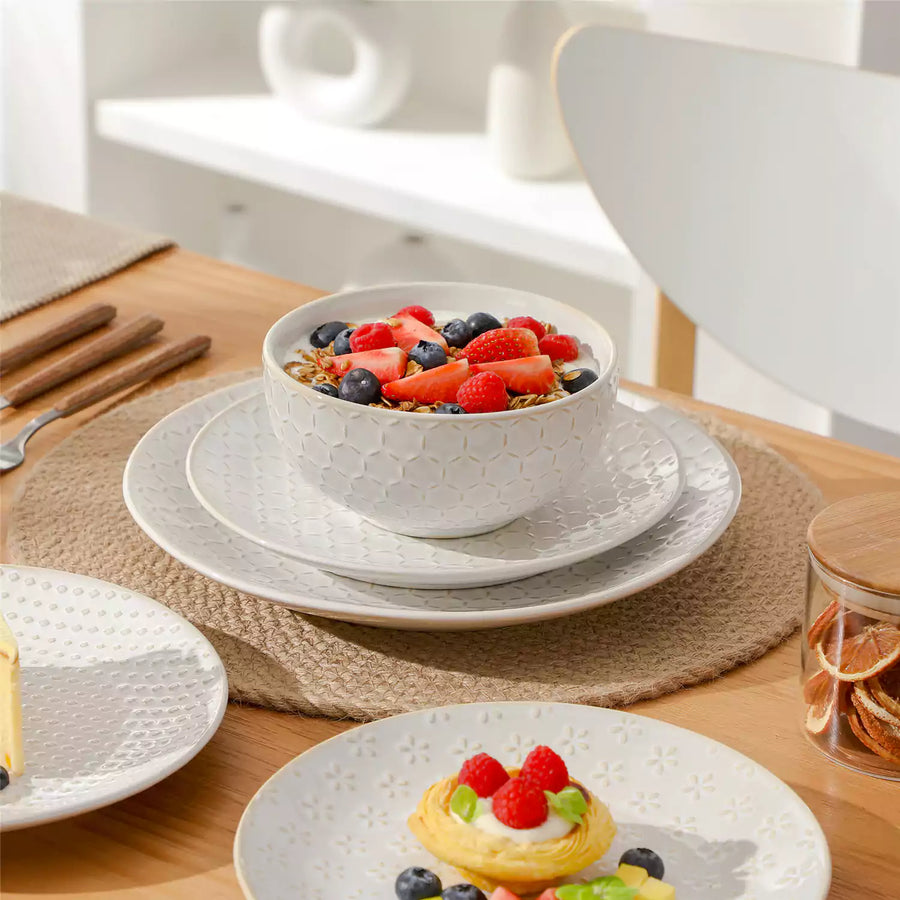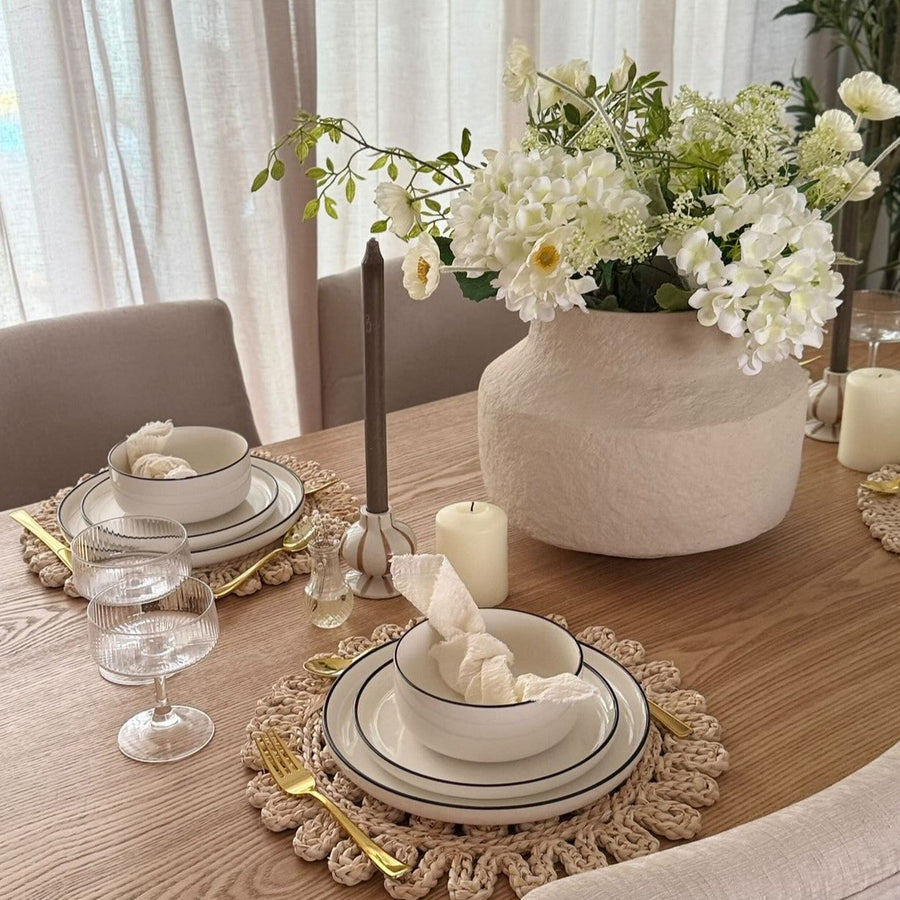


In the era of Instagram and Pinterest, the appearance of your food may be as crucial as its taste. Plating is the art of making ordinary food look like a work of art- an extra dimension of pleasure that is not just on the tongue. You may be a home cook, a food blogger, or just someone who wants their dinner to look as good as it tastes, but learning how to plate can transform your everyday meals into something worth sharing.
And although your ingredients and cooking skills are important, do not underestimate the importance of dinner plates and the best dinnerware sets. Whether it is a set of elegant white dinnerware or a set of stylish porcelain dinnerware, the dinnerware you choose sets the stage for visual success.

So, how can you take your food to the next level with plating techniques and dinnerware that will make every meal look like it was served in a fancy restaurant, or at least, for your Instagram feed?
Select the Appropriate Plate: The Base of Your Culinary Canvas
No artist can do without a canvas. Your dinner plate is that canvas in the culinary world.
Begin with the right size and shape. An oversized plate will make your dish look sparse, whereas an undersized plate will make it look overcrowded. Traditional round plates are fine, but square or rectangular sets of porcelain dinnerware can add a contemporary look.
The color also counts. White dinnerware sets are a timeless option- they will make the colors of your ingredients stand out and give you a clean, distraction-free background. To achieve a more dramatic effect, darker plates may be used to contrast with light-colored foods.
Material also has a part to play. Smooth porcelain dinnerware provides a sophisticated appearance, whereas textured stoneware can provide rustic appeal. When you are buying the best dinnerware sets, you should focus on quality items that will match your style and the type of food you like to serve.

The Strength of Color and Contrast in Plating
One of the initial things that people see in a dish is color, which can stimulate emotions and appetites even before the first bite. Follow the color wheel- complementary colors (such as orange carrots and green peas) are visually exciting, whereas analogous colors (such as yellow squash and orange peppers) are harmonious.
When your food is neutral in color, such as beige pasta or grilled chicken, add a colorful garnish or serve it on a colorful or contrasting plate. The contrast of light ingredients and clever choice of dinnerware creates a striking composition.
Don’t forget contrast in more than just color. Consider applying sauce streaks, crumbled toppings, or shiny glazes on matte finishes to add an extra dimension to your dinner set presentation.
Establishing Dimension with Height and Layers
Flat plating can lead to a flat photo and a duller presentation. Creating height will give your dish drama, depth, and movement.
A dish can be changed by stacking elements of a dish, ring molds, or vertical garnishes (such as a tall sprig of herbs or a crispy Parmesan tuile). A small rise, such as placing grilled protein on a pile of mashed potatoes, can produce a dynamic, restaurant-like effect.
This is where durable porcelain dinnerware sets excel. They are durable and have the correct weight and balance to hold layered presentations without tipping or cracking. Height is also used to guide the eye, to move the viewer around the dish, and keep their eyes occupied. But be sure not to go overboard, your food must remain easy to eat!
The Aesthetic Importance of Texture
Texture brings interest and variety not only in mouthfeel, but also visually. Think of how a plate of soft scrambled eggs can be made to look a million times more appealing with a piece of crisp toast or a sprinkling of fresh herbs.
Contrasting textures, creamy, crunchy, chewy, crispy, make a difference that the eye can see even in photographs. Top with sauces, garnishes, and sides.
The contrast can be enhanced by your dinnerware selection. Shiny sauces can be emphasized with matte white dinnerware sets, and crumbly toppings can be made more visible on glossy plates.
Not only does great plating celebrate flavor, but also texture, and the best presentations strike a balance between the two.
The Rule of Odds: Creating Visual Interest
Odd numbers are more aesthetically pleasing to the human eye. This is referred to as the Rule of Odds and is widely used in design, photography, and, yes, plating.
When you are arranging items on your plate, use odd numbers: 3 shrimp rather than 4, 5 gnocchi rather than 6. It is more natural and dynamic. This works especially well with tapas, desserts, or any dish that contains repeatable items.
A nice dinnerware set provides you with a lot of plating choices. Select plates that have a sufficient surface area to place the components in a considered manner, without crowding them or spreading them too thin.
Even the simplest ingredients can appear purposeful, beautiful, and attention-getting with the help of the Rule of Odds.
Keeping it Clean and Minimalist to have the Greatest Impact
When it comes to plating, less is more. Piling too much on your plate may make a meal seem disorganized and sloppy. Minimalism allows every element to stand out and focuses on purposefulness.
Consider your plate as a frame. Leave negative space around the food to attract attention to the dish itself. Add a couple of carefully selected garnishes, such as microgreens, edible flowers, or a spot of sauce, to complement the composition without overwhelming it.
White dinnerware sets are particularly useful in minimalistic plating. Their minimalist design keeps the food in the spotlight, not the dish. Minimalism is also in line with current food trends, e.g., small portions, curated plating, and delicate garnishes. And, on camera, it is so polished.

Food Photography: How to Get the Perfect Lighting
You have already done the heavy lifting: you have chosen the finest porcelain dinnerware sets, plated with purpose, and styled like a pro. It is time to record your creation.
It is all about lighting. Your best friend is natural light- take pictures of your food by a window, preferably during the so-called golden hour (early morning or late afternoon) when the shadows are soft and flattering.
Avoid harsh overhead lighting or flash, which can flatten textures and produce unflattering highlights. Reflect light and fill in shadows with a white bounce card or even a piece of paper.
Direction counts as well. Top-down shots (flatlays) are excellent with colorful and symmetrical food. A 45-degree angle is ideal to display layers and height. Experiment with props, such as linen napkins, antique cutlery, or even other items in your dinner set, to give context and character.
And don’t forget: edit naturally. Increase contrast a bit, white balance to your dinnerware tone, but do not over-filter. The aim is to bring out the beauty of your food, not to distort it.
Conclusion: Plating is Presentation-and Passion
Plating is not just a culinary afterthought; it is a self-expression. Every home cook can serve meals with style and grace using the right techniques and the ideal dinner plates.
Whether it is selecting the appropriate dinnerware sets or learning how color, height, texture, and photography can be used to create a better dining experience, each step you take towards purposeful plating will improve the overall experience. Your food will not only look great, but you will also be more proud of what you create.
Therefore, whether you are using a contemporary porcelain dinnerware set, a traditional white dinnerware set, or stocking your kitchen with the finest dinnerware sets you can get, keep in mind: the art of plating transforms food into a feast, both for the eyes and for the soul.