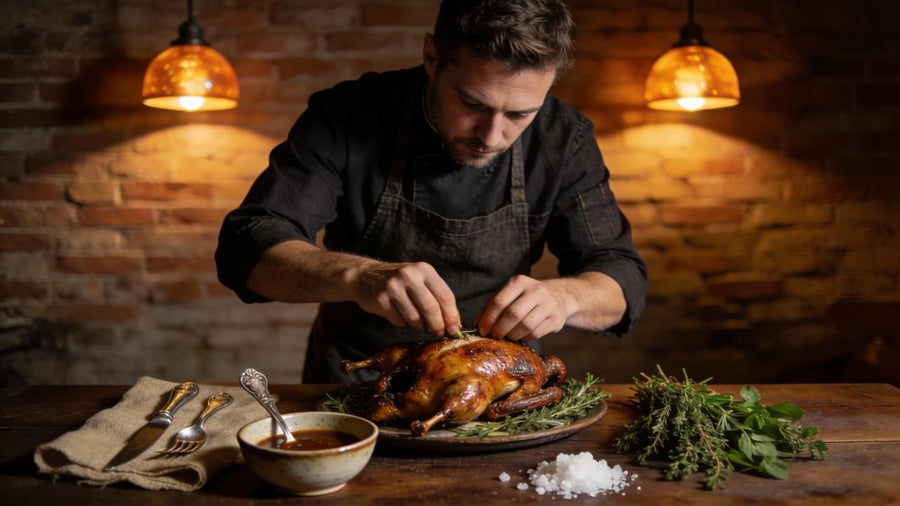



The Plate Becomes an Ingredient
When I style a table, I am never just choosing “a plate.” I am choosing a quiet ingredient that will interact with heat, aroma, color, and ultimately your first bite. Over the last decade, ceramic tableware has moved from background player to intentional tool, both in design studios and test kitchens. Global market research already shows ceramic dinnerware accounting for well over half of tableware sales, largely because people associate it with safety, durability, aesthetics, and environmental responsibility, as reported by tableware analysts and brands such as By the Earth Living and HF Coors.
At the same time, scientists, potters, and chefs are all asking the same question in different ways: how does the vessel change the flavor? From materials science studies on ceramic cooking pots to sensory research on mug color and warmed‑over flavors in reheated meat, a clear thread emerges. Ceramics do not just hold food. They help shape how it tastes.
As a tabletop stylist and pragmatic lifestyle curator, I see this play out at every dinner. Swap a cool, dense porcelain plate in under a citrusy salad and the dressing feels brighter. Serve the same dish in a rough, dark stoneware bowl and suddenly it reads heartier and more rustic. The future of ceramic tableware sits right at that intersection: grounded in material science, guided by food safety, and expressed as a deeply sensory ritual at home.

How Ceramic Tableware Shapes Flavor Today
Material Neutrality: Letting Ingredients Speak
Modern high‑quality ceramic tableware is formed from natural minerals, fired at high temperatures, and finished with stable, typically lead‑free glazes. Brands such as Joyye and HF Coors emphasize the same core advantage: ceramics are non‑toxic and non‑reactive. They do not leach lead, cadmium, BPA, phthalates, or microplastics into food when properly formulated and fired, even with hot, acidic, or oily dishes. That neutrality matters for flavor.
Compared with plastic, ceramics avoid the chemical or plastic note many people detect when hot tomato pastas or curries are served on plastic plates, a concern echoed in health‑oriented articles from Joyye and Pottery for the Planet. Plastic also tends to absorb odors and stain, so yesterday’s spaghetti can subtly haunt today’s salad. Well‑fired ceramic, by contrast, is non‑porous at the surface and resists odor absorption, which keeps the olive oil in tonight’s fish tasting like itself, not like last week’s chili.
Metal dinnerware and cups bring a different issue. Guides from Stonessa and GreenPan point out that reactive metals can interact with acidic foods, sometimes dulling color and imparting metallic off‑notes. Stainless steel is more stable than aluminum or bare copper, but even low‑quality steel can create faint metallic tastes in bright sauces. Ceramic plates and bowls sidestep that reaction entirely, giving lemon‑heavy dressings, tomato braises, and vinegar‑forward pickles a clean, unmuted profile.
Glass is wonderfully neutral for flavor, but it is fragile and loses heat quickly. Ceramics, especially stoneware and porcelain, sit in a sweet spot. They are non‑reactive like glass, yet far more durable and better at holding temperature, which brings us to the second way they influence taste.
Heat Retention, Temperature, and Flavor
Flavor is not fixed. It shifts with temperature. Coffee researchers and ceramic cup makers such as Pottery for the Planet and CURVD note that coffee tastes most balanced when the beverage is comfortably hot, roughly in the neighborhood of 160–175°F. At that range, volatile aromatics are active, body feels round, and acidity is present but not harsh. As coffee cools below this window, aromatic intensity falls and the acidity seems sharper and more forward.
Ceramic mugs and bowls excel at keeping liquids in that pleasurable zone. Stoneware and vitrified porcelain have relatively low thermal conductivity and good heat capacity, so they warm slowly and then release heat gradually. HF Coors, which produces vitrified, lead‑free dinnerware for both homes and restaurants, highlights this even heat behavior as a key performance feature. In practice, that means a soup or stew served in a thick‑walled stoneware bowl stays hot and aromatic long enough for leisurely conversation, without quickly dropping into the lukewarm range where fats congeal and flavors flatten.
Materials‑science research on ceramic cooking pots, summarized in an article set in an archaeological context, helps explain why. Microstructural factors such as temper type, porosity, grain size, and wall thickness jointly control thermal conductivity and thermal shock resistance. Researchers using finite element modeling and thermal testing show that clay bodies with carefully chosen temper and firing cycles can distribute heat evenly and resist cracking under temperature swings. Although those studies focused on traditional cooking pots, the same principles apply to modern oven‑to‑table stoneware and porcelain.
Other work on ceramic‑pot sealed meat, published in a flavor chemistry journal, tracks how reheating methods change the volatile compounds responsible for aroma. In ceramic‑pot sealed meat, boiling boosted certain aldehydes linked with warmed‑over, slightly rancid notes, while microwave reheating altered those compounds far less. Steam reheating also preserved flavor better than boiling. The key takeaway for home cooks is not that ceramic is magical on its own, but that its compatibility with different heating methods lets you choose the gentler approach that protects flavor instead of amplifying off‑notes.
Surface, Porosity, and Aroma
Glazed ceramic surfaces used for dinnerware are designed to be non‑porous and easy to clean, which supports both hygiene and flavor clarity. HF Coors and Joyye stress that properly vitrified glazes do not absorb liquids, making it harder for bacteria to colonize and for old flavors to linger. That is why a good porcelain plate can go from kimchi to vanilla cake after a proper wash with no taste ghosting in between.
At the same time, ceramics exist on a spectrum. Earthenware, fired at lower temperatures, is inherently more porous than stoneware or porcelain and relies fully on a perfect glaze layer. Research for reflux‑conscious diners from Malacasa notes that under‑fired, crazed, or intentionally crackled glazes can trap residue, stain more easily, and increase the risk of leaching under acidic conditions. The advice that follows is straightforward: reserve those crackle‑glazed showpieces for dry snacks or decorative use, not for slow‑simmered tomato ragù.
Protein studies in experimental archaeology even suggest that cooked food proteins remain primarily in the carbonized foodcrust clinging to the ceramic, not in the ceramic body itself. In experiments where chestnut, deer, and salmon were cooked in ceramic vessels, researchers recovered many more food proteins from the crust than from the ceramic matrix, both before and after burial. For modern kitchens, that aligns with daily experience: flavor clings to the sauce and fond, not to a well‑glazed plate that has been properly washed.

What Research Says About Ceramics, Cooking, and Flavor
Cooking Performance: Lessons from Ancient Pots
Archaeological and materials‑science work on traditional cooking ceramics has become surprisingly quantitative. Studies cited in a broad review of ceramic cooking pots combine petrography, mechanical testing, and computer modeling to map how mineral composition, temper, pore size, and wall thickness affect heating efficiency, fuel use, and resistance to thermal shock.
Clay fabrics tempered with quartz or rock inclusions, for example, can increase toughness and help vessels survive repeated cycles of heating and cooling. Surface treatments and wall textures change how quickly moisture evaporates and how heat flows through a pot’s body. Ethnoarchaeological case studies in the Aegean, La Graufesenque, and West Africa show that communities long ago were already fine‑tuning pot shapes and fabrics to match specific cuisines, whether that meant steady simmering of grains or fast boiling of watery stews.
For contemporary ceramic cookware, this points toward a future where the casserole dish, pasta bowl, or tagine is designed not only for style but for quantified thermal performance. The same finite element models used to predict fracture patterns in transport amphorae can be adapted to develop stoneware that heats evenly in a home oven, minimizes hotspots, and resists thermal shock when you move from a moderate oven to a cool counter with reasonable care.
Reheating and “Warmed‑Over” Notes
The ceramic‑pot sealed meat study offers a rare, detailed look at flavor chemistry around reheating. Researchers identified twenty‑six key volatile compounds, with aldehydes especially important because they can smell fatty, green, or rancid depending on structure and concentration. Hexanal, for example, is a marker of lipid oxidation and warmed‑over flavors.
When ceramic‑pot sealed meat was reheated by boiling, hexanal and several other aldehydes increased sharply, and sensory scores for flavor dropped. Microwave and steam reheating, by contrast, caused smaller shifts in these compounds, and tasters preferred those samples. While the experiment focused on a specific meat dish, the practical message generalizes well to ceramic tableware and cookware. If you are reheating last night’s stew in a ceramic bowl, a covered microwave or gentle steam bath is more likely to preserve its original savor than repeated hard boiling on the stovetop.
Ceramic is stable and non‑reactive across all these methods; it does not create off‑flavors. Instead, its even heating and compatibility with both microwave and oven give you flexibility to choose methods that protect delicate aromatics rather than drive oxidation.
Containers, Fermentation, and Subtle Taste Shifts
Flavor does not start at the table. It begins where food is stored and fermented. A study on sturgeon gut sauce, a high‑salt fermented fish product, compared three container types: food‑grade plastic, unglazed earthenware, and oak wood. Over six months of refrigerated storage after fermentation, all three produced microbiologically safe sauce with no detectable pathogens. However, sauces stored in earthenware and wood generally retained more protein and minerals, showed lower oxidation markers, and achieved better sensory scores than those kept in plastic.
The authors suggest that clay and wood, as natural materials, create slightly different micro‑environments than smooth, hydrophobic plastic. Their porosity and mineral content can influence oxygen diffusion and enzyme activity, supporting a more favorable balance of controlled fermentation and oxidative stability.
For home cooks who love ceramic crocks for sourdough, kimchi, or pickles, this research validates a long‑held intuition: the container material subtly shapes the final aroma and taste. Properly fired, food‑safe earthenware and stoneware can be excellent companions for slow, complex flavor development in ferments and condiments, especially when paired with sensible salt levels and cold storage.

Beyond Chemistry: How Ceramic Tableware Changes Perception
Color, Shape, and the Taste in Your Mind
Even when chemistry is identical, the plate can change your perception. Studies discussed by CURVD and Pottery for the Planet report that coffee served in a white mug is often perceived as more intense and less sweet than the same coffee in a blue or transparent mug. The theory is that stronger color contrast between the dark coffee and the white interior exaggerates perceived bitterness.
Research on plate design, cited by Joyye and Pottery for the Planet, shows similar effects with food. Round plates and bowls tend to make dishes feel softer and more harmonious, whereas square plates can make desserts taste less sweet and more formal or restrained. Color psychology work highlighted by Stonessa adds another layer. Red tableware tends to make food look more appealing and can increase appetite, while blue plates often suppress appetite and make food seem less inviting. Yellow and warm neutrals are associated with happiness and vibrancy, flattering everything from omelets to roasted vegetables.
Portion perception also changes with plate size. Studies referenced in Joyye’s healthy dining overview and Stonessa’s tableware guide note that people consistently eat more when food is served on larger plates and bowls. Downsizing to slightly smaller ceramic dinner plates or wide, shallow bowls is a simple, design‑driven way to encourage more mindful portions without making meals feel stingy.
In my own work, I routinely see these findings play out. A rich chocolate tart plated on a glossy, ivory porcelain coupe plate reads as luxurious and indulgent. The same slice on a wide, matte charcoal stoneware plate suddenly feels earthier, less sweet, almost smoky. Nothing in the recipe changed; only the ceramic canvas did.
Weight, Texture, and the Ritual of Eating
Ceramic’s tactile qualities quietly contribute to flavor perception. CURVD describes how the heft of a ceramic mug signals sturdiness and quality, which can psychologically enhance the sense of richness in the beverage. Pottery for the Planet similarly points out that the comforting weight and smooth rim of a ceramic cup encourage slower, more attentive sipping than a lightweight disposable cup.
Texture matters as well. Stonessa notes that rougher clay surfaces increase friction and can make flavors feel more intense and complex, while ultra‑smooth porcelain and glass create a sleeker, sometimes less distinctive sensation. Neither is better in absolute terms; they simply support different experiences. For a rustic, smoky bean stew, a textured stoneware bowl complements the story. For a delicately scented consommé, fine porcelain allows the aroma to feel almost weightless.
These are the details that elevate a weekday meal into a small ritual. When you choose ceramic tableware that feels good in your hand, sits comfortably against your lip, and frames the food with thoughtful color and form, you subtly prime your senses to notice more of what you are eating. That, by itself, is a flavor upgrade.

Choosing the Right Ceramic for Flavor
Porcelain, Stoneware, and Earthenware
Not all ceramics behave the same way. Understanding the main families helps you choose pieces that support both flavor and practicality.
Porcelain is made from fine clays such as kaolin and fired at very high temperatures, around 2,300°F or higher, as described by Caskata and ModestHive. This produces a dense, glass‑like, non‑porous body with low water absorption, often in the zero to one percent range. Porcelain plates and bowls are typically light in the hand, luminous, and very hard, with excellent resistance to chipping and staining. For food flavor, porcelain offers neutrality and clarity; it does not absorb odors, and glossy white interiors keep sauces and juices visually legible.
Stoneware is also high‑fired, typically slightly below porcelain in firing temperature. It uses coarser clay and often reaches low but not minimal water absorption, around two to five percent in common formulations. Well‑made stoneware, such as the neutral‑toned pieces described by Vancasso and Thinkitchen, is dense, strong, and beautifully suited to both hot and cold dishes. Its slightly thicker walls give it superior heat retention for soups, stews, baked pastas, and breakfast bowls, and its weight creates a grounded, cozy feeling at the table.
Earthenware is fired at lower temperatures and remains more porous by nature. It has a charming, rustic presence and a satisfying heft, but it is more prone to chipping and relies entirely on its glaze to remain food‑safe. Malacasa’s reflux‑focused guide suggests using earthenware with flawless, glossy glazes for occasional use rather than long, repeated contact with acidic foods or high‑heat microwave cycles.
A concise way to see the differences is to compare their key traits.
Ceramic type |
Typical firing temperature (approx.) |
Porosity and absorption |
Flavor strengths |
Main cautions |
Porcelain |
Around 2,300°F and higher |
Very low absorption; dense and vitrified |
Extremely neutral, excellent for bright, acidic dishes and clean flavors |
Can feel a bit formal or clinical if everything is bright white; avoid sudden temperature shocks |
Stoneware |
Around 2,300°F but often slightly lower than porcelain, depending on clay |
Low absorption when well‑fired; very dense |
Superb heat retention, comforting weight, ideal for hearty hot or chilled dishes |
Heavier; matte, very rough interiors can stain; confirm oven and microwave guidance |
Earthenware |
Around 2,200°F |
Naturally more porous; fully dependent on glaze |
Rustic charm, pleasant heft, great for occasional serving pieces |
More fragile; best not used for prolonged acidic contact or heavy microwave use unless well certified |
Glaze Stability, Safety, and Acidic Foods
Glaze chemistry is where flavor, safety, and longevity meet. Malacasa’s reflux‑oriented article carefully unpacks terms that often appear on packaging. “Food‑safe” means that under standardized tests the finished surface does not release harmful levels of regulated metals into food. “Dinnerware‑safe” goes further, implying durability under everyday cutting, washing, and thermal stress. “Non‑toxic,” by contrast, is informal marketing language, not a regulated category.
Regulators such as the FDA set strict limits for leaching of lead and cadmium from ceramic ware. Some products labeled “lead‑safe” may contain trace levels below these thresholds, while others are certified “lead‑free.” Independent testing and clear documentation from reputable makers are the most reliable assurances. HF Coors, for example, highlights that its vitrified dinnerware is completely lead‑free, tested by accredited laboratories, and compliant with California Proposition 65.
Glaze stability is especially critical with acidic foods like tomato sauces, citrus dressings, vinegar pickles, coffee, and wine. Malacasa emphasizes that fully matured, glassy glazes that fit the clay body, especially on dense porcelain and stoneware fired around 2,300–2,400°F, offer excellent performance and stain resistance. By contrast, very dry matte textures, pinholes, and craze or crackle patterns create micro‑reservoirs where residues can lodge and, under acid and dishwasher chemistry, gradually stain or leach.
Practical guidance for flavor and safety converges on a few habits. Choose porcelain or stoneware with smooth, glossy, light‑colored interiors for pasta bowls, salad bowls, and coffee mugs. Rinse tomato or citrus residues reasonably soon after meals instead of leaving them on plates overnight. Avoid using unknown vintage, brightly colored earthenware, especially older reds, yellows, and oranges, for frequent hot, acidic dishes. And retire any piece that begins to show grayish residue after washing, visible glaze corrosion, or color shifts where food contacts the surface. Ceramics educators flag these as signs that the glaze is degrading.
For storage of acidic foods over many hours or days, Malacasa’s sources and Smart’s food‑safe ceramics guide both recommend shifting to clear glass or high‑quality stainless steel. Ceramic can return as the star when it is time to serve.
Ceramic Versus Other Common Materials
The case for ceramic tableware becomes clearer when set against other everyday materials.
Plastic is convenient, lightweight, and nearly unbreakable, but studies and brand guides from Joyye, Pottery for the Planet, and Smart point to several issues. Under heat and with fatty or acidic foods, some plastics can release microplastics and chemical migrants that subtly alter taste and raise health concerns over time. Plastic is also slightly porous, absorbing odors and staining in a way that dulls both appearance and flavor clarity.
Melamine is durable and popular for outdoor and kid‑friendly settings. However, the By the Earth Living article notes that melamine tableware is not microwave‑safe and may release harmful chemicals when exposed to high temperatures. That makes it ill‑suited for hot, acidic dishes where both flavor and safety matter.
Metal plates and cups, particularly when not made from high‑grade stainless steel, can feel cold and sometimes interact with acidic foods, as several sources, including GreenPan and Stonessa, underline. That interaction can shift taste and is one reason many people describe an unwelcome metallic note with some metal drinkware and flatware.
Glass is non‑porous and flavor‑neutral, a solid choice for clean taste. Its main drawbacks for tableware are fragility and lower heat retention. Ceramic, especially stoneware and porcelain, offers comparable flavor neutrality with better insulation and a far broader aesthetic range, from minimalist white porcelain to rich, hand‑painted glazes that double as art.
Seen through this lens, it is not surprising that By the Earth Living cites a 2021 global market report where ceramic dinnerware accounts for more than half of tableware sales. People are voting for flavor, safety, and beauty with their cupboards.

Where Ceramic Tableware Is Headed
Data‑Driven Clay and Glaze Design
The references on ceramic thermo‑mechanical performance highlight a shift from descriptive pottery studies to model‑based engineering. Researchers now use transient plane source measurements to quantify thermal conductivity, finite element analysis to simulate stress and fracture, and microstructural imaging to understand how pores and grains influence toughness.
Translating that work into dinnerware, we can expect more tableware lines designed not only for look and price, but for quantified thermal behavior. Imagine pasta bowls whose walls are engineered to keep bolognese within a narrow, warm temperature band for fifteen minutes at the table, or dessert plates tuned to avoid excessive heat absorption so a quenelle of ice cream holds its shape just long enough. The same modeling tools that help archaeologists understand ancient cooking pots can help contemporary makers design better everyday plates.
Health‑First, Transparency‑Led Ceramics
Multiple sources converge on a growing consumer insistence that ceramic glazes be lead‑free, cadmium‑free, and clearly labeled as food‑safe. Smart’s guide to food‑safe ceramics notes that customers increasingly prioritize explicit “food safe” markings and are willing to pay slightly more for the assurance. HF Coors frames its American‑made, tested dinnerware as part of this movement, combining health, quality, and community values.
Regulatory frameworks such as FDA standards and California Proposition 65, discussed in Malacasa’s buying guidance and HF Coors’ materials, set a baseline. The next wave is likely to involve more transparent testing data, perhaps with QR codes linking to lab reports or material passports. For flavor, that clarity is not just about avoiding harm. Stable, fully vitrified, lead‑free glazes are also the ones that preserve taste consistency and appearance over years of use, instead of slowly dulling or staining.
Fewer Pieces, More Roles
Lifestyle trends point toward smaller kitchens, multipurpose rooms, and a desire to own less but better. Ceramic responds beautifully to this. Thinkitchen describes ceramic bowls that move from mixing to marinating to baking to serving, while brands like HF Coors and Vancasso emphasize oven‑, microwave‑, dishwasher‑, and freezer‑safe stoneware and porcelain that work both in professional kitchens and at home.
Functionally, this means a single set of porcelain dinner plates can reliably go from a gentle oven warm to a formal dining table without feeling out of place, and a stack of stoneware pasta bowls can handle everything from baked oats to brothy noodles. For food flavor, that versatility matters because it reduces the number of times food has to be transferred between containers, minimizing heat loss and exposure to reactive surfaces.
Historically, communities like the Diola Kassa in Senegal have long integrated ceramic vessels into every stage of foodways, from cooking and fermenting to serving and storage, as documented in a recent midden study. The future of ceramic tableware looks, in many ways, like a return to that integrated, vessel‑aware approach, updated with modern testing and design tools.

Practical Styling and Care to Elevate Flavor
On a practical level, the future of ceramic tableware is something you can begin to live today by choosing and using pieces with flavor in mind. For tomato‑, citrus‑, and wine‑forward menus, lean toward dense, glossy‑glazed porcelain or stoneware with light interiors, as Malacasa recommends for reflux‑conscious diners. That combination supports clean, non‑reactive flavor and makes it easier to monitor staining over time.
For coffee, tea, and hot chocolate, a well‑made ceramic mug or porcelain cup will keep your drink near that pleasantly hot range, help preserve aromatics, and avoid metallic or plastic notes. Curved forms with slightly wider openings allow more aroma to reach your nose, as CURVD and Pottery for the Planet point out, while the mug’s weight tells your hand and mind that this is something to savor, not gulp on the run.
At the table, use color and size intentionally. If you want to encourage lighter portions, bring in slightly smaller dinner plates and wider, shallow bowls. When you want to highlight sweetness and delicacy, consider warm neutrals or soft pastels. For hearty winter braises, deep, earthy stoneware amplifies the sense of comfort. These are not mere styling tricks; they are levers that research shows can shift how your guests actually perceive taste.
Care habits protect both flavor and safety. Several sources, including HF Coors, Malacasa, Cupindy, and Thinkitchen, emphasize avoiding rapid extreme temperature changes, such as moving a very hot dish straight into cold water. Let ceramic pieces cool a bit before washing, and give them a moment to come to room temperature before going into a hot oven. Inspect rims and interiors regularly for chips, cracks, craze lines, or surface changes. if a favorite piece begins to show dull, rough patches where food contacts the glaze or persistent gray marks that do not wash off, it is kinder to retire it from food service and keep it as a memory rather than a working plate.
Finally, stay curious. Ask makers about their glazes, firing temperatures, and testing. Support studios and brands that publish their safety data and invest in durable, lead‑free, fully vitrified ceramics. Each purchase is a vote for a future in which the plates, bowls, and mugs around your table quietly honor the food they hold.

FAQ
Does ceramic tableware actually change the way food tastes, or is it just psychological?
Both chemistry and psychology are involved. Non‑reactive ceramics avoid metallic or plastic off‑notes that can arise with some metals and plastics, especially with acidic or hot foods, according to sources like Joyye, GreenPan, and Pottery for the Planet. At the same time, research discussed by CURVD, Stonessa, and others shows that mug color, plate shape, and even weight alter how people perceive sweetness, bitterness, and richness. Ceramic’s strengths lie in combining chemical neutrality with highly tunable sensory cues.
Is stoneware better than porcelain for flavor, or vice versa?
Neither is absolutely better; they simply emphasize different strengths. Porcelain, fired to very high temperatures with very low absorption, excels when you want crisp, clean presentation and maximum flavor neutrality for bright, acidic dishes. Stoneware, slightly more robust and thicker‑walled, offers superior heat retention and a more grounded, cozy hand‑feel, ideal for stews, pastas, and baked dishes where lasting warmth enhances enjoyment. Malacasa, ModestHive, Caskata, and Vancasso all highlight these complementary roles.
How can I tell whether a ceramic piece is safe for everyday dining, especially with acidic foods?
Look for clear labels such as “food safe,” “lead‑free,” and “dishwasher and microwave safe,” and favor reputable makers who reference compliance with FDA standards or regulations like California Proposition 65, as suggested by Smart and HF Coors. Examine the glaze on food‑contact surfaces; it should be smooth, even, and free of cracks or pinholes. For sauce‑ and citrus‑heavy menus, Malacasa recommends dense porcelain or stoneware with glossy, light interiors and explicitly “dinnerware‑safe” labeling. Use unknown vintage or obviously crazed ware decoratively rather than for daily meals.
Ceramic tableware has always carried our food. Its future is to shape that food more thoughtfully, uniting material science, sensory design, and everyday practicality. When you choose the right piece, you are not just setting the table. You are quietly seasoning the entire experience.

References
- https://pmc.ncbi.nlm.nih.gov/articles/PMC11298606/
- https://journals.openedition.org/bch/1531?lang=en
- https://royalsocietypublishing.org/doi/10.1098/rsos.240610
- https://help.upscorecard.org/background-information/food-contact-materials-fcms/ceramic
- https://www.carawayhome.com/blog/best-cookware-materials
- https://smart.dhgate.com/a-practical-guide-to-identifying-food-safe-ceramics-for-your-kitchen-needs/
- https://joyye.com/info-detail/how-ceramic-tableware-enhances-healthy-dining-experiences
- https://modesthive.com/porcelain-stoneware-or-earthenware-which-dinnerware-is-best-for-your-kitchen/?srsltid=AfmBOoqp0e3B7J1vmtnNHi3yPwAmqiVVOmiDnCVMs_2bYFdZ9JdjCnL1
- https://learn.surlatable.com/ceramic-nonstick-cookware-guide/
- https://bytheearthliving.com/blogs/news/why-ceramic-dinner-plates-are-the-best-choice-for-your-dining-table