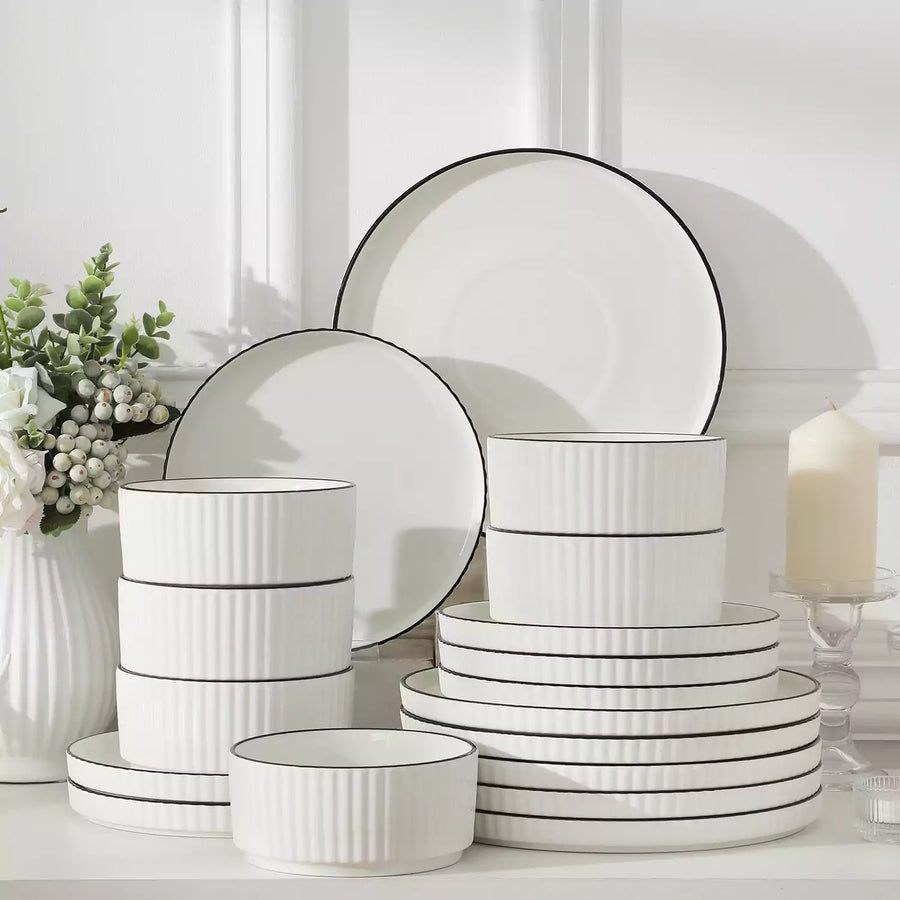


Even an oven-safe porcelain dish can crack at 350°F if one part heats or cools much faster than the rest. Say you open the oven to add broth to a roast. If cold broth hits the hot, exposed side of the dish, that patch of porcelain contracts while the surrounding area stays hot. This sudden, uneven cooling can causethermal shock. The resulting stress can crack the dish even below its rated oven temperature.
Why Some Porcelain Dishes Handle Heat Better Than Others
If porcelain can survive a 2,300°F kiln, why would it crack in a kitchen oven? The kiln temperature tells you how hot the piece got while it was being made. How well the finished dish handles a sudden temperature change depends partly on its glaze and how it was fired. In tests on porcelain tableware, samples made with a slower firing schedule at a lower peak temperature resisted thermal shock better than samples fired faster at higher temperatures.
That difference is hard to spot in your cupboard. A white porcelain serving bowl can look just like a small casserole. The manufacturer’s oven instructions for the exact piece are what tell you whether you can bake in it.

How to Tell Whether Your Dish Can Go in the Oven
Check the underside of the dish, its care card, or the maker’s instructions. Match the dish to every step in the recipe. If your baked ziti spends 30 minutes at 375°F and finishes under the broiler, choose a pan approved for both baking and broiling from the start.
| What you find | What it means for dinner |
| An oven-safe marking and a temperature limit | Bake within that limit. Follow any instructions about preheating or moving the dish from the fridge to the oven. |
| “Oven-safe” with no temperature listed | Look up the model or ask the maker. If you can’t confirm it’s suitable for your recipe, use a dish with a known rating. |
| Only “microwave-safe” or “dishwasher-safe” | Neither marking establishes that the dish can go in a conventional oven. Use it for serving unless the maker confirms oven use. |
| A chip in the rim or a crack in the base | Retire the dish from baking, even if it has an oven-safe mark. The damage can spread as the dish heats or when you lift it full of food. |

How to Prevent Thermal Shock When Baking With Porcelain
If you’re making dinner ahead, plan for the fridge-to-oven step. For a lasagna you want to bake straight from the refrigerator, assemble it in a pan whose maker allows that transfer. With leftovers you can scoop, such as baked pasta, it’s easy to move a portion into a room-temperature, oven-safe dish just before reheating.
If the recipe needs liquid, check when it goes in. For a roast that cooks in broth, pour the broth around the meat before the pan goes into the oven if the recipe allows. If you’ll need to move the pan onto a burner to make gravy afterward, use a stovetop-safe roasting pan or pour the drippings into a saucepan.
Have a dry, heatproof trivet ready. A wet patch on the counter can cool the hot base unevenly. When lifting one of our porcelain baking dishes, grip both handles with dry oven mitts and set it directly on the trivet. Let the dish cool before adding water to loosen any baked-on cheese.

What to Do if a Porcelain Dish Cracks Mid-Bake
If you see a split or sauce leaking through the base, turn off the oven and leave the dish on the rack to cool. Resist the urge to grab the handles. The weight of the filling can pull the pieces apart as you lift, spilling hot food.
Once the dish has cooled, discard any food that may contain ceramic fragments. Picking out the pieces you can see can leave small, sharp shards behind. Replace the cracked dish before baking again.
FAQs
Q1. Why Did My Porcelain Dish Crack at 350°F This Time?
If the same dish handled the same recipe before, retrace what happened just before the crack. Did the dish go in straight from the fridge this time? Did you add liquid halfway through? A change in handling or an existing chip can help explain why it cracked on this bake.
Q2. Should I Start Porcelain Bakeware in a Cold Oven?
Use a cold start only if the maker allows it and the recipe works with that method. Some bakeware calls for a preheated oven. Starting cold won’t make a serving dish with an unknown oven rating safe to bake in.
Q3. Can the Lid Go in the Oven With the Dish?
Only if the lid and its knob are oven-safe at the temperature you plan to use. Some casseroles come with a storage lid intended for leftovers. If an oven-safe lid has a lower temperature limit than the dish, use the lid’s limit when baking with both.
Q4. Can I Bake in a Dish With a Web of Fine Lines in the Glaze?
Set the dish aside if the lines are new, and check with the maker before baking in it again. A web of hairline cracks in the glaze is called crazing. The pattern alone can’t tell you whether the porcelain underneath is sound.
Q5. Can I Bake on an Unmarked Porcelain Plate I’ve Used in the Oven Before?
A previous bake can’t establish the plate’s oven rating. A maker’s stamp or pattern name on the back may help you find its care instructions. If you can’t identify the plate, bake the food in a rated dish and transfer it to the plate to serve.