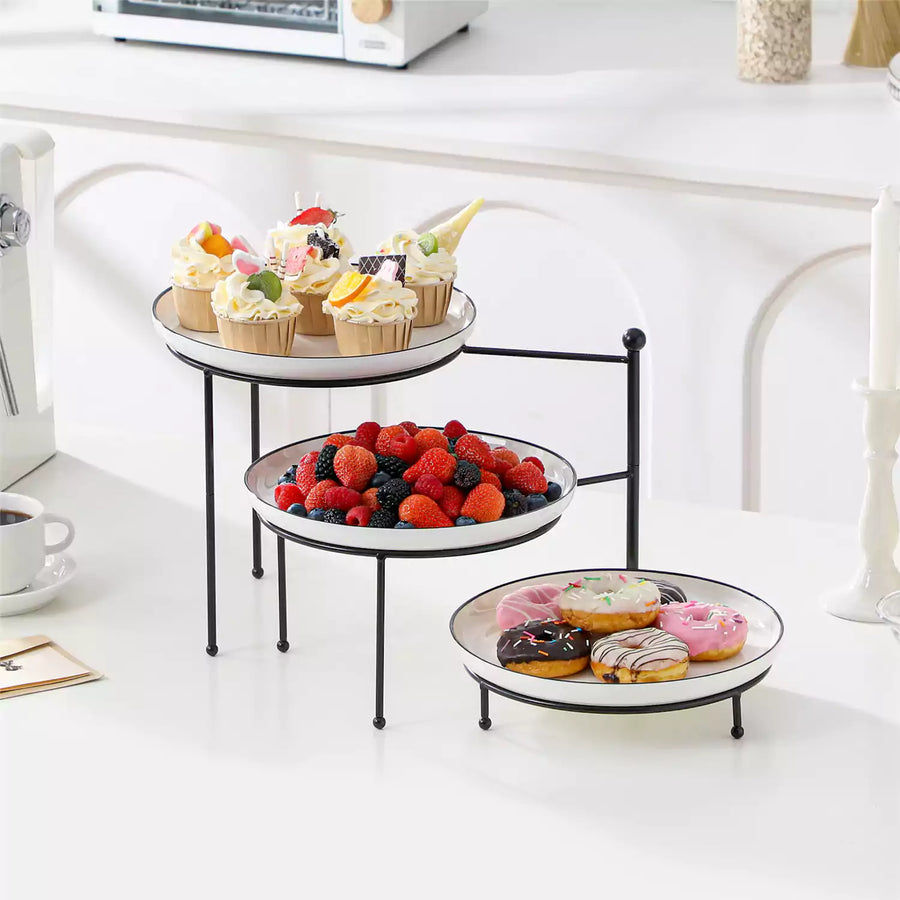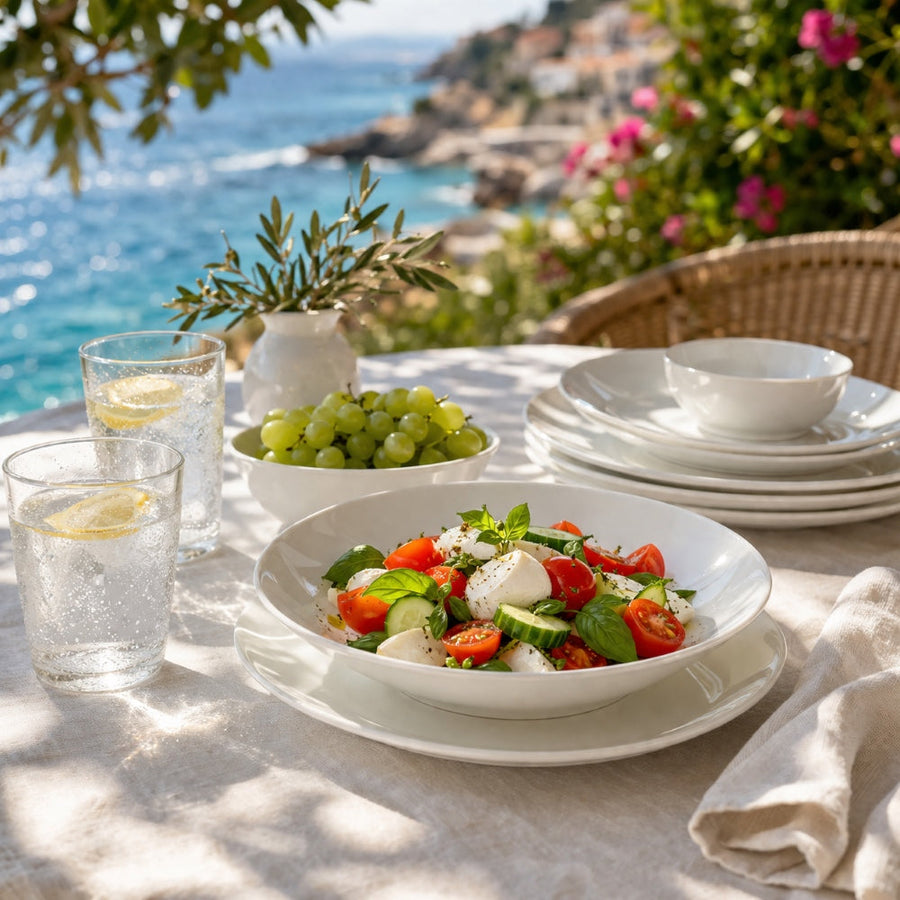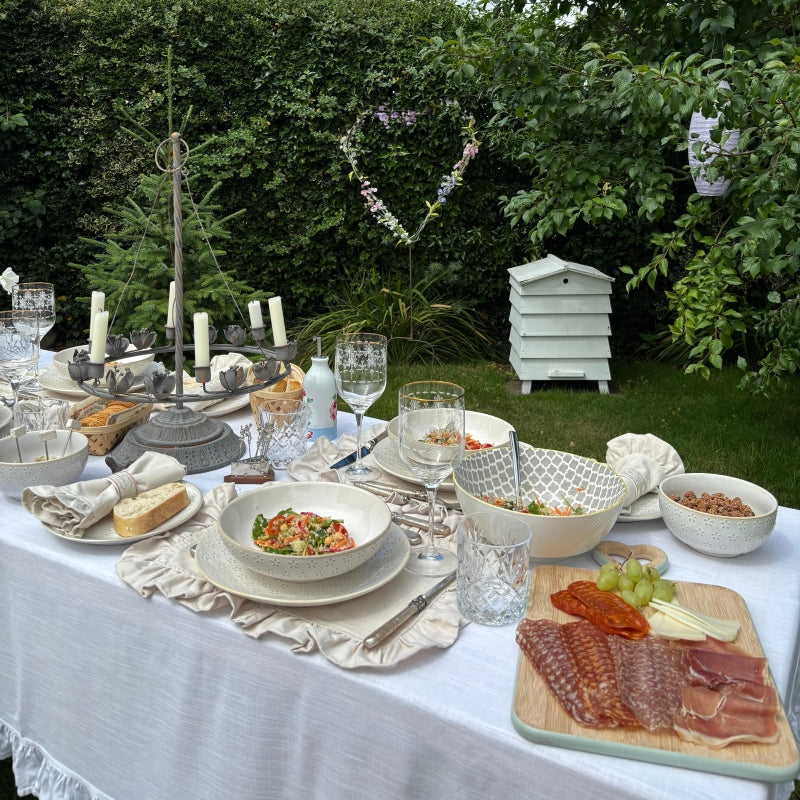


Conclusión clave: Los platos pequeños facilitan las reuniones informales, las hacen más ordenadas e intencionales. El mejor conjunto incluye una combinación de platos para entrantes, platos de postre, cuencos pequeños de cerámica y una fuente para entrantes, para que los invitados se sirvan solos sin saturar la mesa.
Recibir no siempre significa una cena completa. A veces son quesos, fruta, salsas, galletas, sliders, tapas o unos cuantos platos compartidos en el centro de la mesa – y ahí es donde los platos pequeños resultan sorprendentemente útiles. Permiten a los invitados probar, compartir y repetir sin necesidad de un plato grande, a la vez que dan un toque de orden a los entrantes, los postres, los brunchs del fin de semana, los aperitivos del día a día y las comidas informales compartidas, sin que la mesa resulte demasiado formal.
Por qué los platos pequeños aportan más intención a la hospitalidad informal
Los platos pequeños transforman un bufé informal en una puesta en escena acogedora. En lugar de equilibrar galletas, fruta y queso sobre servilletas, cada invitado tiene un plato de verdad, limpio y fácil de usar.
Son especialmente útiles para:
- Entrantes antes de la cena
- Postres después de la comida
- Tablas de quesos y charcutería
- Platos para compartir al estilo tapas
- Salsas y finger food
- Aperitivos para niños
- Pequeñas porciones en el brunch
- Comidas en familia con varios acompañamientos
El valor no es solo visual. Los platos pequeños ayudan a controlar las raciones, reducen el desorden y evitan que los invitados cojan platos grandes cuando solo quieren unos pocos bocados.
En la hospitalidad informal, el objetivo es sencillo: que la comida sea fácil de disfrutar. Una pila de platos pequeños junto a una fuente de servicio o una tabla de aperitivos cumple exactamente esa función.

Platos para entrantes vs platos de postre vs platos de pan
Mucha gente usa estos términos indistintamente, y en casa suele estar bien. Aun así, cada tipo tiene una función ligeramente diferente.
| Tipo de plato | Ideal para | Uso típico |
|---|---|---|
| Platos para entrantes | Finger food, queso, salsas, tapas | Antes de cenar o en fiestas informales |
| Platos de postre | Tarta, galletas, fruta, bollería | Después de las comidas o con el café |
| Platos de pan | Panecillos, tostadas, pequeños acompañamientos | Brunch, cena o eventos formales |
En la práctica, un buen juego de platos pequeños puede hacer las veces de los tres. Un plato de entre 15 y 20 cm suele ser lo bastante versátil para entrantes, postres, aperitivos y pan.
Si recibes a menudo, los platos para entrantes son probablemente los más útiles porque sirven para el mayor abanico de alimentos. Si en tu casa los postres son los protagonistas (tarta, pastel, fruta, galletas o café con dulces), los platos de postre tendrán más uso.
Para la mayoría de los hogares, elige primero platos pequeños versátiles. Las piezas especializadas pueden venir después.
Elegir platos pequeños para tapas, tablas de quesos, salsas y finger food
El plato adecuado depende de lo que sirvas con más frecuencia. Para tapas, tablas de quesos, charcutería y finger food, elige platos pequeños fáciles de sostener, no demasiado pesados y lo suficientemente amplios para unos pocos bocados. Los platos más planos suelen funcionar mejor con galletas, queso, fruta, embutidos, sliders, bruschetta y sándwiches pequeños.
Para salsas, aceitunas, frutos secos o bayas, combina los platos pequeños con cuencos pequeños de cerámica. Los cuencos mantienen los alimentos húmedos o sueltos bien contenidos, mientras que los platos ofrecen espacio para pan, chips, verduras o galletas.
Si quieres una puesta en escena práctica para recibir, empieza por:
- 8–12 platos pequeños
- 2–4 cuencos pequeños de cerámica
- 1 fuente para entrantes
- 1 cuenco de servicio grande
- Servilletas y utensilios de servicio sencillos
Esa combinación puede resolver la mayoría de las reuniones informales sin necesidad de un juego de vajilla completo.
Platos redondos, cuadrados y rectangulares para distintos estilos de servicio
La forma influye en el aspecto de la comida y en cómo funciona la mesa.
| Forma del plato | Ideal para | Ventaja para recibir |
|---|---|---|
| Platos redondos | Postres, aperitivos, entrantes | Clásicos, fáciles de apilar, versátiles |
| Platos cuadrados | Entrantes modernos, pequeños bocados | Líneas limpias, aspecto más estilizado |
| Platos rectangulares | Sushi, sliders, pan, bocados compartidos | Perfectos para filas, tablas y mesas estrechas |
Los platos pequeños redondos son la opción más segura. Se apilan fácilmente, caben en la mayoría de los armarios y sirven para casi cualquier tipo de alimento.
Los platos cuadrados tienen un aspecto más moderno. Son útiles cuando quieres que los entrantes luzcan más cuidados, especialmente para pequeños bocados, pastelería o postres emplatados.
Los platos rectangulares son excelentes para alimentos servidos en filas o grupos: sushi, bruschetta, sándwiches pequeños, sliders, rebanadas de pan o porciones de degustación. Un plato de cerámica rectangular también puede usarse como mini fuente cuando sirves para dos o tres personas.
Si el espacio de almacenamiento es limitado, empieza por platos redondos y añade un juego de platos rectangulares solo si sueles servir entrantes o bocados compartidos.

Cuántos platos pequeños necesitas para fiestas, comidas familiares y aperitivos del día a día
La cantidad adecuada depende de la frecuencia con la que recibes y cómo se come en tu hogar.
Una regla sencilla:
Número de invitados × 1,5 = cantidad práctica de platos pequeños
Los invitados suelen usar más de un plato durante una fiesta, especialmente si los entrantes y los postres se sirven en momentos distintos.
| Caso de uso | Platos pequeños recomendados |
|---|---|
| Aperitivos del día a día para 1–2 personas | 4–6 |
| Postres familiares o platos de acompañamiento | 6–8 |
| Pequeña reunión de 4–6 invitados | 8–12 |
| Fiesta o estilo bufé | 12–18 |
| Anfitrión frecuente | 18 o más |
Para la mayoría de los hogares, entre 8 y 12 platos pequeños es la cantidad ideal. Es suficiente para entrantes, postres y comidas compartidas sin ocupar todo el armario.
Si organizas fiestas más grandes, no siempre necesitas una colección permanente enorme. Puedes combinar platos pequeños de cerámica con platos de reserva para reuniones muy numerosas, o tener una pila de platos pequeños neutros que funcionen para múltiples ocasiones.
Combinar platos pequeños con fuentes de servicio y cuencos de cerámica
Los platos pequeños funcionan mejor cuando forman parte de un sistema de servicio.
Una buena puesta en escena suele incluir:
- Una fuente para entrantes
- Platos pequeños para los invitados
- Cuencos pequeños de cerámica para salsas, aceitunas, frutos secos, aderezos o bayas
- Un cuenco o bandeja grande para acompañamientos compartidos
- Utensilios de servicio cuando sean necesarios
La fuente sostiene el conjunto principal. Los platos pequeños permiten a los invitados montar sus propias porciones. Los pequeños cuencos de cerámica mantienen los alimentos pequeños o húmedos bien contenidos.
Esto resulta especialmente útil para tablas de quesos, noches de tacos, mezze variados, mesas de brunch, barras de postres y reuniones informales en casa.
Para una mesa ordenada, elige piezas que compartan un hilo visual. No tienen que ser exactamente iguales, pero deben guardar armonía. Por ejemplo:
- Platos de cerámica blanca + tabla de madera + cuencos blancos pequeños
- Fuente neutra + platos pequeños azules + cristalería transparente
- Platos rectangulares + cuencos para salsas a juego
- Platos de gres suave + tabla de servicio rústica
Los platos y cuencos pequeños de cerámica de MALACASA, aptos para lavavajillas y microondas y resistentes a las astillas, encajan de forma natural en este tipo de puesta en escena. Se combinan para entrantes, postres, salsas, comidas compartidas y aperitivos del día a día manteniendo un aspecto coordinado sobre la mesa.

Consejos de almacenamiento para tener los platos pequeños siempre a mano
Los platos pequeños solo son útiles si son fáciles de coger.
Si están apilados detrás de platos grandes y pesados o escondidos en un estante alto, acabarás olvidándote de ellos. Guárdalos cerca de tu vajilla de uso diario, del rincón de los aperitivos o de la cafetera para que formen parte de la rutina.
Prueba estos hábitos de almacenamiento:
- Apila los platos pequeños por forma.
- Guarda los platos de entrantes cerca de las fuentes de servicio.
- Almacena los cuencos pequeños de cerámica juntos.
- Evita comprar demasiadas formas especializadas.
- Mantén las piezas de uso más frecuente a la altura de los ojos.
- Usa alzas para estantes si el armario tiene altura suficiente.
- Guarda los platos de temporada por separado si solo los usas una vez al año.
Si el espacio es limitado, elige un juego neutro y versátil en lugar de varios juegos temáticos. Un plato de cerámica que sirva para entrantes, postres, pan, aperitivos y comidas compartidas es más útil que un plato muy específico que solo sale para una festividad.
Cómo montar una puesta en escena práctica con platos pequeños
Si empiezas desde cero, organiza tu equipamiento según cómo recibes realmente.
| Estilo de anfitrión | Puesta en escena práctica |
|---|---|
| Aperitivos informales | 4–6 platos pequeños + 2 cuencos pequeños de cerámica |
| Comidas familiares | 6–8 platos pequeños para pan, acompañamientos, postres y porciones de los niños |
| Anfitrión ocasional | 8–12 platos pequeños + 1 fuente para entrantes + algunos cuencos para salsas |
| Anfitrión frecuente | 12–18 platos pequeños + varias fuentes de servicio + cuencos coordinados |
La mejor puesta en escena con platos pequeños no es la más grande. Es la que realmente vas a usar.
Preguntas frecuentes
P1: ¿Para qué sirven los platos pequeños?
Los platos pequeños se usan para entrantes, postres, aperitivos, pan, tapas y comidas compartidas, es decir, siempre que un plato de cena completo resulta demasiado grande.
P2: ¿Qué tamaño tienen los platos para entrantes?
Los platos para entrantes suelen medir entre 15 y 20 cm, aunque las medidas varían. Eso da a los invitados espacio suficiente para unos pocos bocados sin saturar la mesa.
P3: ¿Son iguales los platos de postre y los platos para entrantes?
A menudo pueden usarse de la misma manera. Los platos de postre son habituales para tarta, fruta o galletas, mientras que los platos para entrantes se usan para finger food, queso, salsas y pequeños bocados.
P4: ¿Cuántos platos pequeños necesito para una fiesta?
Una buena regla es: número de invitados × 1,5. Para 6 invitados, suelen bastar 8–10 platos pequeños. Para fiestas más grandes, 12–18 platos pueden ser más prácticos.
P5: ¿Son mejores los platos cuadrados que los redondos?
Los platos cuadrados tienen un aspecto moderno y quedan bien con entrantes presentados con cuidado, pero los platos redondos suelen ser más fáciles de apilar y más versátiles.
P6: ¿Cuándo debo usar platos rectangulares?
Los platos rectangulares son útiles para sushi, sliders, bruschetta, rebanadas de pan, porciones de degustación y entrantes compartidos, especialmente en mesas estrechas o montajes de bufé.
P7: ¿Necesito cuencos pequeños de cerámica junto a los platos pequeños?
Sí, si sirves salsas, aceitunas, frutos secos, bayas o pequeños acompañamientos. Los cuencos pequeños de cerámica mantienen los alimentos sueltos o húmedos bien contenidos, mientras que los platos sostienen los bocados principales.
Reflexión final
Los platos pequeños facilitan el arte de recibir porque se adaptan a como la gente come de verdad: unos pocos bocados, un pequeño postre o una tabla compartida en el centro de la mesa.
Empieza por platos pequeños versátiles, añade unos cuantos cuencos de cerámica y ten una buena fuente para entrantes a mano. Esa sencilla puesta en escena puede resolver entrantes, postres y comidas compartidas sin complicar la reunión.

Sobre Emma Carter
Emma Carter es escritora especializada en vajilla y utensilios de cocina, con foco en la vajilla práctica, los hábitos alimentarios saludables y la cocina cotidiana. Explora cómo los platos y accesorios de servicio adecuados pueden simplificar la preparación de comidas y hacer las rutinas diarias más agradables. Su trabajo conecta menaje, vajilla y vida saludable, ayudando a los lectores a crear hábitos que sean a la vez funcionales y hermosos en casa.
Escritora experta en MALACASA