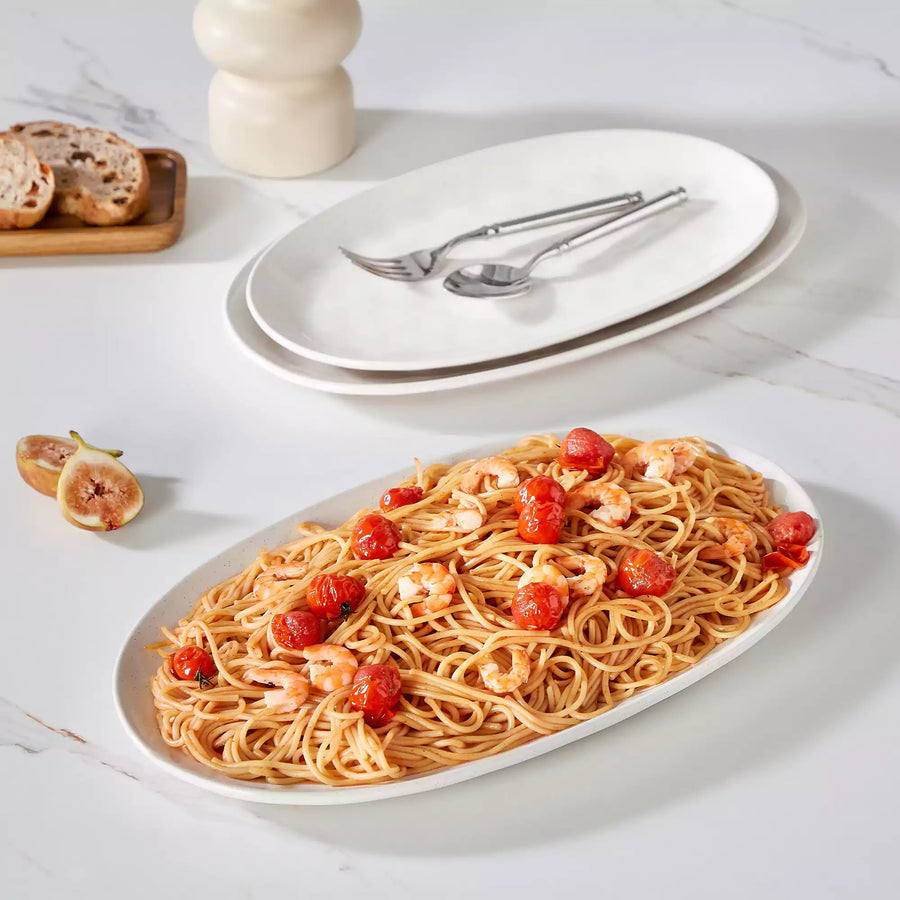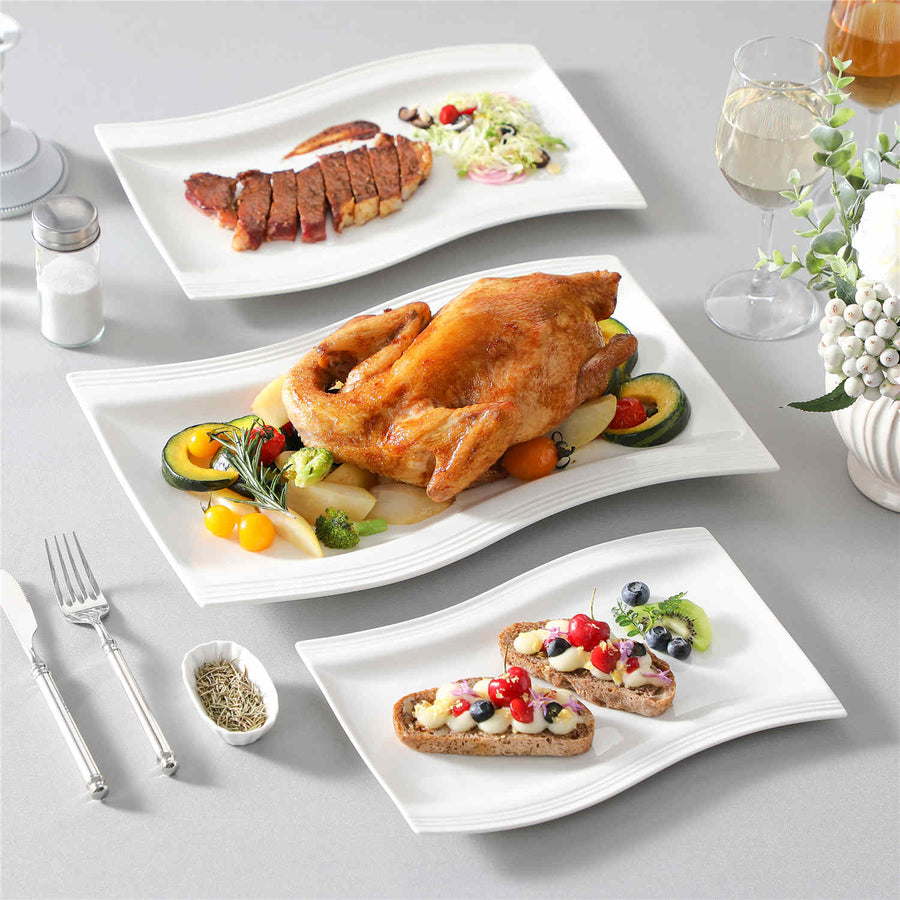


If you have limited cabinet space, purchasing multiple baking dishes may be a storage issue rather than a cooking issue. A good set should give you useful size options without filling an entire shelf with pieces you rarely use. This is where ceramic bakeware sets that have a genuine nesting feature can come in handy.
Do not purchase a bakeware set because it has more pieces; think about what each piece of bakeware will be used for, how well each piece fits in the stack, and how much space the entire set will take up in the cabinet. The best baking pan set is not necessarily the largest one; it is the set in which every size earns its place.
Nesting Saves Footprint Only When the Shapes Truly Fit
Nesting bakeware consists of pieces designed to fit inside one another, which means that it requires less space for storage. But coordinated sizes do not necessarily imply secure nesting. Two dishes can be the same shape, but have large gaps due to the different rim shapes, handles, or wall angles. A good nesting set should make it easy to place the smaller ceramic baking dish in the larger one without rocking, scraping, or leaving a lot of empty space.
Pay attention to how the pieces are shaped as a complete collection. Dishes with straight sides may not fit into each other as well as dishes with flared rims, and large handles may make it difficult to nest compactly. If cabinet space is limited, consider the number of pieces, but also consider if the entire collection can be stacked together in a relatively compact and stable manner.

Give the Smallest Dish a Defined Job
The smallest dish should not be included simply because it makes the set look more complete. Before deciding it deserves cabinet space, assign it a specific, regular function. Compact ceramic dishes are good for small amounts of baked vegetables, single servings of dessert, reheating leftovers, dips, side dishes, or recipes for one or two people.
It can also be useful when you frequently prepare small quantities separately from the main meal. A small gratin, fruit crumble, baked pasta portion, or roasted side are good examples of what you can make in a small dish. If you cannot identify several recipes you would realistically make in it, a set with fewer, more useful sizes may be a better purchase.
Make the Medium Dish the Everyday Workhorse
The medium dish should do most of the work for many households. This is the size to examine most carefully when comparing a bakeware set, because it should handle the recipes you prepare repeatedly rather than occasional specialty dishes.
Consider your typical dishes: casseroles, baked vegetables, pasta dishes, smaller desserts, roasted foods, and family sides. A medium ceramic baking dish will be sufficient for these tasks, yet not too large to be a burden in the oven or cabinet. If you are only using one dish a few times a week, then consider the set that contains the medium size dish that you use most often.
Buy the Largest Dish Only for a Recurring Need
The biggest dish may be the best deal in a set, but in a small kitchen, it may be the least efficient. When purchasing, think about the number of people you serve regularly, how often you entertain, and if you have enough room in your oven for a large dish.
If you're baking family-sized casseroles, large roasts, holiday dishes or meals for gatherings regularly, a large rectangular baking pan is a good choice. If these events occur infrequently, say once or twice per year, it is not necessarily worth keeping the biggest one all year round. Measure your oven rack and cabinet space. A dish that fits the oven may not be very useful if it is cumbersome to handle or store.

Compare Rectangular, Square, and Oval Nesting Geometry
Shape influences cooking space and storage efficiency. Rectangular dishes usually offer a good usable area and are particularly useful for casseroles, layered dishes and baked pasta. When the dimensions are carefully coordinated, square dishes can fit neatly together, and oval dishes can be pretty for serving from the oven to the table, but may take up more cabinet space.
Handles are a special case. Larger integrated handles can make a dish easier to lift, but can also make it more difficult to get smaller pieces into the dish. Rounded corners can also influence the nesting ability of dishes. When comparing sets, consider the actual outer dimensions and nesting arrangement, not the general shape.
Check Oven Instructions and Temperature Limits by Product
Just because a dish is ceramic, don't assume it can go in the oven. Temperature limits, preheating requirements, broiler suitability, freezer use, and other restrictions may vary by product and manufacturer.
Read the product listing and care instructions for the set before buying. The dish you choose should be appropriate for how you're going to prepare it. This is particularly important if you frequently transfer bakeware from one temperature to another. The ceramic label is not sufficient to identify suitability for a particular use.
Measure the Full Nested Stack and Retrieval Clearance
It is not the size of one dish that matters in the real storage test, but the entire nested stack. When stacking all the pieces, measure their height and compare it to the vertical clearance in your cabinet. Look at the depth of the shelves, particularly if the biggest dish has handles that extend beyond the shelf.
Allow sufficient clearance for the stack to be removed without striking the top shelf. If you are using separators or protective pads between ceramic pieces, measure the thickness of these items as well. Also, you should be able to pull the inner dishes without using excessive force or an awkward grip. If retrieving an inner dish requires moving the entire stack, then the stack is not useful.

Conclusion
The most expensive ceramic bakeware sets are not the best. Select a set with sizes that suit your normal cooking needs, nest snugly, and fit in your cabinets and oven. When it's time to start comparing the practical sizes and styles, check out MALACASA's bakeware sets to discover a bakeware set that provides you with valuable cooking versatility without compromising on storage space.
Nesting Ceramic Bakeware Set FAQs
Q1: What Sizes Are Most Useful in a Nesting Bakeware Set?
The most useful sizes will vary according to the recipes you use, but a small dish for small amounts, a medium dish for everyday casseroles and a larger dish for family meals or entertaining will provide a useful range. Focus on jobs that are done regularly, not on the quantity of pieces.
Q2: Do Duplicate Dishes Belong in a Bakeware Collection?
They are helpful when you are cooking multiple meals at once, particularly when entertaining or cooking parts of a meal separately. If not, duplicate sizes can consume storage space without offering a lot of flexibility.
Q3: How Can I Protect Ceramic Dishes While Nesting Them?
Store them according to the manufacturer's instructions. When separators are recommended, use the proper protective material and measure the stack thickness including the thickness of the separator. Don't push pieces together if the rims or handles do not fit together properly.
Q4: Can Nesting Ceramic Bakeware Go From Oven to Table?
Many ceramic dishes are made to be served at the table, but not all are oven-safe or resistant to sudden temperature changes. Before using it this way, always read the instructions for the specific set.
Q5: What Should I Compare When Shopping for Nesting Bakeware Sets?
Do not consider only the number of pieces in the box. Compare the dimensions, piece sizes, nesting height, handles, care instructions, and intended cooking uses.