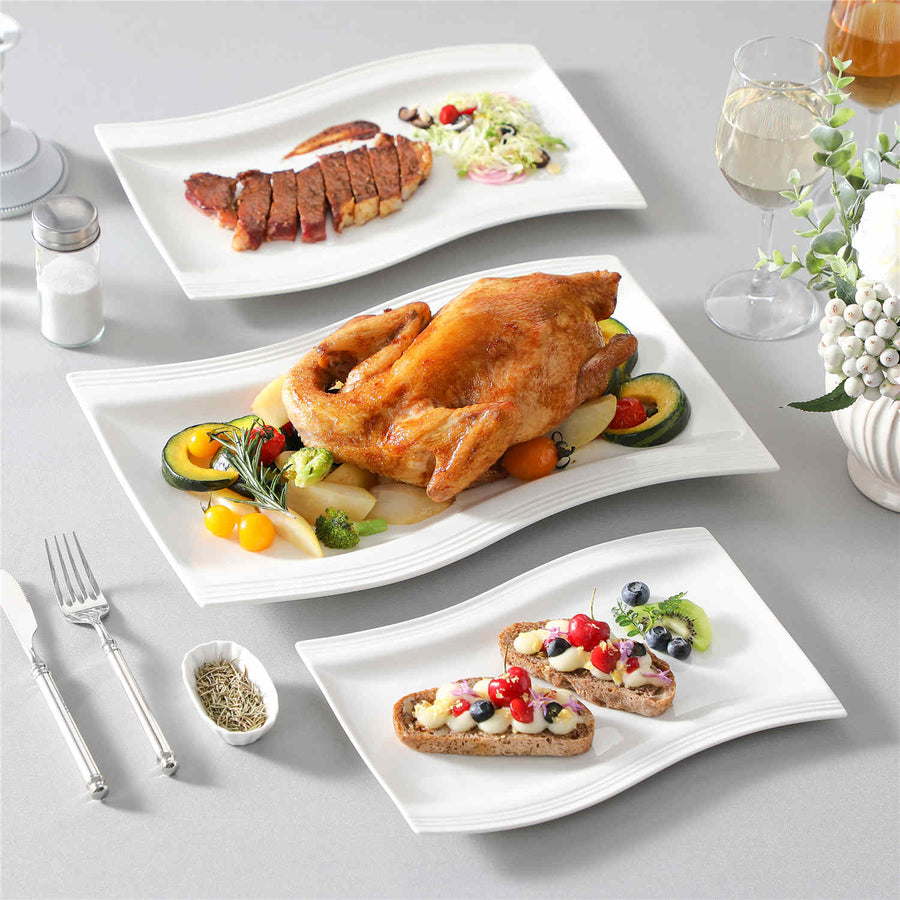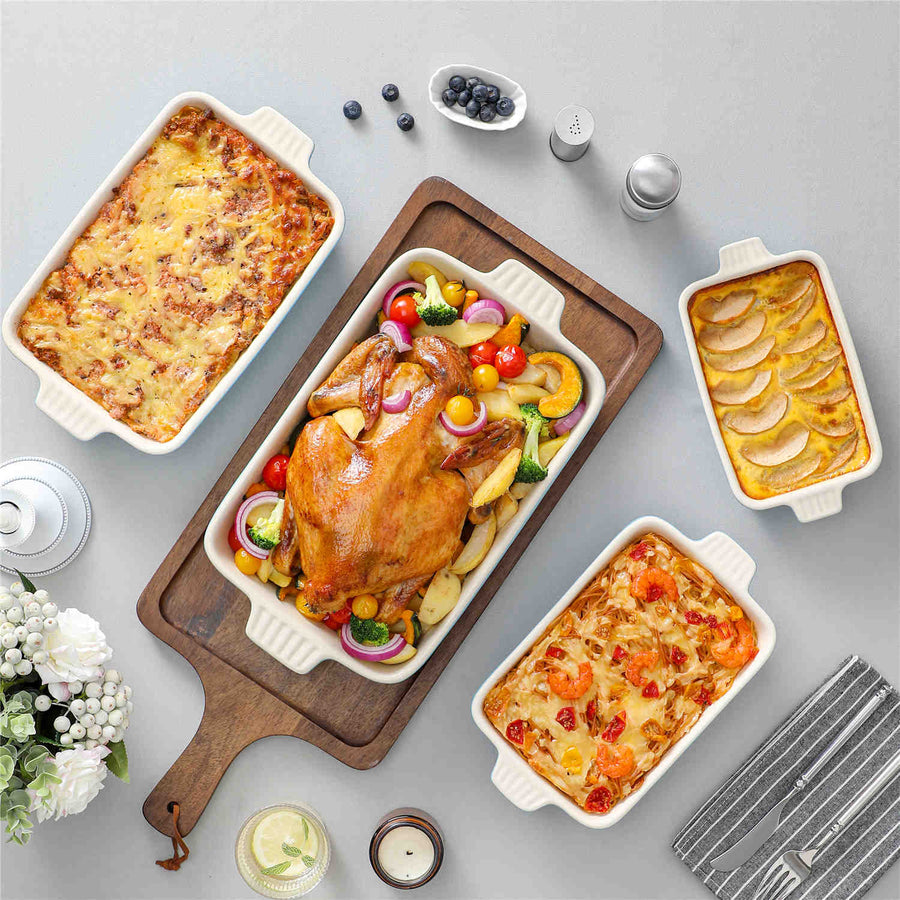


When choosing serving platters, the shape is only part of the decision. The edge design can affect how easily food holds, how much surface area you have, and how easy it is to serve guests. A rimmed serving platter will have a raised edge that will give some containment, and a rimless platter will have a flatter, more open presentation area. The right choice depends on the foods you serve, the utensils you use, and how you move the platter from the kitchen to the table.
From serving meals for the family to serving appetizers to serving platters for entertaining, knowing the difference can help make shopping easier.
What the Rim Changes on a Serving Platter
A platter's rim changes more than its appearance. It creates a visual barrier around the food and can also indicate the usable surface area for setting out ingredients. The usable surface is the area where food can be placed safely and not obstruct the edge.
A raised rim can contain juices, crumbs, sauces and small garnishes and the height and shape of the rim will affect the ease of access to the food by the serving utensils. There is less physical containment around the perimeter of a flat design, and more of the surface may feel immediately accessible. When comparing serving platters, consider whether you prioritize keeping food contained or maximizing open access for presentation.

Choose a Rimmed Platter for Juices and Loose Garnishes
A rimmed serving platter may be especially helpful if the food juices or ingredients tend to flow around in the pan while being carried. Roasted meats, sauced vegetables, glazed foods, sliced fruit and foods with loose herbs can be enhanced with an edge to keep them all in the platter. The rim is not a substitute for careful carrying, but it can be used to create an additional barrier when food is slightly displaced during transport.
A modestly raised-edge ceramic serving platter can provide a practical balance between containment and presentation for a roast surrounded by vegetables or a fruit arrangement with small berries and garnishes. A white platter with a subtle rim can also frame colorful foods without competing with them.
Choose a Rimless Platter for Clean Access and Open Presentation
A rimless platter is helpful when the food is best presented on a flat surface and can be accessed from many angles. When there's no raised border to break the visual line, canapés, cookies, sandwiches, sliced cakes, cheeses and carefully arranged sliced foods can look especially clean. A platter for appetizers may be easier to browse when guests can approach the food from different angles. Composed displays can also appear larger when they have a rimless design, as the food seems to flow naturally to the edge. The downside is that it's less contained, so foods that have runny sauces or loose juices might need a bit more attention when it comes to placement.
Compare Carving and Serving Utensil Clearance
One of the most important factors in the rim decision is the serving utensils. A low rim will help to keep juices in place, but allow for room for serving forks, tongs and spoons. A taller or more sharply angled edge may make it harder to slide a knife through a roast or maneuver a large serving spoon around the food. If you regularly carve directly on a platter, check whether the rim provides enough room for your hand and knife. If you serve food with tongs, like roasted vegetables or appetizers, consider how easy it is to open and close the tongs near the edge. Rimless platters are usually the most convenient to use, while rimmed ones demand more care in edge height and profile.

Use Negative Space without Sacrificing Capacity
Negative space may help make a platter look more finished, but consumers should be aware of the difference between the space around the plate and the space the food will cover. A wide rim can give a nice frame to a roast or appetizer display, but it will take up more of the space in the center than a flat platter of the same size. This does not necessarily make the rimmed option less useful; the border can help organize the presentation and prevent sauces or garnishes from reaching the table.
When choosing ceramic serving platters, don't just focus on the size of the plate, but also the area where food is served. If you would like to have a large decorative border and room for the main dish, a slightly wider platter might be helpful.
Check Carrying Grip, Loaded Weight, and Stability
The edge can also affect how comfortably a platter can be carried. A defined rim may help you see the rim better and depending on the rim profile, may offer a spot to put your fingers under the platter. However, the most important factors are the platter's overall weight, thickness, underside design, and how heavily it is loaded.
Even if the platter is high, it can be hard to carry a large ceramic platter that has roast meat or multiple dishes on it. Before purchasing, think about how far the kitchen is from the dining area, if you'll have to go through tight spaces, and if you'll need to use two hands. A stable, controllable platter is more useful than one just for looks.
Measure Storage and Dishwasher Fit
Another distinction between rimmed and rimless designs may be found in storage. A raised edge gives the platter a profile that can influence the stacking of a number of pieces in a cabinet. Rimless platters tend to be flat, but they have a wide base, which can take up a lot of space on the shelf or in the dishwasher.
When buying a large serving platter, take measurements of the opening in the cabinet, the depth of the shelves, and the space available in the dishwasher. If you own several serving platters, also consider how their rims nest or stack together. If you're looking for a design that you can use every day, it's probably best to go with something that's easy to store and clean up with, rather than something that's only good for special occasions.

Choose the Platter Edge That Fits Your Food
When it comes to edge styles, the deciding factor is how you will be using the food, not which style you prefer. A rimmed serving platter will provide extra containment for juices, sauces and loose garnishes, and a rimless platter will give open access and a clean presentation surface. For those who want to serve up a variety of ceramic dishes for daily meals and entertaining, check out MALACASA's collection of serving platters and compare designs for various foods and table settings.
Rimmed and Rimless Platter Questions
Q1: Is a Rimmed Serving Platter Better for Roasts?
A platter with a rim is good for roasts as it will keep meat juices and vegetables contained. A lower rim can also be sufficient for carving and serving.
Q2: Is a Rimless Platter Good for Appetizers?
Yes. A rimless platter can be used for canapés, cookies, sandwiches, sliced foods and other appetizers that aren't a lot of liquid. It is open on one side so that food can be easily accessed.
Q3: Which Platter Is Better for Saucy Foods?
A rimmed design will provide better containment for sauces and juices. The real effectiveness will depend on the rim height and the quantity of liquid used.
Q4: Can You Carve Meat on a Rimmed Platter?
Yes, as long as the rim allows for the knife and hands to have adequate clearance. A low, raised rim can provide a good balance between containment and access.
Q5: Can One Platter Style Handle Most Serving Needs?
A medium rim, versatile ceramic serving platter can be used for a variety of foods, such as roasts, vegetables, and fruit. For open presentation, consider using a rimless platter for appetizers and composed displays.