

Buying a dinnerware set is often viewed as a one-time decision, but the best set should work for you long after the first purchase. Plates may break, bowls can become damaged, families can expand or you might just have more guests to entertain. That's why expandability and replacement should be considered before purchase.
Whether you are comparing everyday dinnerware sets, porcelain dinnerware sets, or looking for a dinnerware set for 4, 6, or 8, choosing a collection that remains available over time can make future purchases much easier.
Why Replaceability is Important When Selecting a Dinnerware Set
No matter how sturdy dinnerware is, individual pieces can wear or break over time. A plate can chip, a bowl can crack, or a bowl that is used often can get damaged in the dishwasher. When you can no longer find the same dinnerware, it can be quite a challenge to replace a single piece.
Replaceability is also important in case of a change in your household. A dinnerware set for 4 might be ideal for a small family today, but you may want to expand your dinnerware collection to accommodate extra family members or frequent visitors. Choosing a collection with individual replacement pieces or multiple service sizes gives you more flexibility. You don't have to replace an entire set; you can keep the set you already love.

Can You Add More Place Settings Later?
When purchasing a dinnerware set, check whether different service sizes are available and if individual pieces are available. If you begin with a dinnerware set for 4, but have the option to expand to larger sizes, you will have a smoother path to growth as your needs evolve.
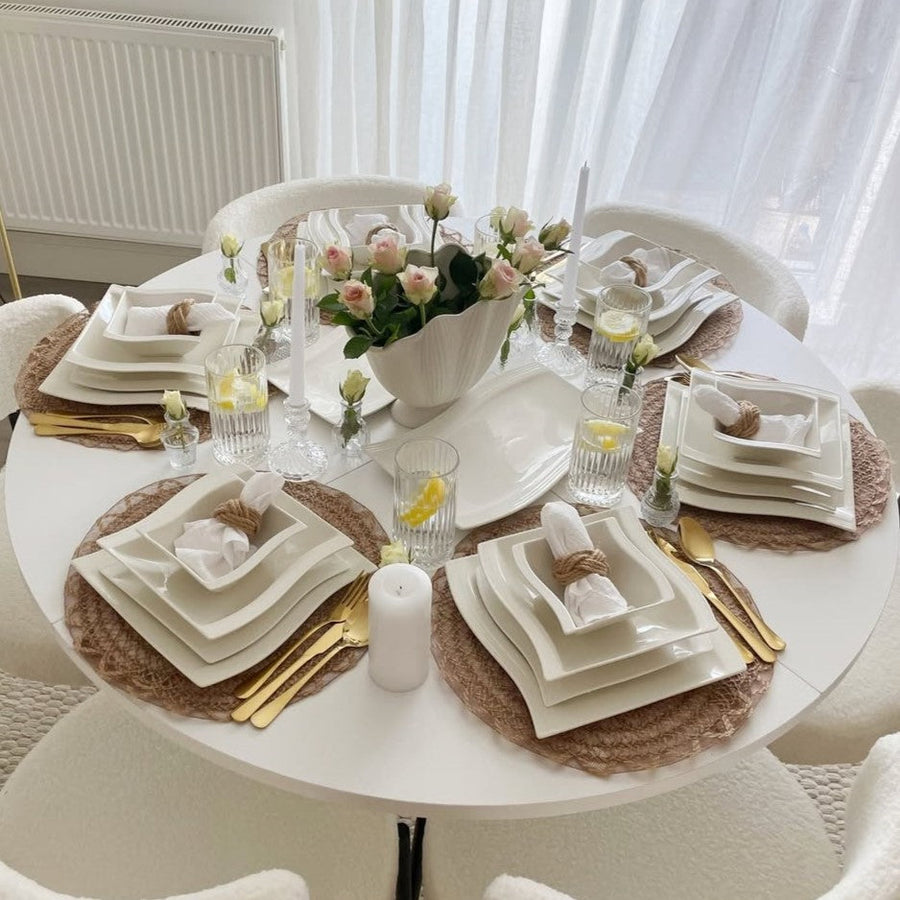
When considering how a collection can fit various household sizes, shoppers can consider MALACASA's Service for 4 collection, Service for 6 collection and dinnerware sets for 8 collection. If you start with six settings and then want to have more for larger parties, this type of range might be helpful.
Look for the manufacturer to have the same collection available over time. The right dinnerware set for your needs today might not be available for purchase later on if the design is discontinued rapidly.
What Happens When One Plate or Bowl Breaks?
When one piece breaks, the difference between replaceable and non-replaceable dinnerware becomes apparent. If replacement dinnerware is available, you can buy one dinner plate, salad plate or bowl rather than another full set.
This can help save money and avoid buying duplicate items. It also helps maintain a consistent visual appearance to your table. If you like to have a matching place setting, matching plates and bowls are especially significant.
When buying, search for collections that make it obvious what their core items are and provide them as part of a number of service configurations. This is particularly helpful for items that are used often like dinner plates and bowls.

Choose Core Pieces That Are Easy to Match
Design can have an impact on the ease with which a dinnerware set can be expanded. Neutral colors, classic silhouettes, and consistent proportions tend to be easier to coordinate with future purchases than highly distinctive shapes or seasonal patterns.
Simple white, cream or understated finishes can serve as a base for porcelain dinnerware sets. Common plate and bowl sizes are also convenient as they can be supplemented if an exact size is not available.
Consider the most frequently used pieces. An everyday collection usually consists of dinner plates, salad plates, cereal or soup bowls, and mugs. When these pieces are all the same shape and finish, it's easier to blend in replacements and complementary pieces.
When Mixing New Pieces Can Still Look Coordinated
In some cases, a perfect replacement just doesn't exist. In such a case, you don't need to buy an entire dinnerware collection. Carefully selected complementary pieces can still create a cohesive table.
The easiest approach is to maintain one or two visual elements, such as color, shape, finish, or material. For instance, a simple white bowl may be used in conjunction with another white collection when the scale and style are fairly comparable. Contrasting pieces can also be used intentionally, with the original dinner plates kept, and a slightly different bowl design added.
Rather than trying to make every piece identical, aim for consistency. A blend of complementary dinnerware can be intentional and still be flexible when replacement dinnerware is limited.

A Pre-Purchase Checklist for a Dinnerware Set You Can Keep for Years
Before purchasing, consider more than the appearance of the set. First, see if the collection is available and if the manufacturer has any replacement pieces. Next, check for the various sizes of service, like dinnerware set for 4, dinnerware set for 6 or dinnerware set for 8, just in case your family or entertaining plans change.
Then look for the availability of individual core pieces. Ensure that dinner plates, smaller plates and bowls are the same shape and finish. Think about the color and design, and how it will match with future additions.
Last but not least, consider expansion before you actually need it. A dinnerware set that can expand with your family may be more functional than one that is just for looks. It may be worth taking a few minutes to check availability today to avoid the hassle of replacing a potentially valuable collection later.
Choose a Dinnerware Set That Grows with You
Choosing a dinnerware set that is easy to expand or replace can save you money and keep your table coordinated for years. Before buying, check service sizes, replacement availability, and the consistency of core pieces. A flexible collection makes it easier to handle breakage, welcome extra guests, and adapt to changing household needs.
Common Questions on Expanding Dinnerware Sets
Q1: Is It Better to Buy a Dinnerware Set for 4 or 6?
It will depend on your household and entertaining needs. A dinnerware set for 6 can be used in a smaller home, as it offers extra settings for guests, or a dinnerware set for 4 can be used in a larger home. If the collection can be expanded, you can start with fewer place settings and expanded over time.
Q2: Is It Easy to Replace Porcelain Dinnerware Sets?
They may be, but replacement is dependent on the manufacturer and collection. Before ordering, ask if any plates or bowls are still available.
Q3: Can I Add Matching Plates and Bowls Later?
Yes, if the collection is available in several sizes or individual pieces. Before purchasing, always check whether the collection is expected to remain available over time.
Q4: What Should I Do If My Exact Dinnerware Piece Is Discontinued?
Look for a visually compatible replacement with a similar color, shape, size, and finish. Mixing complementary pieces can maintain a coordinated table without replacing the entire collection.
Q5: Can I Mix Pieces from Different Dinnerware Collections?
Yes. If an exact replacement is unavailable, choose pieces with similar colors, shapes, finishes, and proportions. This helps create a coordinated look while giving you more flexibility when expanding or replacing your dinnerware.