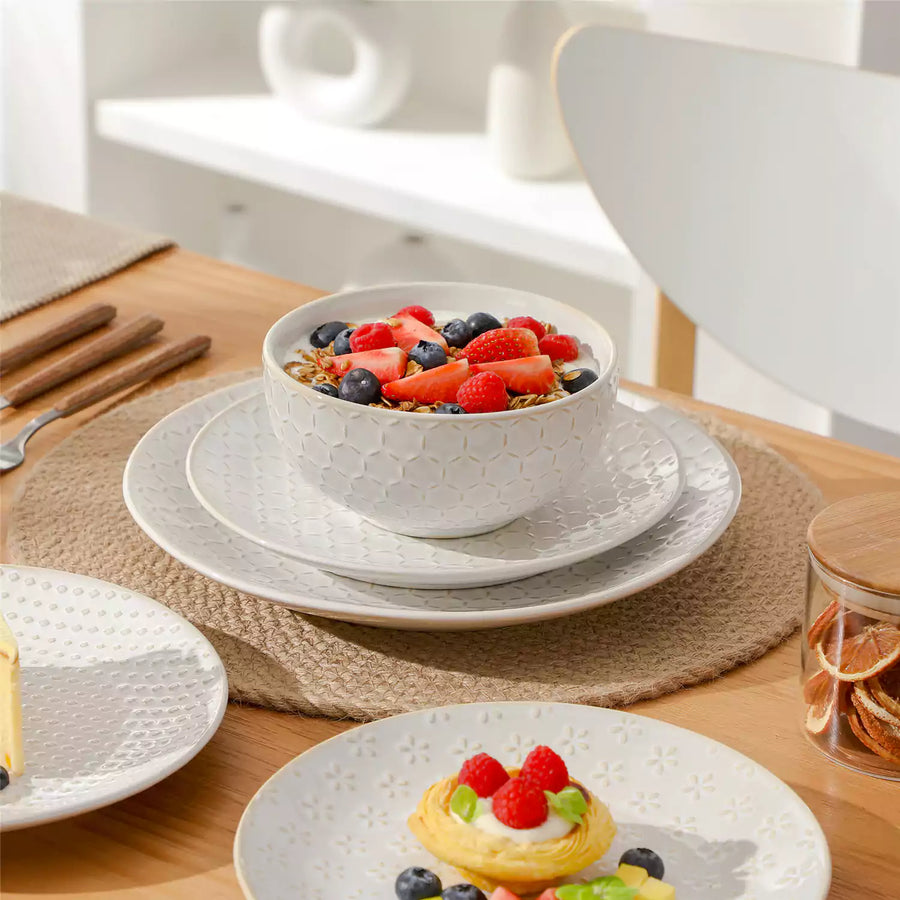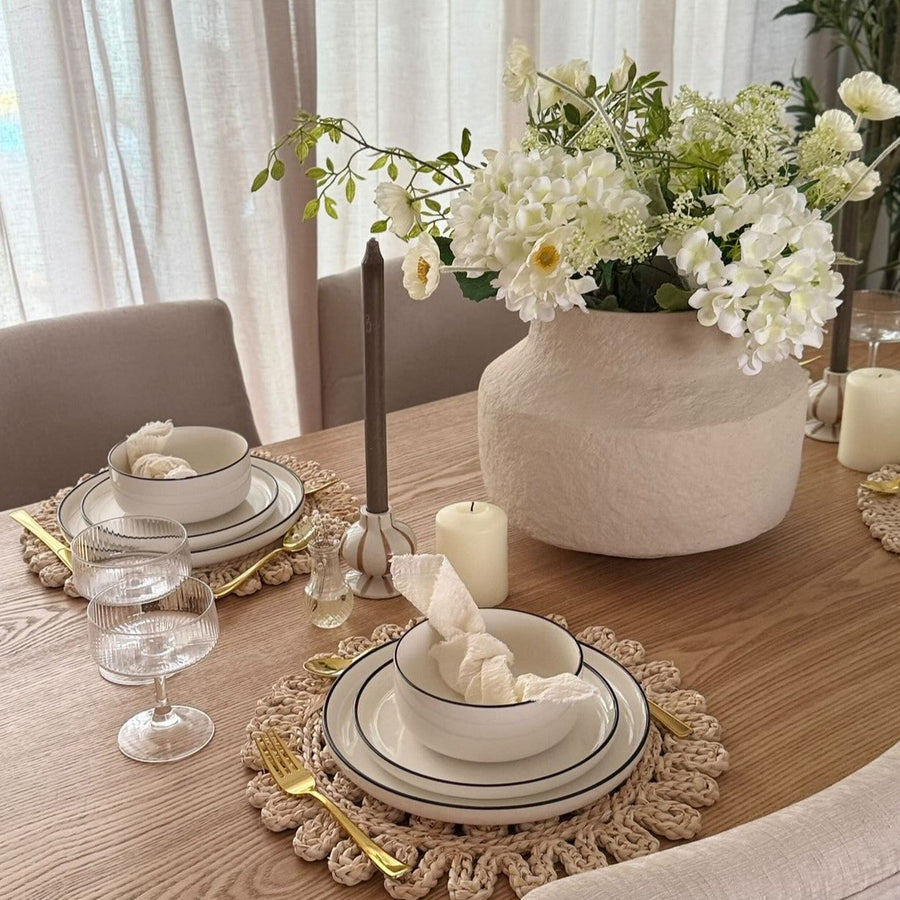


Summer gatherings deserve dinnerware that matches the season's relaxed elegance. Porcelain dinnerware with botanical motifs brings freshness to outdoor dining, while classic monochrome designs add refined simplicity. Knowing the differences between porcelain, bone china, and stoneware helps you pick pieces that actually work for your summertime entertaining style.
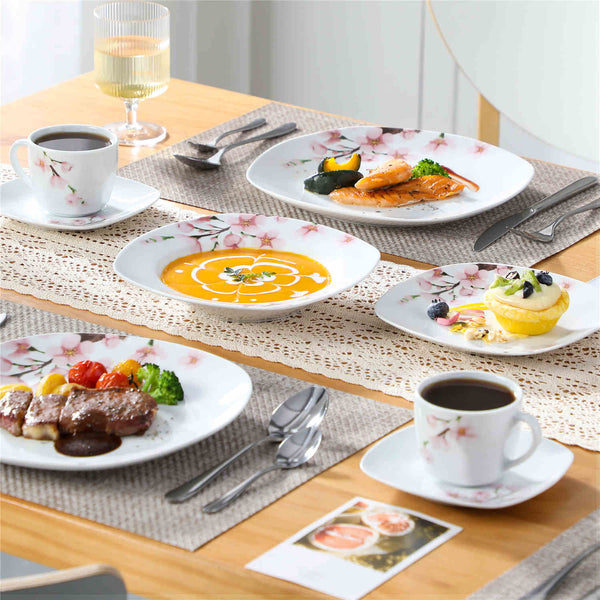
Types of Ceramic Dinnerware: Finding Your Perfect Summer Match
Choosing between porcelain, bone china, and stoneware doesn't have to be complicated. Each has its strengths, and understanding the basics helps you pick what works best for your summer gatherings.
Porcelain
Porcelain is the sweet spot between elegance and everyday practicality. Made from fine clay fired at high temperatures, it's surprisingly tough despite its delicate look. You'll love its smooth texture and subtle translucency that catches the light beautifully.
Most porcelain comes in white or soft colors, making it incredibly versatile for any table setting. Whether you're hosting a formal dinner party or a casual brunch, porcelain adapts to your style while maintaining that refined, polished look.
Bone China
Bone china takes porcelain up a notch. It contains bone ash, which gives it that distinctive creamy-white glow and extra translucency. It's actually stronger and more chip-resistant than regular porcelain, but here's the catch—it's pricier and feels a bit too precious for everyday meals. Save this one for special occasions.
Stoneware
Think of stoneware as the laid-back cousin of the ceramic family. Made from dense clay fired at high heat, it's durable and casual with earthy, textured finishes. It's perfect for backyard barbecues, picnics, or daily use since it can handle some wear and tear. The rustic vibe works great for informal summer gatherings.
For summer entertaining, porcelain dinnerware hits the mark. It gives you elegance without the fussiness, durability without sacrificing style, and works beautifully for everything from poolside lunches to sunset dinner parties.

What to Look for When Buying Porcelain Dinnerware
Quick Checklist: Before You Buy
Use this final checklist to ensure you're making a smart purchase:
- Design works for multiple seasons
- Dishwasher and microwave safe
- Chip-resistant quality grade
- Sufficient quantity for your typical gatherings
- Smooth glaze with no defects
- Pieces stack efficiently
- Serving pieces included or available separately
- Price fits your budget per place setting
The right design sets the tone for your entire summer gathering. Light colors and fresh patterns work best for warm-weather dining. Botanicals, soft blues, and whites keep things feeling seasonal without being overly themed. Avoid heavy, dark designs that feel out of place in summer. If you entertain outdoors often, skip intricate gold or metallic trims—they can fade in sunlight.
What to Check Before Buying
Not all porcelain is created equal. Here's a quick reference guide to spot quality pieces:
| Quality Feature | What to Look For | Why It Matters |
| Grade Label | "Chip-resistant" or "hotel-grade" | Indicates stronger, more durable construction |
| Weight | Feels substantial but not heavy | Quality porcelain has the right balance |
| Glaze Finish | Smooth, even surface with no bumps | Uneven glaze wears through and stains easily |
| Translucency | Slight light transmission when held up | Sign of proper firing and fine clay quality |
| Edges | Clean, smooth rims with no roughness | Poor edges chip easily and feel unpleasant |
Essential Practical Features
Before you buy, confirm these three non-negotiables:
- Dishwasher-safe certification: Hand-washing porcelain for 12 people after a party gets old fast, so verify it can handle regular dishwasher cycles without damage.
- Microwave-safe rating: You'll want to reheat food directly on plates, especially for casual summer gatherings where buffet-style serving is common.
- Stackability test: Check how pieces nest together in person if possible, since wobbly stacks waste cabinet space and increase the risk of chips.
How Many Pieces Do You Actually Need?
Planning the right set size prevents both shortages and waste. Use this guide to determine what works for your entertaining style:
| Guest Count | Dinner Plates | Salad/Dessert Plates | Pasta Bowls/Soup Plates | Cereal Bowls | Serving Pieces Needed |
| 4 people (small gatherings) | 4 plates | 4 plates | 4 bowls | 4 bowls | 1-2 platters, 1-2 serving bowls |
| 6 people (regular entertaining) | 6 plates | 6 plates | 6 bowls | 6 bowls | 2 platters, 2-3 serving bowls |
| 8 people (frequent hosting) | 8 plates | 8 plates | 8 bowls | 8 bowls | 2-3 platters, 3-4 serving bowls |
| 12+ people (large parties) | 12+ plates | 12+ plates | 12+ bowls | 12+ bowls | 3-4 platters, 4-5 serving bowls |
Pro tip: Buy slightly more than your typical guest count—pieces break, and you'll want matching replacements available without having to rebuy an entire set.
What counts as essential serving pieces:
- Large platters (11-14 inches): For main proteins, appetizer spreads, or desserts
- Serving bowls (9-11 inches): For salads, sides, pasta, or fruit
- Pitchers: For water, iced tea, lemonade, or sangria at summer gatherings
Design Longevity: Will You Use It Year-Round?
Summer-specific patterns limit your return on investment. Consider these guidelines:
- Avoid overly seasonal motifs: Coastal stripes might feel perfect in July but awkward at Thanksgiving dinner.
- Choose neutral bases: White or cream foundations with subtle patterns transition easily across seasons and occasions.
- Test mental versatility: Ask yourself: "Would this work for a winter holiday meal?" If not, you're limiting its use to 3-4 months yearly.
- Consider your climate: Year-round warm weather areas can justify more summery patterns than seasonal regions.
Mixing and Matching Done Right
Creating a cohesive mixed look requires strategy, not guesswork:
- Same brand/collection mixing: Stick to one manufacturer's coordinating pieces—they're designed to work together visually
- Pattern + solid pairing: Use patterned salad plates with solid dinner plates, or vice versa for balanced visual interest
- Color family consistency: Mix different shades within the same color family (various blues, different greens) rather than random colors
- Avoid cross-brand mixing: Unless you have design experience, mixing brands usually looks disjointed and unplanned

How to Match Your Porcelain Dinnerware to Your Summer Menu
The right dinnerware pairing makes your food look better and your gathering feel more intentional. Here's how to coordinate plates with what you're actually serving:
Match Colors to Your Menu
Your food's color palette should guide your dinnerware choice. Use this pairing guide to make your dishes look their best:
| Menu Type | Best Dinnerware Colors | Avoid |
| Bright Salads (caprese, Greek, rainbow bowls) | White, cream, or light gray | Heavy patterns that compete with colorful ingredients |
| Seafood & Shellfish (shrimp, crab, grilled fish) | Coastal blue, seafoam green, or white | Dark or earthy colors that feel too heavy |
| Mediterranean Spreads (hummus, olives, feta, grilled vegetables) | Terracotta-rimmed, earth tones, or warm whites | Cool blues or overly modern minimalist designs |
| Grilled Meats & BBQ (steaks, burgers, chicken) | Bold solids (coral, white) or simple patterns | Busy florals or delicate patterns |
| Pasta & Italian (tomato-based sauces, pesto) | Classic white or cream with minimal trim | Patterns with reds or greens that clash |
| Fresh Fruit & Desserts (berries, tarts, summer pastries) | White, pale pink, or mint green | Dark colors that make portions look smaller |
Pro tip: Heavily patterned plates work best with simple, monochromatic foods like grilled chicken or plain rice dishes. Complex, colorful meals need simpler dinnerware to avoid visual chaos.
Choose the Right Plate Sizes for Each Course
Size matters more than you'd think for presentation:
- Appetizers and small bites: 6-8 inch plates prevent overcrowding and keep portions looking intentional
- Salads and sides: 8-9 inch plates give greens room to breathe without looking sparse
- Main courses: 10-11 inch dinner plates properly showcase proteins with sides
- Pasta and risotto: Wide, shallow bowls (9-10 inches) display these dishes better than deep bowls
- Soups and stews: Deep bowls (8-9 inches, 2+ inches deep) contain liquids and stay practical
Theme-Specific Pairings That Actually Work
Here are proven combinations for popular summer gatherings:
- Backyard BBQ: Use bright solids (coral, turquoise, sunny yellow) or gingham patterns. The casual vibe matches grilled foods, and bold colors photograph well outdoors.
- Garden Party: Botanical patterns with greens and florals echo your surroundings. Pair with light salads, finger sandwiches, and fresh fruit.
- Coastal Dinner: Blue and white striped or wave patterns work with seafood platters, grilled fish, and citrus-based dishes.
- Farm-to-Table Evening: Neutral porcelain with subtle textures or minimal patterns lets colorful seasonal vegetables be the stars.
Smart Mixing for Visual Interest
Mix intentionally, not randomly. Use solid white dinner plates as your base, then add patterned salad plates in complementary colors. Or reverse it—patterned dinner plates with solid bowls. Keep serving platters neutral so they work with everything.
One practical rule: your bread plates and coffee cups can be the most playful pieces since they appear in smaller quantities and don't need to match the main course presentation.
How to Care for Your Porcelain Dinnerware
Proper care keeps your porcelain dinnerware in good condition for years. Follow these practical steps to prevent damage and maintain appearance.
1. Hand-Wash When Possible: Wash porcelain with mild dish soap and warm water, even if it's dishwasher-safe, since hand-washing is gentler and extends durability.
2. Use Soft Cleaning Tools: Use soft sponges or cloths only—avoid steel wool or rough scrubbers that scratch the glaze and dull the finish.
3. Dry Right Away: Rinse well and dry each piece immediately with a towel to prevent water spots and mineral deposits.
4. Load Dishwashers Carefully; Leave space between pieces in the dishwasher so they don't hit each other during the cycle and chip.
5. Prevent Temperature Shock: Let hot dishes cool briefly before washing in cold water—sudden temperature changes cause cracks.
6. Change Temperatures Gradually; Don't move porcelain from freezer to oven or refrigerator to hot water—gradual warming prevents breakage.
7. Warm Serving Pieces First: Run lukewarm water over serving dishes before adding hot food to prevent thermal stress.
8. Clean Stains Carefully: Use baking soda paste on stained pieces—harsh chemicals damage the glaze.
9. Carry Large Pieces with Both Hands: Hold platters and bowls with two hands to prevent drops and breakage.
How to Store Your Porcelain Dinnerware
1. Protect Stacked Plates: Place felt pads, paper plates, or cloth between stacked plates to prevent scratches during storage.
2. Don't Stack Too High: Keep stacks to 6-8 plates maximum to avoid pressure damage on bottom pieces.
3. Store in Dry Places: Keep porcelain in dry cabinets away from sunlight, which fades patterns, and moisture, which causes damage.
4. Don't Stack Cups: Hang cups or store them separately—stacking creates pressure that chips rims and breaks handles.
5. Check for Damage Monthly: Inspect pieces regularly for cracks, chips, or glaze wear so you can fix problems early.
These care and storage steps prevent common damage and keep your porcelain ready for regular use and entertaining.
Putting It All Together for Your Summer Table
Good porcelain dinnerware doesn't have to be complicated—it just needs to fit how you actually entertain. Sets like the MALACASA Flora 26-Piece Porcelain Dinnerware Set offer a practical starting point for regular hosts. With service for six including dinner plates, dessert plates, soup plates, cereal bowls, and two serving platters, it covers everything from casual brunches to formal dinner parties. The square wavy design and choice of ivory white or marble-inspired colors (grey, blue, pink) give you versatile options that work beautifully for summer gatherings and beyond. Match your dinnerware to your typical cuisine, maintain it properly, and you'll get years of use from quality pieces.