

Dinnerware plays a bigger role than you might realize at social events. Your bowl and plate sets help establish the tone before anyone tastes anything. Different patterns bring personality and warmth, while matching everything creates a sleek, cohesive feel. Good presentation elevates regular meals into occasions worth remembering.

How to Improve Food Presentation with Bowl and Plate Sets
Simple arrangement techniques can make your meals look more appealing without requiring professional skills. Here are three practical ways to improve your food presentation.
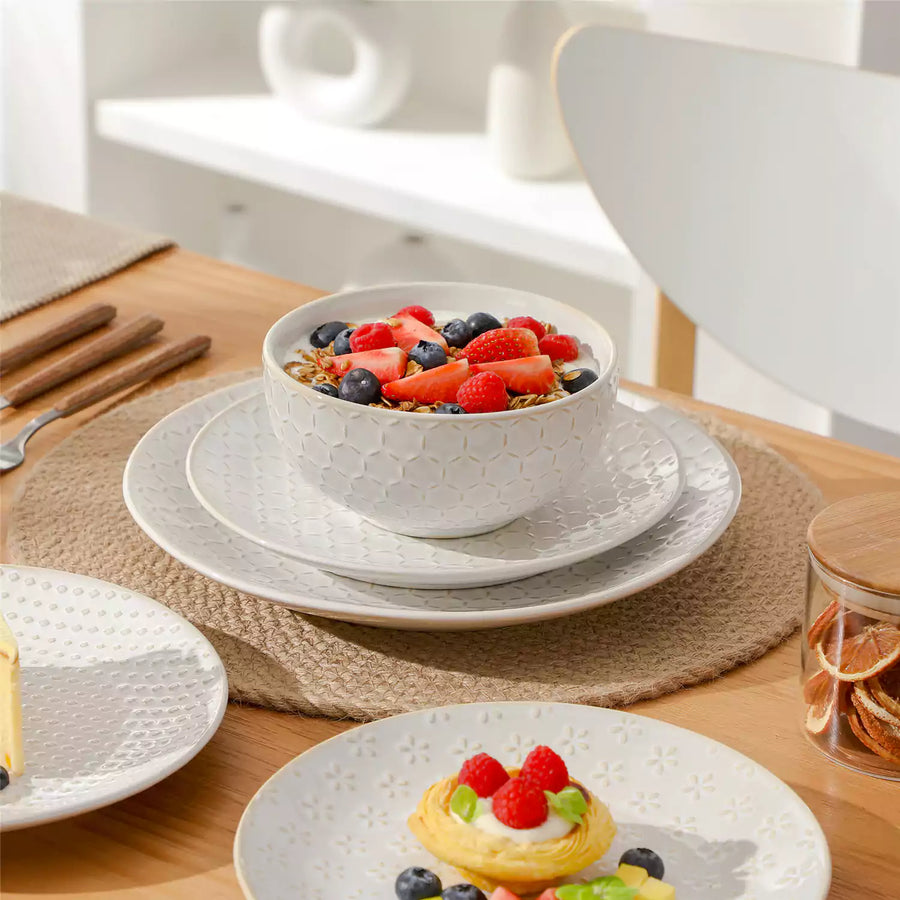
Creating Tiered Displays with Stacked Dinnerware
Build height on your table by stacking plates and bowls:
1. Start with your largest dinner plate as the base
2. Place a medium bowl or salad plate in the center
3. Add a small dessert plate or bowl on top for more height
4. Fill each level with finger foods (mini pastries, tea sandwiches, strawberries)
5. Keep heavier items on lower levels for stability
Best for: Appetizers, desserts, finger foods
Serving Individual Portions
| Dish Type | Bowl/Plate Size | Examples |
| Salads & dips | Small bowls (4-6") | Individual salads, fruit cups, hummus |
| Desserts | Small plates (6-8") | Mini cheesecakes, cookies, tarts |
| Appetizers | Individual plates | Bruschetta, caprese skewers |
| Snacks | Small bowls | Nuts, olives, candy |
Individual servings work well for buffets and help accommodate different dietary preferences.
Setting Up Interactive Food Bars
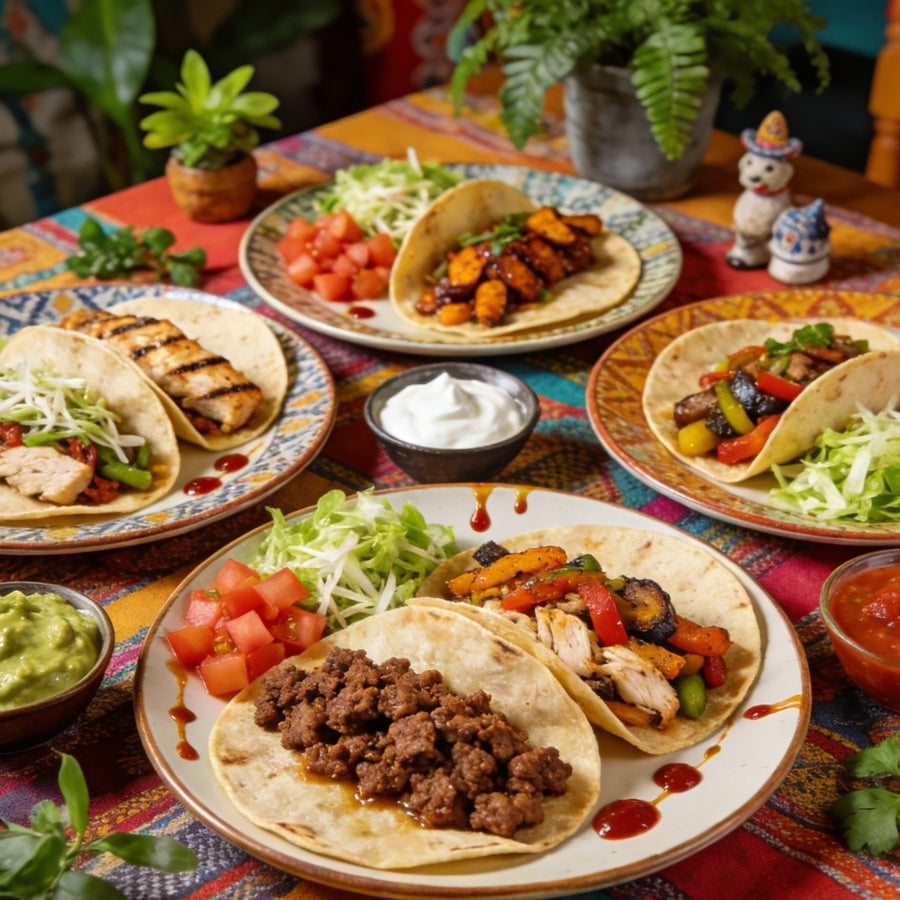
- Taco Bar Setup: Use medium bowls for salsa, guacamole, sour cream, shredded cheese, lettuce, and tomatoes. Place dinner plates at the start.
- Salad Station: Arrange toppings like croutons, nuts, dried fruit, and dressings in small bowls. Label each bowl clearly.
- Dessert Bar: Set out bowls with chocolate chips, sprinkles, whipped cream, fruit, and sauces. Provide small plates for guests to build their treats.
Food bars give guests control over their meals and work perfectly for parties with diverse tastes.

What Else Can You Do with Your Bowl and Plate Sets?
Your dinnerware works for more than just traditional meals. Here are practical ways to use bowls and plates differently.
1. Serving Grain Bowls
Start with a medium-sized bowl (7-9 inches). Add your base grain like rice, quinoa, or couscous to fill about half the bowl. Then add your protein (chicken, tofu, fish) on one side and vegetables on the other.
2. Serving Pasta in Shallow Bowls
Choose shallow bowls with wide rims (8-10 inches across, 2-3 inches deep). Place a serving of pasta in the center, then spoon sauce over the top.
3. Making Parfaits in Clear Bowls
Use clear glass bowls that are 4-6 inches wide. Start with a layer of yogurt at the bottom (about 2 tablespoons), then add granola, then fruit. Repeat the layers 2-3 times, ending with fruit on top.
4. Serving Cocktails in Small Bowls
Select small decorative bowls (4-5 inches wide) that hold about 6-8 ounces. Pour your cocktail into the bowl and add ice if needed. Add garnishes like mint leaves, fruit slices, or cocktail umbrellas.
5. Portioning Desserts in Bowls
Use dessert bowls that are 4-5 inches wide. Scoop ice cream or spoon mousse into each bowl before guests arrive. Cover them with plastic wrap and keep them in the fridge or freezer until serving time. Plan for about 1/2 cup (one scoop) per person.
6. Serving Bread in Lined Bowls
Pick a medium bowl (8-10 inches). Place a clean cloth napkin inside, letting the edges drape over the rim. Put warm rolls, biscuits, or sliced bread inside.
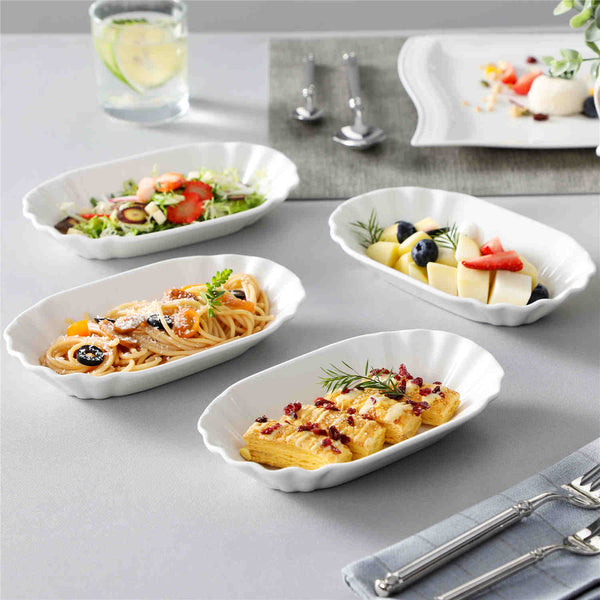
7. Arranging Charcuterie on Platters
Use a large platter (14-16 inches). Start by placing small bowls of olives, nuts, or jam on the platter. Then arrange meats in folded rows or rosettes. Add cheese chunks or slices in different areas. Fill gaps with crackers, grapes, and dried fruit.
8. Presenting Roasted Meat on Oval Platters
Choose an oval platter that's at least 2 inches longer than your roast. Let the meat rest for 10 minutes after cooking, then transfer it to the platter. Garnish with fresh herbs like rosemary or thyme around the edges.
9. Displaying Vegetables on Rectangular Plates
Use a rectangular plate (12-14 inches long). Arrange vegetables in parallel rows—for example, line up asparagus spears all facing the same direction. Alternate colors for visual appeal, like green beans next to orange carrots.
10. Plating Antipasto on Round Platters
Start with a round platter (12-14 inches). Place a small bowl of olives in the center. Arrange salami slices in a circle around it, then add mozzarella balls. Fill in empty spaces with roasted peppers, artichoke hearts, and crackers.
11. Serving Nachos on Large Plates
Use a plate that's at least 12 inches wide. Spread tortilla chips in a single layer across the plate—avoid stacking too high. Add toppings like cheese, jalapeños, and beans. If baking, use an oven-safe plate and broil for 3-5 minutes until cheese melts.
12. Using Plates as Drink Trays
Pick plates or saucers that are 6-8 inches wide. Place 2-3 filled glasses on each plate, spacing them evenly. Choose glasses with stems or handles that won't tip easily. Carry the plate with both hands.
13. Organizing Condiments in Bowls
Use small bowls (2-4 inches wide). Put one type of condiment in each bowl—lemon wedges in one, sugar packets in another, creamer cups in a third. Line them up on your coffee or beverage station.
14. Using Saucers for Serving Spoons
Place a saucer (5-6 inches) next to each serving dish on your buffet table. Rest the serving spoon on the saucer with the bowl of the spoon facing up.
15. Serving Chips in Lined Bowls
Choose a shallow bowl (8-10 inches wide, 2-3 inches deep). Cut parchment paper or use a paper napkin to line the bottom and sides. Pour chips, pretzels, or popcorn into the lined bowl.
Using Bowl and Plate Sets as Non-Food Décor
Your dinnerware doesn't have to stay in the cabinet until mealtime. Bowls and plates make excellent decorative elements that enhance your table setting before the food arrives.
How to Create Elegant Centerpieces with Bowls and Plates
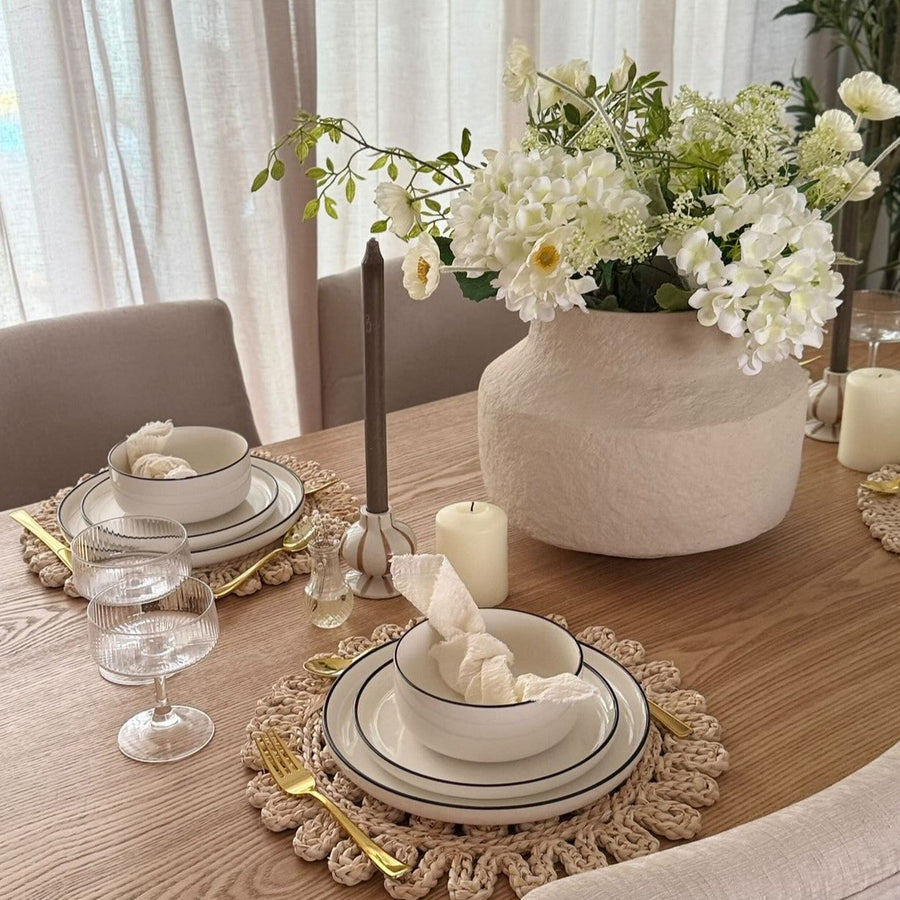
Transform your dinnerware into sophisticated centerpieces by following this simple layering approach:
| Step | What to Do | Best Materials |
| 1. Base Layer | Use a large dinner plate (10-12 inches) as foundation | White porcelain, decorative ceramic, or metallic finish plates |
| 2. Center Element | Place a medium bowl filled with floating candles and water | Glass or clear bowls work best to show the candles |
| 3. Surrounding Décor | Arrange fresh flowers, greenery, or seasonal items around the bowl | Roses, eucalyptus, pinecones, ornaments, or berries |
| 4. Height Check | Keep total arrangement under 12 inches | Allows guests to see across the table |
This layered technique works for any occasion—use white dishes for a classic look or colorful plates to match your event theme. The key is balancing the bowl's contents with what surrounds it on the plate.
5 Ways to Make Rustic Centerpieces with Natural Elements
Create a relaxed, natural look by filling bowls and plates with organic materials. Here's how to achieve that farmhouse-style charm:
1. Seasonal Fruit Displays: Fill shallow bowls with apples, pears, citrus, or pomegranates for an edible centerpiece that guests can enjoy after dinner. Choose fruits with interesting colors and textures that complement your table setting.
2. Natural Stone Arrangements: Use plates to display river stones, smooth pebbles, or driftwood pieces collected from nature. Layer different sizes for visual depth and arrange them in odd numbers (3, 5, or 7) for a more natural look.
3. Scented Potpourri Plates: Arrange dried flowers, herbs, or store-bought potpourri on decorative plates to add fragrance to your dining space. This works especially well for evening events when the scent can create ambiance.
4. Moss and Candle Combinations: Layer a large plate with fresh or preserved moss, then place a bowl with pillar candles on top. The contrast between the soft moss and smooth ceramics creates visual interest.
5. Succulent Garden Displays: Arrange small potted succulents on a large serving plate for a modern rustic centerpiece. These can double as take-home gifts for your guests.
Natural centerpieces are budget-friendly since you can often gather materials from your yard or local farmers market. They work well for casual gatherings where you want a welcoming, unfussy atmosphere.
Best Practices for Decorating with Your Dinnerware
Keep these practical considerations in mind when using bowls and plates as table décor:
- Color Selection: Choose bowls and plates in neutral colors (white, cream, gray) if you plan to use them for both serving and decorating—they'll match any theme and give you more flexibility.
- Ease of Movement: Make sure decorative arrangements are easy to move when it's time to serve food. Avoid gluing or permanently attaching elements so you can quickly clear the table.
- Reserve Your Best Pieces: Consider using your second-best dinnerware set for décor so your nicest pieces stay available for the actual meal. This also prevents accidental damage to your favorites.
- Seasonal Rotation: Change out decorative elements seasonally to keep your table looking fresh throughout the year. Store small seasonal items in labeled bins for easy swapping.
Using your bowl and plate sets as décor saves money on special table decorations and ensures everything on your table coordinates perfectly.

How to Choose the Right Bowl and Plate Sets for Your Event
The dinnerware you choose sets the tone for your entire gathering. Different events call for different styles, materials, and even shapes. Here's how to match your bowl and plate sets to your occasion.
Selecting Dinnerware for Formal Events
For formal settings, stick with classic colors like white, ivory, or cream with minimal patterns. If you want patterns, choose subtle designs like thin gold bands, delicate florals, or geometric borders. These classic looks photograph well and won't clash with your table linens or centerpieces.
Design Elements for Formal Dinnerware:
- Shape: Round plates with smooth edges are the safest choice for formal events. Square or rectangular plates work for modern, contemporary themes.
- Finish: Look for glossy finishes that reflect light beautifully. Avoid heavily textured or matte finishes for very formal occasions.
- Rim Style: Wide-rimmed plates (also called chargers) add elegance and create a frame for your food presentation.
- Set Completeness: Formal events typically need dinner plates (10-11 inches), salad plates (7-8 inches), bread plates (6 inches), and bowls for soup or dessert.
Choosing Dinnerware for Casual Gatherings
Casual events give you more freedom to show personality and creativity with your dinnerware choices.
Best Materials for Relaxed Events
For family dinners, backyard barbecues, picnics, and informal get-togethers, consider these practical options:
- Ceramic Sets: Colorful ceramic dinnerware brings warmth and personality to casual tables. Look for hand-painted designs, bold patterns, or mix-and-match collections. Ceramics are dishwasher-safe and durable enough for everyday use.
- Earthenware: These sets have a rustic, artisanal feel perfect for farmhouse-style gatherings. They're often available in earthy tones like terracotta, sage green, or deep blue. Note that earthenware can chip more easily than other materials.
- Melamine (for outdoor events): If you're hosting a pool party, picnic, or any event where broken dishes are a concern, melamine offers durability with attractive designs. Modern melamine looks surprisingly elegant and won't shatter if dropped.
- Stoneware: The middle ground between casual and formal, stoneware works for everyday dinners and semi-casual entertaining. It's microwave and dishwasher-safe, and comes in beautiful reactive glazes.
Color and Pattern Guidelines for Casual Settings
- Bold colors like cobalt blue, sunny yellow, or coral create an energetic, welcoming atmosphere
- Mix-and-match sets work beautifully for casual events—try coordinating colors in the same family
- Patterns can be playful: stripes, polka dots, florals, or geometric designs all work well
- Textured finishes add visual interest and hide minor scratches or wear
Make Your Next Event Memorable
The right bowl and plate sets do more than hold food—they set the mood, reflect your style, and make your gatherings more enjoyable. Start with dinnerware that matches your event's formality level, then experiment with creative arrangements, unexpected uses, and decorative displays. Whether you're stacking plates for a tiered dessert display or using bowls as rustic centerpieces, these simple techniques help you create memorable experiences for your guests without breaking the budget.
- Need an everyday set that works for everything? The MALACASA Leah 24-Piece Porcelain Dinnerware Set serves six people and handles daily dinners and casual get-togethers with ease. Choose ivory white or black trim—both go with everything and make your food look great.
- Want something cozy for family meals? The MALACASA Giselle 16-Piece Dinnerware Set adds warmth to your table with its textured rim and beautiful blue and brown glazes. This sturdy stoneware brings a rustic, homey feel that's perfect for gathering around the table together.
- Planning a special occasion? The MALACASA Lotus 16-Piece Bone China Dinnerware Set makes any formal event feel elegant with its scalloped edges and gold trim. The creamy white finish catches the light beautifully and adds a touch of sophistication to celebrations.
When your table looks great, you'll feel more confident, and your guests will notice the extra care you've put into creating a welcoming atmosphere.