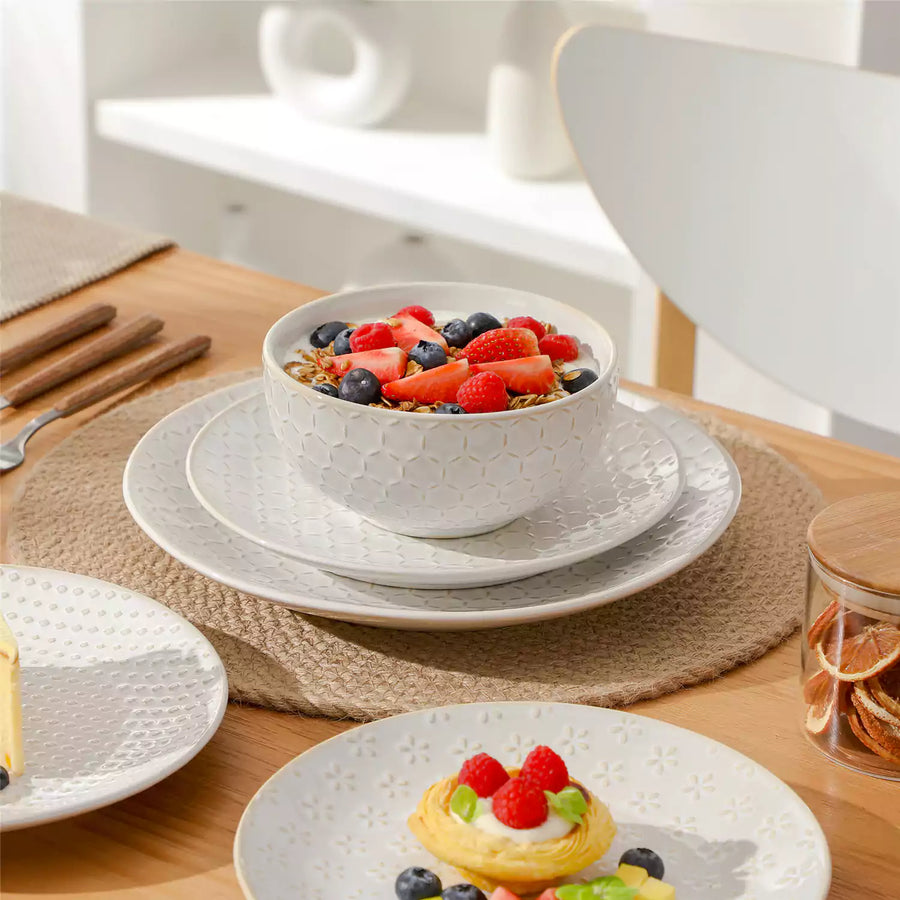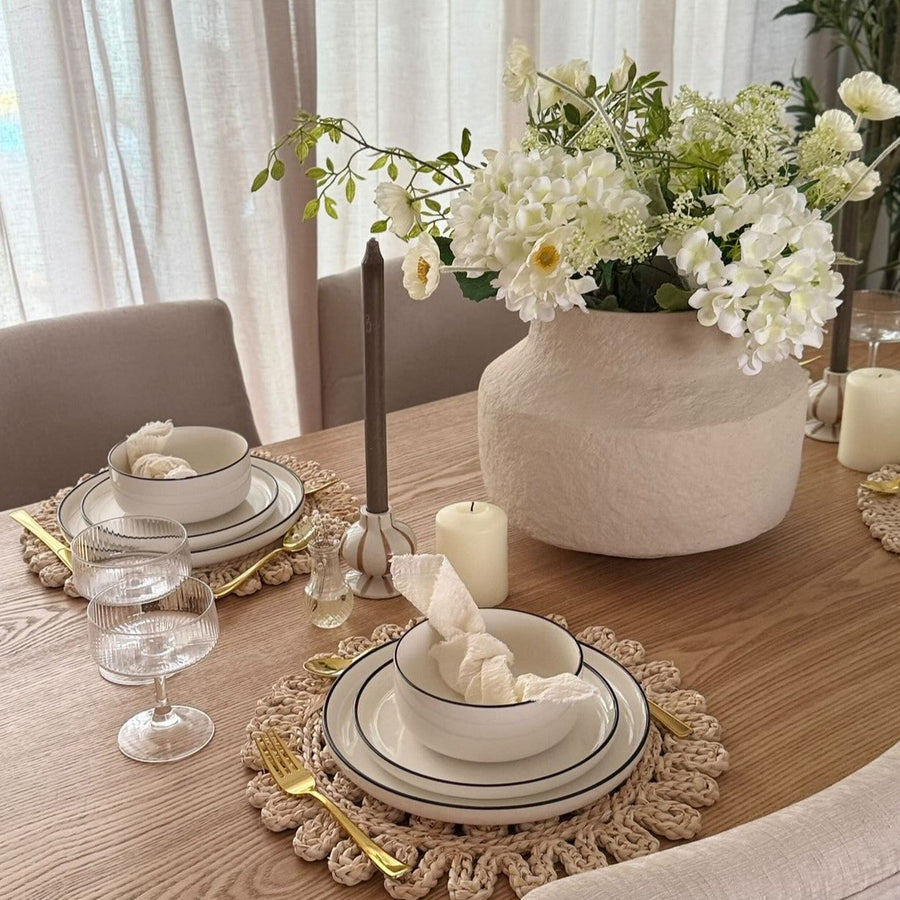


Porcelain dishes are a common household item, and people love them because of their fragile beauty, shiny surface, and strength. However, with time, even the most expensive porcelain dishes and white porcelain dinnerware sets start to wear out, particularly in the shape of gray or black cutlery stains. These scuffs may make the surface of your beautiful porcelain dinnerware dull and you may be wondering whether it can ever be new again.

The good news? These are marks that are normally superficial and completely removable. In this guide, we will reveal the secret of utensil marks on porcelain, the most effective tools to clean your dishes, and simple step-by-step instructions on how to remove them. You may have a complete set of porcelain tableware or only a couple of your favorite plates, but this blog will assist you in restoring and preserving their perfect finish.
Porcelain Dishes: The Mark Mystery Revealed
It is important to know what causes these stubborn gray streaks before getting into the removal techniques.
Porcelain dishes with utensil marks are not scratched porcelain. Rather, they are metal residues of stainless steel forks, knives, and spoons. Porcelain has a harder surface than most metal cutlery, and when you cut food or scrape your plate, tiny flakes of metal are rubbed off onto the shiny surface.
These stains are particularly evident on white porcelain dinnerware and may be in the form of streaks, scuffs or smudges. They are harmless but can take away the beauty of your dining presentation.
The following are some of the factors that predispose to utensil marks:
- Serving with cheap cutlery
- Rough scraping or cutting movements
- Very high-gloss glazedporcelain dishes
- Regular use without maintenance
The first step in reversing the damage is to understand the cause.

Essential Tools for Restoring Your Porcelain Plates
You do not have to use harsh chemicals or specialty products to get your porcelain dinnerware back to its pristine look. Actually, the best utensil mark removers are probably already in your kitchen or cleaning cupboard. The idea is to carefully remove those shallow scratches without ruining the fragile glaze that makes your porcelain plates look so shiny and classy.
The following are the essential tools and materials that every porcelain owner must have in their possession to perform regular restoration and maintenance:
Baking Soda
This pantry staple is a mild, non-scratchy abrasive- ideal to clean without scratching. Baking soda is very effective when it is mixed with water to form a paste and then applied to the utensil marks. It is perfect to use in routine cleaning and minor to moderate scuffing.
Bar Keepers Friend
This is a reliable cleaning powder or liquid that is popular with people who deal with ceramic, enamel and porcelain sets of tableware. Its active ingredients are formulated to dissolve mineral deposits and metal stains without damaging the surface glaze. Simply apply it with a soft cloth or sponge and rinse well after use.
Magic Erasers
These micro-abrasive pads are a dream come true to remove marks with the least amount of effort- no cleaning solution needed. Just wet the eraser and gently rub the spot. It is most appropriate with contemporary white porcelain dinnerware that has hard glazes. Handle with care, since repeated harsh rubbing can wear off the finish.
Microfiber Cloths or Non-Abrasive Sponges
These are your default applicators for any of the above cleaning agents. Do not use steel wool or coarse scrubbing pads, which will cause permanent scratches. Microfiber cloths, especially, are great at polishing porcelain to a streak-free shine once it has been cleaned.
Hydrogen Peroxide or Cream of Tartar (Optional Natural Alternatives)
When combined with a little water, cream of tartar forms a slightly acidic paste that may be used to dissolve more tenacious stains. Hydrogen peroxide, particularly in combination with baking soda, is an excellent alternative to bleach when it comes to removing deeper stains or discoloration. They are both mild alternatives in case you want to use natural cleaning products.
Soft Ways to Clean Porcelain Dinnerware
Are you ready to give your porcelain dishes a new life? To remove those ugly utensil marks, follow these easy, tried-and-true steps:
Method 1: Paste of Baking Soda
- Combine baking soda and a little water to make a paste.
- Put the paste on the utensil marks.
- Rub with a soft cloth or sponge in a circular motion.
- Wash and dry using a clean towel.
This is the best technique to use on light to moderate marks and is safe on most glazed finishes.
Method 2: Bar Keepers Friend Magic
- Moisten the porcelain plate.
- Sprinkle Bar Keepers Friend on a wet sponge or cloth.
- Gently rub on the marks.
- Wash and dry.
Bar Keepers Friend works especially well on tough stains and leaves a smooth shine.
Technique 3: Magic Eraser Touch-Up
- Wet a Magic Eraser.
- Rub lightly over the utensil marks.
- Clean and rinse the plate.
Apply light pressure so as not to take off too much glaze, particularly on older or vintage porcelain dinnerware.

How to Deal with Stubborn Stains on Your Porcelain Tableware Set
Although the most frequent visual defect is the utensil marks, your porcelain tableware set may also acquire other persistent stains with time. These are tea stains, grease deposits or acidic food stains.
These are specific deep cleaning strategies:
Tea or Coffee Stains
- Apply a baking soda and hydrogen peroxide paste.
- Rub on the stain and leave it to soak in 5-10 minutes and then scrub lightly.
Grease or Oil Residue
- First wash with hot water and dish soap.
- Then follow up with a baking soda scrub to remove any grease marks.
General Discoloration
- Soak inwarm water and a tablespoon of oxygen bleach (not chlorine bleach) for 15-30 minutes.
- Wash and dry.
Never use steel wool, abrasive brushes, or strong bleach on porcelain plates, as the glaze may be permanently damaged.
Prevention is the Key: How to Save Your White Porcelain Dinnerware
After cleaning your dishes, the next thing is to avoid future stains and keep them beautiful. By adopting a few conscious habits, you can reduce the harm and prolong the life of your white porcelain dinnerware.
Prevention Tips:
- Serve with quality flatware: Cheaper utensils are more likely to leave marks.
- Do not cut food on plates: Particularly tough or crusty foods such as steaks or toast.
- Wash fine porcelain by hand: Although marked dishwasher-safe, handwashing will minimize wear.
- Stack neatly: Put a soft cloth or paper towel between plates to prevent friction marks.
- Wash stains frequently: This will help avoid accumulation and will make cleaning in the future less difficult.
Caring about your porcelain does not imply being too careful; it simply implies respecting the material and handling it with care.
Beyond Marks: Keeping Your Porcelain Dishes Shiny
Your porcelain dinnerware is not just a plate to put food on, but it is a plate that makes your food taste better, it is a plate that makes your table setting look better and it is a plate that makes every occasion a little bit more refined. After the marks are removed, keeping that signature porcelain shine is all about regular maintenance and clever practices.
Tips on Daily Care:
- Clean in warm water using a mild detergent.
- Blot dry using a soft towel to prevent water marks.
- Keep in a cool, dry place--do not pile too high.
- To avoid cracking, avoid sudden temperature changes (e.g. fridge to microwave).
To give your porcelain plates a little shine, dry them and then polish with a soft microfiber cloth. It is a small measure that makes them look presentable even when used daily. A full set of porcelain tableware is a beautiful and useful investment in your kitchen. However, it takes only a bit of effort to keep it elegant, and it is worth it.
Conclusion
The marks left by utensils on your porcelain dishes can be a frustrating blemish, but it is not permanent. Your porcelain dinnerware can remain perfect with the proper tools, soft cleaning methods, and a little bit of regular care. Whether you are entertaining guests on special occasions or having solo dinners with your favorite white porcelain dinnerware, clean porcelain makes every meal special.
Do not allow gray streaks or stubborn smudges to deprive your tableware of its beauty. Wash them with pride, guard them with wisdom, and have your porcelain plates gleam with every meal you serve.