

Something about a French vintage table setting is undoubtedly magical. It is comfortable but elegant, romantic but not over the top, and cozy but still with a sense of art. French vintage dining is a celebration of texture, detail, and considered imperfection, unlike modern minimalist tables, which are all about restraint. It welcomes visitors to lounge, enjoy, and bond, transforming a simple meal into a special one.
Making a vintage French-style table is not about imitating one appearance or loading your table with antiques. Rather, it is about the selection of things that complement each other: stoneware dinnerware sets, soft linens, glassware, and thoughtful plating. This blog takes you through every step, turning the concept of French romance into a real, attainable table setting with the help of certain pairing methods and styling tricks.
The Romantic Beauty of French Vintage Dining
The French vintage dining is all about the balance between comfort and beauty. The design is inspired by country houses, ancient Parisian apartments, and family kitchens where people eat at their own pace and the tables are full of stories.
This style is characterized by several important features: romance, rustic appeal, elaborate detailing, and coziness. Romance is manifested in curved forms, lace-like textures, and gentle color schemes. Natural materials such as ceramic, linen, and wood are sources of rustic influences. Fine work, in embossed plate rims or etched glassware, is a visual interest. The coziness is achieved by the use of layers, dull colors, and rough finishes that are not artificial.
An old French table never looks artificial. Plates are not always perfectly matched, glazes can be slightly different, and linens are frequently gently wrinkled. It is this casual sophistication that makes the French style stand out from overly formal table settings. The idea is to make a table that is friendly but undoubtedly sophisticated.

Why Stoneware Dinnerware Sets Are Essential for the French Look
Dinnerware sets made of stoneware are the key to the creation of a true French vintage look. Unlike plain porcelain, which often feels glossy and uniform, stoneware offers depth, texture, and character. These are qualities that align perfectly with rustic European charm.
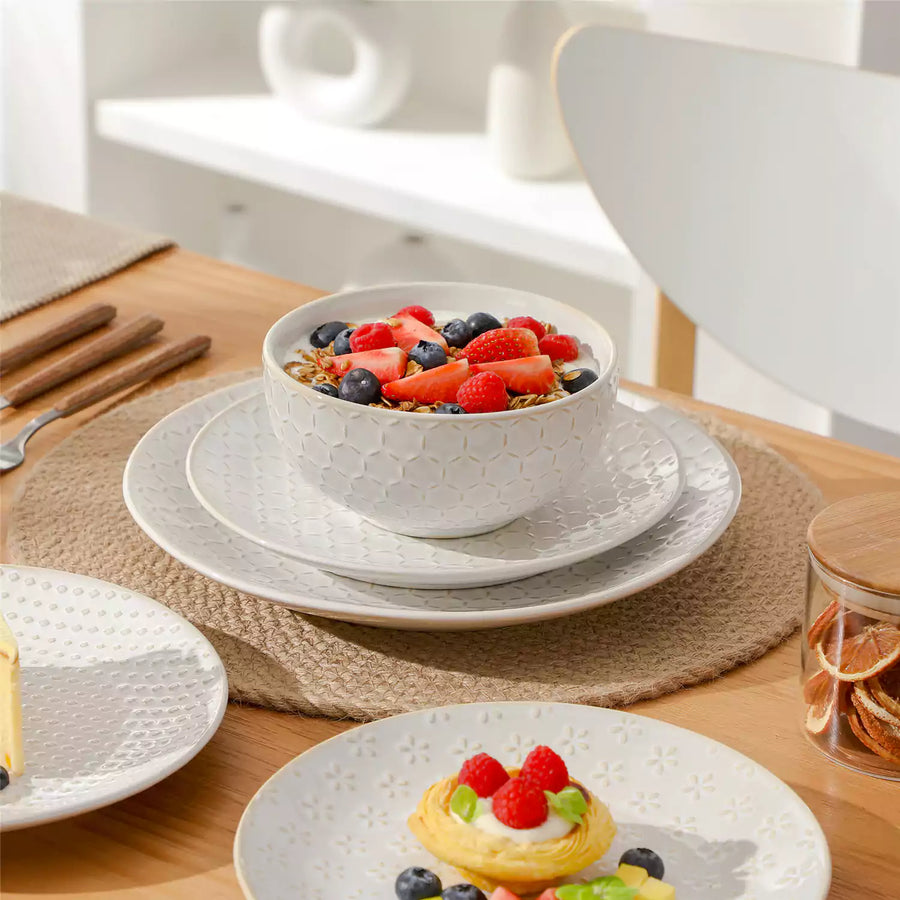
The slight differences in glaze, the weight of the objects, and the feel of the surface of stoneware evoke a sense of craftsmanship. Vintage stoneware dishes often feature embossed patterns, rounded edges, or hand-worked details, which adds to the appearance of the table without overpowering it. These attributes add warmth and artistry that porcelain cannot possibly imitate in this regard.
Stoneware is versatile, which is another benefit. Stoneware dinnerware sets are elegant and can be easily used in casual lunches and intimate dinner parties. They are durable and can be used in everyday life, and they are beautiful and can be used on special occasions. When styled correctly, stoneware dinnerware sets become the anchor around which the rest of the table is built.

Timeless Elegance with the Giselle Collection
The Giselle Collection is a perfect illustration of how contemporary craftsmanship can pay tribute to the old-fashioned aesthetics without being outdated. The lace-embossed rim, which is its hallmark, is inspired by the antique French ceramics, but has a clean and modern shape.
These fine embossed patterns resemble the appearance of antique plates that have been handed down over generations. Nevertheless, the reserved design makes the plates not too fancy. This is the key to the contemporary French-style tables, where the elegance is conveyed not by extravagance but by delicacy.
The set of dinner plates used is the Giselle Collection, which immediately creates a vintage base. The rounded edges are a perfect way to present food, and the textured rim provides depth even before the food is served. Since the design is neutral but unique, it matches perfectly with both traditional and modern table items, and you can layer without visual clutter.
Combining Linens and Glassware with Unique Dinnerware Sets
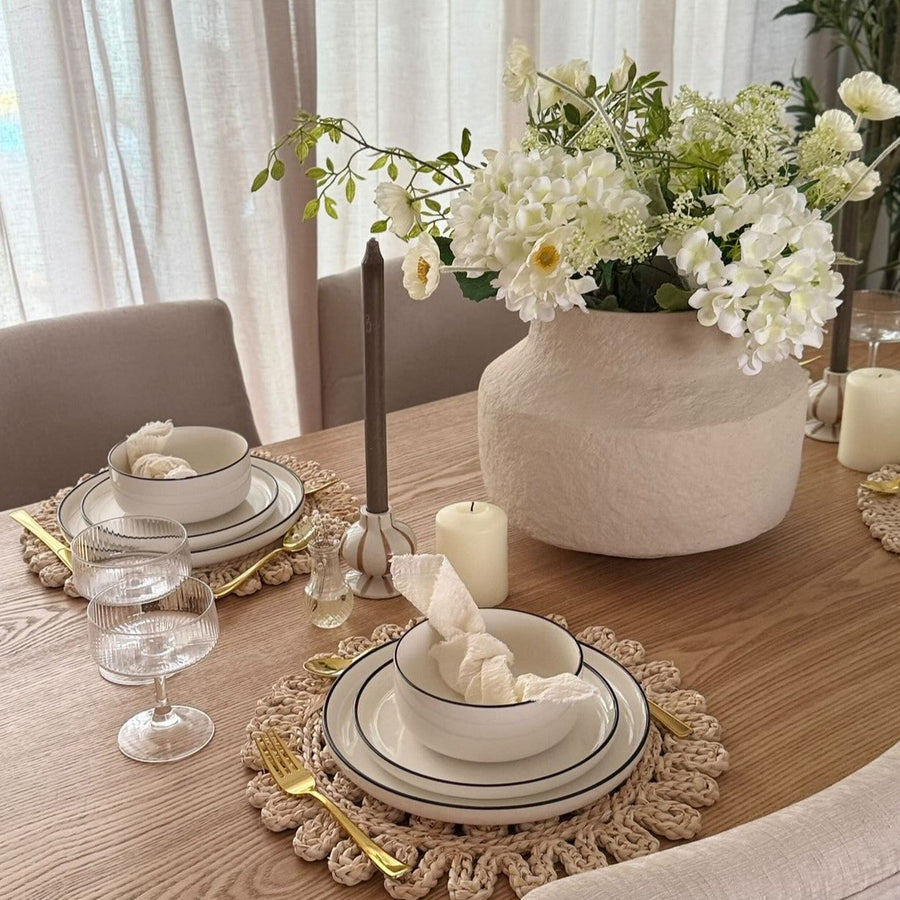
After choosing your dinnerware, linens and glassware are important supporting factors. French vintage style is more inclined to natural materials, linen and cotton in dull colors like ivory, warm beige, faded blue, or soft grey. Do not use too crisp tablecloths, but adopt a soft relaxed drape that is organic and welcoming.
Napkins may be folded or tied with twine in a loose manner. Napkins are placed on the plates instead of next to them, which gives the table a casual, European touch. Placing a table runner on top of a bare wooden table or neutral cloth adds texture without overwhelming your own unique dinnerware sets.
Glassware must be complementary, not competitive. Use etched or slightly ribbed glasses that reflect the fineness of stoneware. Old-fashioned wine glasses, whose stems are a little thicker or have slight flaws, add authenticity. Combining styles of glasses, such as pairing water goblets with plain wine glasses, is not only permissible but even encouraged in French-style interiors.
Plating Techniques to Showcase Your Vintage Dinner Plates Set
Plating is where your table really comes to life. French cuisine is concerned with presentation, although not in a very exact manner. The idea is to allow ingredients to shine naturally without interfering with the artistry of your dinner plates set.
Begin with the acceptance of negative space. Do not overload the plate; it is better to leave the embossed rim visible to add to the vintage impression. Central plating is a great technique to use with stoneware, as it focuses the attention inward and frames the dish beautifully.
Use height sparingly. Layered ingredients or slightly piled up elements provide depth without interfering with the casual look. Select garnishes that are natural, such as fresh herbs, edible flowers, or a drizzle of sauce, instead of elaborate decorative features.
Color contrast is essential. Foods with earth-tones are well matched with old stoneware dishes, and colorful vegetables or sauces are a visual delight. Always think about the interaction of the glaze and texture of your plates with the food. The stoneware must add to the dish rather than to distract it.
Conclusion
The process of designing a vintage French-style table setting is all about telling stories. Each detail, such as the feel of your stoneware dinnerware sets or the manner in which linen napkins are gently folded, adds to a sense of intimacy, consideration, and gracefully unobtrusive. This style makes you take your time, enjoy craftsmanship, and see beauty in small details instead of perfection.
When you select old stoneware dishes with glazes that are tactile and embossed rims, you add depth and warmth to your table that plain porcelain cannot provide. Combining these items with natural linens, character glassware, and purposeful plating will make your dining table capture the romance and rustic nature of the French dining culture. Lines such as Giselle show how lace-inspired detailing can be both classic and elegant while remaining current and relevant in contemporary homes.
Most importantly, a French-inspired table is meant to be lived in. It encourages dialogue, communal meals, and protracted stays even after the dishes are cleared. When comfort is combined with elegance, your table is not just a place to eat, but a place where ordinary meals are made to seem special, and special occasions made to seem natural.