

The right plate should give a cheesecake slice enough room without making the serving look sparse. A plate around 7 to 8.5 inches works for most individual slices. Choose a larger plate when adding fruit, sauce, ice cream, or other garnishes.
Color and design matter too. A simple plate keeps an elaborate cheesecake from looking crowded, while a plain slice can benefit from a colored rim or subtle pattern. The best choice depends on the size, toppings, and way you plan to serve the cheesecake.

Quick Cheesecake and Plate Pairing Guide
| Cheesecake Style | Suggested Porcelain Plate | Why It Works |
| Plain or New York-style | 7–8.5-inch plate with a clear center | Leaves enough space without making a single slice look small |
| Berry-topped | White or cream plate | Keeps red, blue, and purple fruit visually distinct |
| Chocolate or marble | White, ivory, or another light neutral | Provides contrast for dark cake, chocolate, and crumbs |
| Japanese or no-bake | Simple round plate with a subtle rim | Supports a light, minimal presentation |
| Cheesecake with sauce or ice cream | 8.5–9-inch flat or shallow-rimmed plate | Provides room for additional components and helps contain sauce |
These are practical ranges rather than fixed rules. The width of the slice and the usable flat area of the plate are more important than diameter alone.
What Size Plate Should You Use for Cheesecake?
A 7- to 8.5-inch dessert plate is the most versatile choice for a standard cheesecake slice. It normally provides room for a dessert fork and a small garnish without leaving excessive empty space.
Smaller plates around 6 to 7 inches can work for mini cheesecakes or narrow slices served without sauce. Once you add berries, whipped cream, ice cream, or a decorative sauce, an 8.5- to 9-inch plate gives you more control over the arrangement.
Check the usable center before choosing. A plate may measure 8.5 inches across but offer much less space when it has a wide rim. The flat center should hold the entire slice, including the crust, without pushing it against the edge.
A whole cheesecake requires a separate cake stand or serving platter. Choose a surface at least 1 inch wider than the cake so there is room to cut and lift each slice.
Match the Plate to the Cheesecake and Toppings
Color contrast helps the cheesecake remain the visual focus. The goal is not to match every color exactly. Instead, choose a background that keeps the cake, crust, and toppings easy to distinguish.
Plain and New York-Style Cheesecake
A plain cheesecake has a pale filling and a golden or brown crust. A muted blue, soft gray, or lightly patterned rim can add contrast without competing with the slice. White and ivory also work when the crust or topping provides enough definition.
If the cheesecake has no topping, a small amount of berry sauce, citrus zest, or fresh fruit can introduce color. Leave part of the plate open rather than surrounding the slice with decorations.

Berry-Topped Cheesecake
White and cream porcelain plates give strawberries, raspberries, blueberries, and fruit sauces a clean background. A subtle pattern around the rim can frame the dessert, but a busy design beneath the slice may make the presentation look crowded.
Avoid matching a bright berry topping with an equally strong plate color. The fruit should remain the most noticeable element.
Chocolate and Marble Cheesecake
Dark chocolate cheesecake usually looks clearer on white, ivory, pale gray, or another light neutral. The same approach works for chocolate-and-vanilla marble cheesecake because the lighter background preserves the definition of the swirl.
If the plate already has a marble pattern, keep additional garnishes simple. A few crumbs, a small amount of sauce, or one piece of fruit is usually enough.
Japanese and No-Bake Cheesecake
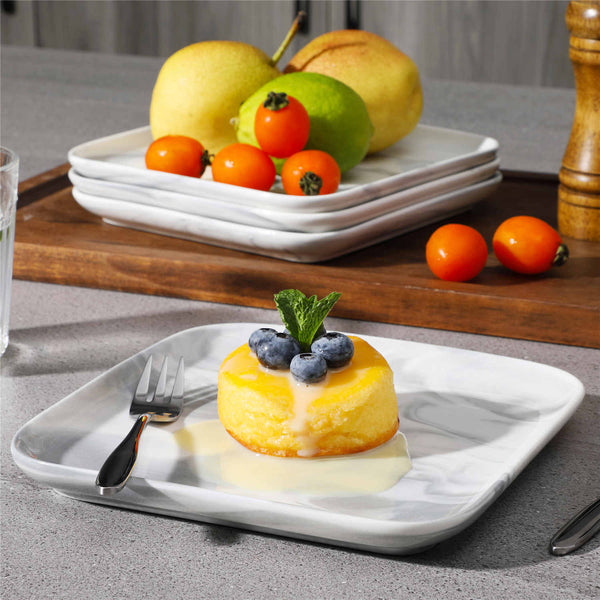
Japanese soufflé cheesecake has a light, airy appearance created in part by whipped egg whites. No-bake cheesecake can range from airy to creamy and dense. Neither style needs an elaborate plate.
A simple round plate with a clean center keeps the presentation light. Powdered sugar, citrus zest, or a few berries can add contrast without hiding the shape and texture of the slice.
Choose the Right Shape, Rim, and Surface
The structure of a porcelain plate affects both presentation and ease of serving.
- A flat plate is the most flexible option for a clean slice with little or no sauce.
- A shallow-rimmed plate helps contain fruit coulis, caramel, or melting ice cream.
- A wide-rimmed plate creates a visual frame and provides space for restrained decoration.
- A square plate gives the serving a more angular, modern composition. Position the slice in relation to one corner rather than placing every element in the center.
- An irregular plate can add visual interest, but it works best when the cheesecake and garnishes remain simple.
A smooth center is generally easier to use than a deeply textured surface. It allows the slice to sit evenly and makes sauce, crumbs, and fruit easier to arrange and clean away.
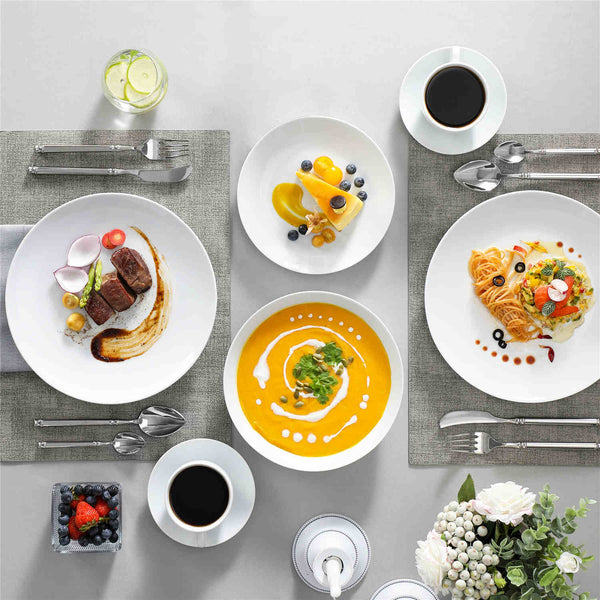
A Simple Formula for Plating Cheesecake
You do not need restaurant equipment to make a cheesecake slice look considered. Use this basic sequence:
- Place the slice slightly away from the exact center of the plate.
- Add sauce beside the cheesecake instead of covering the crust, especially when you want the crust to remain crisp.
- Choose one or two supporting elements, such as fresh berries, chopped nuts, citrus zest, or cookie crumbs.
- Leave open space around the main components. Filling every section of the plate can make a single slice look less defined.
- Wipe the rim before serving to remove crumbs, fingerprints, or stray drops of sauce.
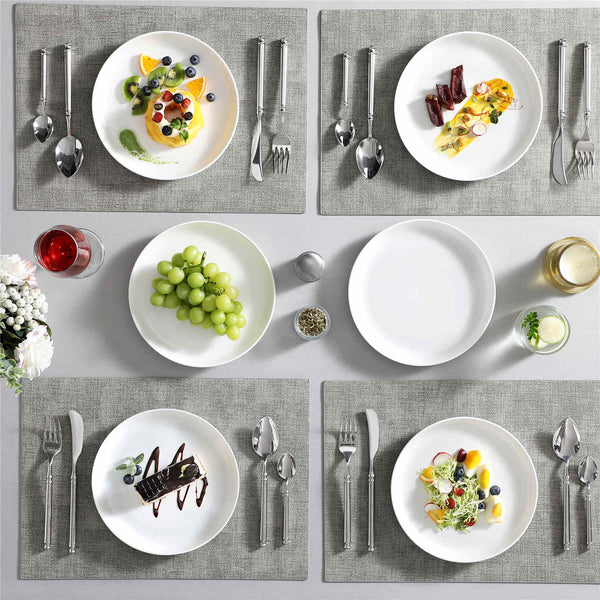
The garnish should also make sense with the flavor. Fresh berries suit vanilla or lemon cheesecake, while toasted nuts can support caramel or chocolate. Decorative elements should be edible and used in manageable portions.
Check Practical Details Before Choosing a Plate
Before buying or using a porcelain plate for cheesecake, consider how it will fit into everyday serving and cleaning.
Make sure the flat center is large enough for the slices you normally serve. If you frequently add sauces or ice cream, a slightly raised edge is more useful than a completely flat rim.
Care instructions can vary by design. Metallic gold or silver decoration should not be assumed to be microwave-safe, and dishwasher suitability should always be checked against the individual product description. Use non-abrasive cleaning materials to protect decorative finishes.
Find the Right Porcelain Plate for Your Next Cheesecake
Once you know how much usable space and what rim shape you need, compare porcelain dessert plates by size, shape, finish, and care instructions. Choose a versatile design that suits the way you normally serve cheesecake and fits naturally with the rest of your table setting.
FAQs About Serving Cheesecake on Porcelain Plates
Q1. Can You Use a Salad Plate for Cheesecake?
Yes. A salad plate can hold cheesecake when its usable center comfortably fits the slice and any garnish. Plates around 7 to 9 inches are often suitable. Avoid deep salad plates when you need to cut the dessert easily or arrange sauce with precision.
Q2. Should Cheesecake Be Served Cold or at Room Temperature?
Baked cheesecake is usually served chilled or allowed to sit briefly at room temperature for a softer texture. No-bake cheesecake generally needs to remain chilled so it holds its shape. Follow the recipe’s serving instructions because the ideal temperature depends on the filling and structure.
Q3. How Do You Cut Clean Cheesecake Slices for Plating?
Chill the cheesecake fully before cutting. Use a thin, sharp knife warmed in hot water, then dry the blade before making each cut. Wipe and rewarm the knife between slices. A narrow cake server helps lift each piece without damaging the crust or pointed end.
Q4. Can You Chill Porcelain Plates Before Serving Cheesecake?
Yes, provided the plate’s care instructions allow refrigeration. A briefly chilled plate can help keep no-bake cheesecake or ice cream firm during serving. Avoid sudden temperature changes, such as moving porcelain directly from a freezer to a hot surface, because thermal shock may damage it.
Q5. What Utensils Should You Use to Serve Cheesecake?
Use a cake server to transfer each slice and a dessert or cake fork for eating. A dessert spoon can be added when the plate includes soft cream, loose fruit, or sauce. Choose utensils that fit comfortably inside the plate’s usable center without crowding the dessert.