

Why Porcelain Dinnerware Still Wins: Beauty, Durability, and Modern Innovation
Porcelain has been valued for centuries because it's both beautiful and durable. You'll find it on dining tables as fine china and throughout homes as decorative pieces. While porcelain's core appeal hasn't changed, how we use it has evolved. Today, this material isn't just for dishes—it's found in everything from jewelry to fashion accessories. In this guide, we'll focus on porcelain dinnerware and explore how traditional craftsmanship meets modern innovation, why it's still a top choice for tables worldwide, and what makes quality porcelain worth the investment.
How Porcelain Dinnerware Is Made
Porcelain originated in ancient China during the Shang Dynasty (1600–1046 BCE). Chinese craftsmen refined the process over centuries, developing true glazed porcelain by the Eastern Han dynasty (25–220 CE).
In England, Stoke-on-Trent became famous for bone china production starting about 220 years ago. Porcelain is made from three materials: kaolin (white clay), feldspar, and quartz. These ingredients are mixed and fired in kilns at extremely high temperatures—up to 1,400 degrees Celsius (2,552 degrees Fahrenheit).
This high-heat process creates porcelain's key characteristics: it's hard, white, and completely non-porous. These qualities make it resistant to stains and bacteria, which is why porcelain dinnerware has remained popular for so long.
Types of Porcelain Dinnerware
Hard Paste Porcelain
This is the original Chinese porcelain that spread to Japan and Europe. Early European makers like Meissen used kaolin and alabaster fired at high temperatures. Later, they switched to feldspar and quartz, which worked at lower temperatures. Today's hard paste porcelain uses kaolin, feldspar, and quartz—the same formula used throughout Europe.
Soft Paste Porcelain
Europeans created soft paste porcelain when they tried copying Chinese porcelain. They mixed clay with frit, soapstone, and lime. These early versions weren't as hard as real porcelain. Adding kaolin, quartz, and feldspar made it better. Soft paste fires at lower temperatures than hard paste and works well for everyday use.
Bone China
English makers invented bone china in the 1700s to compete with Chinese imports. It contains bone ash, kaolin, and china stone (or feldspar in modern versions outside the UK). Bone china looks delicate but is actually quite strong.
Why Choose Porcelain Dinnerware
Porcelain dinnerware works for both everyday meals and special occasions. Its smooth surface, variety of designs, and practical features make it a popular choice for homes and restaurants.
1. Won't Stain or Hold Odors
Porcelain has no pores, so grease and food odors can't sink in. Unlike clay or melamine dishes that absorb stains over time, porcelain wipes clean easily. The non-porous surface repels oils and liquids, making cleanup simple and keeping your dishes looking new.
2. Easy to Keep Clean
Because porcelain doesn't have pores, it won't harbor bacteria, grease, or odors. This makes it naturally hygienic. Some manufacturers add antibacterial glazes for extra protection, but the material itself stays cleaner than porous alternatives.
3. Keeps Food Warm
Quality porcelain holds heat well, so your food stays warm throughout the meal. This heat retention means dishes stay at the right temperature from the kitchen to the table, keeping food enjoyable longer.
4. Handles Temperature Changes
Porcelain can go from freezer to microwave without cracking. It handles sudden temperature changes better than stoneware or melamine, making it more versatile for food storage and reheating. This durability also means less chipping during normal use.
5. Lasts for Years
Porcelain is remarkably strong and resists breaking with normal use. This durability makes it suitable for busy restaurants, large events, and daily home use. With proper care, porcelain dinnerware can last for generations, often becoming family heirlooms.
Porcelain Dinnerware vs. Alternatives: Which Should You Choose?
Choosing dinnerware means weighing durability, price, and how you'll actually use it. Here's how porcelain compares to common alternatives so you can make the right choice for your table.
Quick Comparison Table
| Material | Durability | Weight | Best For |
| Porcelain | Excellent | Light to Medium | Everyday use, formal dining, restaurants |
| Bone China | Excellent | Very Light | Special occasions, elegant entertaining |
| Stoneware | Very Good | Heavy | Casual dining, rustic tables |
| Ceramic/Earthenware | Good | Medium-Heavy | Budget-friendly everyday use |
| Melamine | Fair | Light | Outdoor dining, kids, camping |
| Glass | Fair | Medium | Modern aesthetics, see-through serving |
Breaking Down Each Option
Stoneware
Stoneware is fired at lower temperatures than porcelain, making it thicker and heavier. It's durable and often has a rustic, handcrafted look. However, it's more porous than porcelain, which means it can stain over time and may chip more easily. Great for farmhouse-style tables and casual dining, but not ideal if you want lightweight dishes.
Ceramic (Earthenware)
The most affordable option, earthenware is porous and less durable than porcelain. It works fine for everyday meals but tends to chip, crack, and absorb stains more readily. If you're on a tight budget or need temporary dinnerware, ceramic is functional—just don't expect it to last decades.
Melamine
Lightweight plastic dinnerware that's shatterproof and budget-friendly. Perfect for outdoor dining, kids' plates, or camping because it won't break if dropped. However, melamine can't go in the microwave, scratches easily, and isn't as elegant as porcelain. Use it where practicality trumps appearance.
Glass
Glass dinnerware offers a clean, modern look and doesn't absorb odors or stains. It's microwave and dishwasher safe. The downside? Glass breaks more easily than porcelain and can chip around the edges. Best for minimalist table settings or serving pieces rather than everyday dinner plates.
When to Choose Porcelain
Porcelain makes sense when you want dinnerware that:
- Handles both casual dinners and hosting guests
- Lasts 20+ years without staining or chipping
- Goes safely from freezer to microwave to dishwasher
- Looks refined without being too delicate
- Works in restaurants or homes with heavy daily use
When to Choose Alternatives
- Choose stoneware if you prefer a rustic aesthetic and don't mind heavier dishes.
- Choose ceramic if budget is your main concern and you're okay replacing pieces every few years.
- Choose melamine for outdoor entertaining, children's dinnerware, or travel.
- Choose glass for a modern minimalist look or specialized serving pieces.
- Choose bone china if you want the most elegant option for formal occasions and are willing to hand-wash.
Porcelain hits the sweet spot between durability, elegance, and versatility. It costs more upfront than ceramic or melamine but lasts significantly longer, making it more economical over time. Unless you have specific needs (unbreakable dishes for kids, rustic farmhouse style, ultra-formal entertaining), porcelain is the most practical all-around choice for most homes and restaurants.
Eco-Friendly Changes in Porcelain Manufacturing
As environmental concerns grow, porcelain manufacturers are adopting more sustainable practices. New eco-friendly glazes and clay formulas reduce environmental impact and require less energy during firing.
Energy efficiency has also improved significantly. Modern kilns use less fuel, and some manufacturers now use renewable energy sources like solar or biomass power. These changes help reduce the carbon footprint of porcelain production.
What Makes MALACASA Porcelain Dinnerware Different
We started MALACASA to make porcelain and ceramic dinnerware that people actually want to use. Our pieces are designed for homes and restaurants, combining careful craftsmanship with styles that fit how people eat today.
What You'll Find:
- Coordinated Pieces: Our bowls, plates, and mugs are made to go together, which simplifies table setting for any meal.
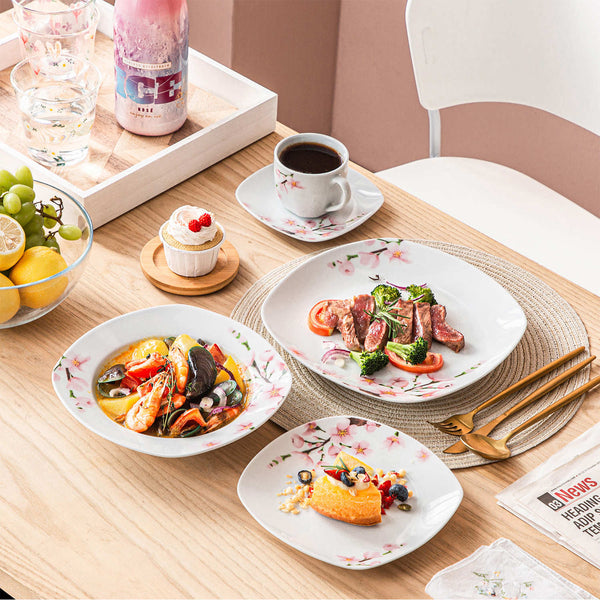
- Multiple Options: Whether you prefer classic white or something with pattern, like our watercolor florals, we have designs for casual and formal dining.
- Solid Quality: We choose durable porcelain and ceramic that can handle regular meals and dishwashing.
- Real-World Use: Everything we make is designed for actual kitchens and actual dinners, not just for show.
We know dinnerware is something you use every day, not just on special occasions. That's why we put effort into making pieces that are functional and attractive enough to use regularly. Whether you're running a restaurant or just trying to make weeknight dinners feel a bit nicer, we hope our dinnerware serves you well.
Finding the Right Porcelain Dinnerware for Your Home
The porcelain industry keeps improving, mixing traditional techniques with new innovations and eco-friendly approaches. More people are choosing quality dinnerware that lasts for years, not just months. Whether it's for everyday dinners or hosting friends, porcelain holds up. Want to see what's out there? Browse MALACASA's collections and find something that works for your table.
Porcelain Dinnerware FAQs
Q1: Is porcelain dinnerware dishwasher safe?
Yes, most porcelain dinnerware is dishwasher safe. The high firing temperature makes it resistant to heat and detergents. However, hand-wash pieces with gold or silver trim, as dishwasher detergent damages metallic decorations. For everyday porcelain without metallic accents, the dishwasher is perfectly safe.
Q2: What's the difference between porcelain and ceramic?
Porcelain is a type of ceramic, but it's fired at much higher temperatures (1,200-1,400°C vs. 900-1,200°C for regular ceramic). This creates key differences:
- Porcelain is harder, denser, non-porous, and translucent when held to light. It has a refined white appearance and resists staining and chipping better.
- Ceramic (earthenware and stoneware) is more porous, heavier, opaque, and generally less expensive. It's perfectly fine for everyday use but may stain over time and chip more easily.
Think of it this way: all porcelain is ceramic, but not all ceramic is porcelain. Porcelain is the premium option with superior durability and elegance.
Q3: Can porcelain go in the microwave?
Yes, porcelain is microwave safe. It handles heat well and contains no metals. The one exception: avoid microwaving porcelain with gold, silver, or platinum trim—the metal can spark. For standard white or painted porcelain, microwave confidently.
Q4: Is bone china better than porcelain?
Not necessarily—they excel in different ways. Bone china contains bone ash (25-50%), making it lighter, more translucent, and surprisingly strong despite its delicate appearance. It's ideal for formal dining and special occasions. Traditional porcelain (hard paste) is slightly heavier, extremely durable, and better for everyday use and restaurants.
Key differences:
- Bone china: Lighter, whiter, more elegant appearance, typically more expensive
- Porcelain: More versatile, handles temperature changes better, often more affordable
Choose bone china if you want refined elegance for entertaining. Choose porcelain if you need reliable durability for daily meals. Both are excellent quality—it's about your specific needs.
Q5: How long does porcelain dinnerware last?
With proper care, porcelain dinnerware can last 20-50+ years, often becoming family heirlooms. High-quality porcelain is remarkably durable—many antique pieces are over 100 years old and still functional. Longevity depends on:
- Quality: Well-made porcelain with thick walls lasts decades
- Use: Restaurant-quality porcelain withstands heavy daily use for 10-15 years
- Care: Avoiding extreme impacts and following care instructions extends lifespan significantly
Unlike cheaper alternatives that may chip, crack, or stain within 2-5 years, porcelain maintains its appearance and function for generations when treated reasonably well. This durability makes it cost-effective despite higher initial prices.


Leave a comment