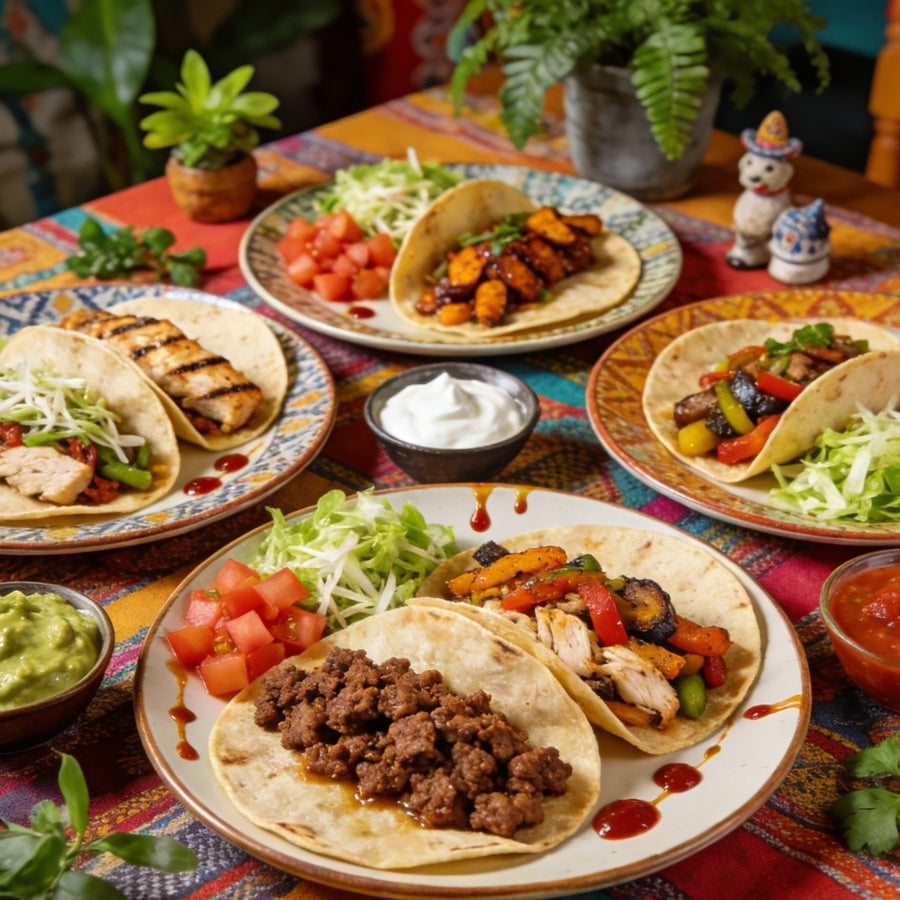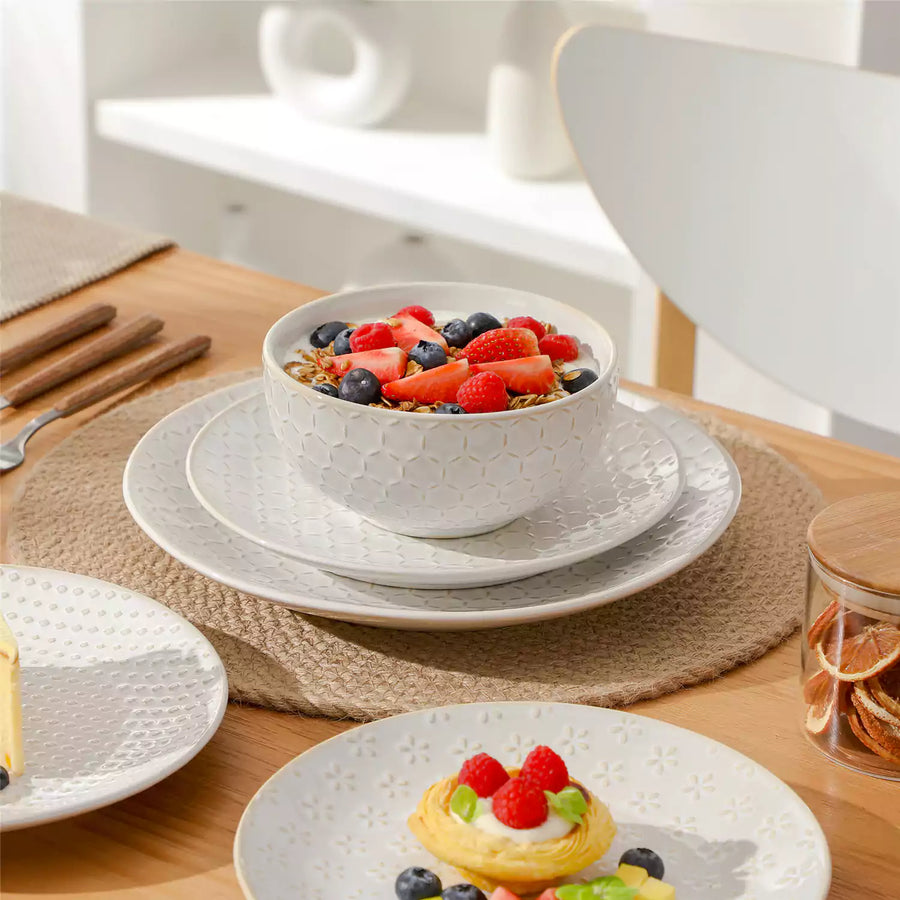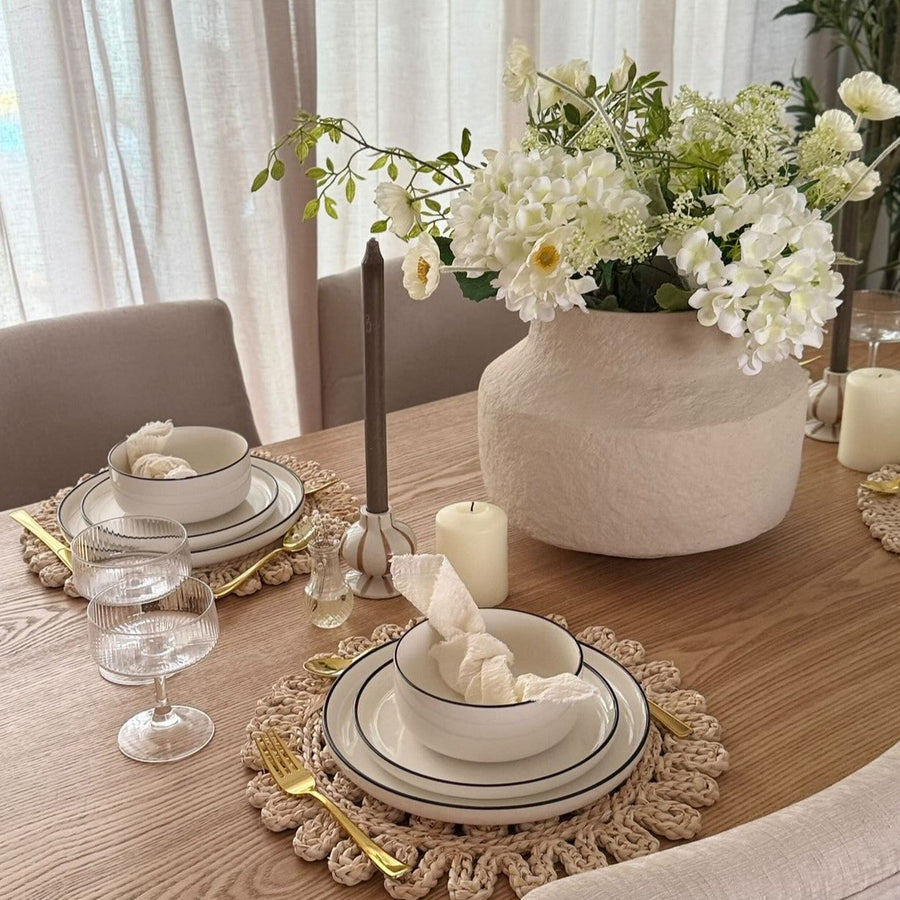


Your dinnerware choice affects every meal you eat at home—from Tuesday night tacos to holiday dinners. The right plates make food look better, cleanup easier, and honestly, meals more enjoyable.
So why porcelain? With ceramic, stoneware, melamine, and bamboo all competing for your attention, it's easy to feel stuck. This guide gives you seven solid reasons porcelain wins, plus the honest downsides you should know. By the end, you'll know if it's right for your table.

Reason 1: It's Actually Cleaner And Safer for Your Food
Porcelain has a non-porous surface—no tiny holes where bacteria can hide and multiply. Porous plates absorb sauce and oils into microscopic cracks, and even after washing, bacteria stick around. Not great.
Porcelain's glazed surface acts like a protective barrier. Nothing gets in, nothing gets absorbed, and bacteria have nowhere to settle. This is why professional kitchens and hospitals use porcelain—it meets strict hygiene standards.
Another bonus: no flavor transfer. Your morning coffee tastes like coffee, not yesterday's chili.
Reason 2: Cleanup Takes Seconds, Not Hours
How much time do you want to spend scrubbing dishes? If your answer is "as little as possible," porcelain is your friend.
That smooth, glazed surface makes cleaning incredibly easy. Coffee stains, tomato sauce, curry, beet juice—all the usual suspects that permanently mark other dishes wipe right off porcelain. Quality porcelain is dishwasher safe, so just load it up and you're done.
Take the MALACASA Luna Marble Grey 24 Piece Dinnerware Set, for example—those stunning marble-patterned plates with their sleek lipped design go straight into the dishwasher after dinner, and they come out looking as gorgeous as day one. This complete service for 8 handles everything from weeknight dinners to hosting friends, and the durable porcelain stays scratch-resistant meal after meal.
Compare that to stoneware that absorbs oils, melamine that stains easily, or wood that requires hand washing. Porcelain? Dishwasher, done.
Here's how different materials stack up:
| Material | Stain Resistance | Dishwasher Safe | Special Care Needed |
| Porcelain | High | Yes | Minimal |
| Stoneware | Medium | Yes | Moderate |
| Melamine | Low | Yes | High (stains easily) |
| Wood/Bamboo | Low | No | High |
Reason 3: Temperature Control That Actually Works
Porcelain has excellent thermal properties. When you put hot food on a porcelain plate, the plate absorbs some of that heat and releases it slowly back to the food. This means your dinner stays warm for longer instead of cooling down the second it hits the plate.
The same principle works in reverse. Chill porcelain plates in the fridge before serving a cold appetizer or salad, and they'll help keep everything crisp and cool.
Many porcelain pieces are also oven-safe, which means you can bake in them and bring them straight to the table. Lasagna, casseroles, baked pasta—cook it, serve it, done. No transferring between dishes.
Want restaurant-quality presentation? Warm your porcelain plates in a 150-200°F oven for about 10 minutes before plating hot food. It makes a noticeable difference.

Reason 4: Porcelain Lasts Way Longer Than You Think
Porcelain looks delicate and fancy, so it must be fragile, right? Not really.
Quality porcelain is fired at extremely high temperatures (around 2,300°F), which creates a dense, hard material. It's genuinely chip-resistant—not chip-proof, but definitely tougher than it looks. With normal care, a good porcelain set can last 10 to 20 years or even longer.
This durability makes porcelain practical for everyday use, not just special occasions. You don't have to baby it or keep it locked away for holidays. Use it for regular Tuesday dinners, and it'll hold up just fine.
The environmental angle matters here too. When your dishes last for decades instead of a few years, you're creating less waste and buying replacements less often. That's better for your wallet and the planet.
The edges and rims are the most vulnerable spots. That's where chips are most likely to happen, usually from banging against the sink or other dishes.
Durability ranking from toughest to most delicate:
1. Commercial-grade porcelain (what hotels and restaurants use)
2. High-quality consumer porcelain
3. Standard porcelain
4. Bone china (beautiful but more fragile)
5. Stoneware (sturdy but can chip)
Reason 5: Classic Looks That Never Get Old
Classic white porcelain is like the little black dress of dinnerware. It works with everything—casual weeknight meals, fancy dinner parties, holiday celebrations, Sunday brunch. The clean, simple background makes your food the star of the show. Food photographers love white plates for exactly this reason.
But here's the thing: you're not limited to plain white. Porcelain comes in every color, pattern, and style imaginable. The MALACASA Elvira 36 Piece Dinnerware Set features a unique leaf-shaped design with subtle geometric accents in ivory white that adds visual interest without overwhelming your table. Or if you prefer something bolder, the Flora collection offers wave-edge plates with geometric patterns in marble-inspired pink, blue, and grey—modern designs that still feel timeless.
That translucent quality when you hold fine porcelain up to the light? That's a hallmark of quality that bone china and porcelain share. It adds a subtle sophistication that's hard to replicate with other materials.
The versatility means one set can do double duty. You don't need "everyday dishes" and "fancy dishes." Good porcelain bridges that gap beautifully. Plus, it's mix-and-match friendly if you want to layer different pieces or add accent colors.
Styling ideas to keep things interesting:
- Pair white porcelain with colorful napkins, placemats, or table runners to add personality
- Layer different shades of white or cream porcelain pieces for a sophisticated monochromatic look
- Let your food be the color—vibrant salads, colorful curries, and bright vegetables really pop against white plates
Reason 6: Cheaper in the Long Run
Okay, let's address the elephant in the room: porcelain isn't cheap. At least, quality porcelain isn't. But here's where you need to think long-term.
A budget ceramic set might cost you $50, but if you're replacing it every three years because of chips, stains, and general wear, you're spending about $16.67 per year. A quality porcelain set might run $150 upfront, but if it lasts 15 years (which it absolutely can), that's $10 per year or less. The math makes sense.
Plus, good porcelain holds its value. Some pieces even appreciate over time, especially from well-known manufacturers. You can pass down porcelain to the next generation—it becomes an heirloom rather than something you toss when you move.
If you're just starting out, the MALACASA Flora 30 Piece Dinnerware Set gives you everything—dinner plates, dessert plates, soup plates, cups, and saucers for six people. It's a complete service that covers daily meals and entertaining, so you're not buying multiple incomplete sets or scrambling to find matching pieces later.
Budget options do exist, and they're not all bad. Just know that lower-priced porcelain might sacrifice some of the benefits we've talked about—thinner material, less perfect glazing, fewer pieces in the set.
Reason 7: Better for You and the Planet
Porcelain is made from natural materials—primarily clay and minerals. No plastics, no BPA, no phthalates, no weird chemicals that might leach into your food. Porcelain is chemically inert, meaning it doesn't react with food or release substances when heated. It's safe for babies, kids, adults, and elderly family members.
The longevity we mentioned earlier? That's an environmental win too. When your dishes last for decades instead of ending up in a landfill after a few years, you're reducing waste. Manufacturing fewer replacement products means less energy consumption and fewer resources used over time.
At the end of its life, porcelain can be recycled at specialized facilities, though admittedly, these aren't available everywhere. Still, the fact that a porcelain set lasts so long means you're not cycling through dishes the way you might with cheaper alternatives.

Choose Porcelain Dinnerware: 7 Reasons It's Worth Every Penny
Porcelain gives you that restaurant-quality vibe without the fuss, and it holds up to real life beautifully. Whether it's taco Tuesday or your anniversary dinner, one great set does it all. Check out our porcelain dinnerware to find what fits your style.