

Porcelain and ceramic snack plates can both work well for fruit, desserts, toast, leftovers, and other small meals. The better choice depends on more than appearance. Weight, surface finish, plate shape, cleaning needs, and microwave compatibility all affect everyday use. Porcelain is usually lighter, smoother, and less absorbent, while stoneware often feels thicker and more substantial. Understanding these differences makes it easier to choose a plate that suits both your snacks and your routine.
Is Porcelain Different From Ceramic?
Porcelain belongs to the ceramic family. Porcelain, stoneware, and earthenware are all made from clay-based materials hardened in a kiln. Their practical differences come from the raw materials used and how the pieces are fired.
Porcelain is generally made with refined materials, often including kaolin, and fired until the body becomes dense and highly vitrified. This process gives porcelain its smooth surface, low water absorption, and relatively thin yet strong construction. Stoneware usually feels thicker and heavier, while earthenware is more porous and often relies on a glaze for moisture resistance.
For snack plates, these differences affect weight, durability, stain resistance, and everyday handling. Porcelain is often preferred when a lighter, smoother, and more refined plate is desired.

Porcelain, Stoneware, and Earthenware at a Glance
| Feature | Porcelain | Stoneware | Earthenware |
|---|---|---|---|
| Clay body | Refined clay, often containing kaolin | Stoneware clay or a blended clay body | Lower-firing clay body |
| Firing | Usually fired at high temperatures | Usually fired at medium to high temperatures | Usually fired at lower temperatures |
| Porosity | Very low after vitrification | Low when properly matured | More porous and usually dependent on glaze |
| Typical weight | Often thinner and lighter | Usually thicker and heavier | Commonly thick and moderately heavy |
| Surface | Smooth and often refined | Glossy, matte, textured, or rustic | Frequently glazed and decorative |
| Everyday durability | Good resistance to stains and utensil marks | Durable, although performance varies by body and glaze | More vulnerable to chipping if handled roughly |
| Price | Often moderately priced or premium | Available across a wide price range | Often affordable, although handmade pieces may cost more |
These are general characteristics rather than guarantees. Thickness, glaze, shape, firing conditions, and manufacturing quality can make two plates made from the same material perform differently.
How the Material Affects Everyday Use
Weight and Handling
Porcelain can be formed into relatively thin pieces because its vitrified body is dense and strong. This often makes a porcelain snack plate easier to carry from the kitchen to a desk, sofa, patio, or bedside table.
Stoneware tends to feel heavier and more substantial. Some people prefer this weight because the plate feels stable on a table or lap. Others may find a thick stoneware plate less convenient when carrying several dishes.
Earthenware can also be relatively thick. Its weight and strength depend heavily on the clay body, firing process, and glaze.
Stains and Cleaning
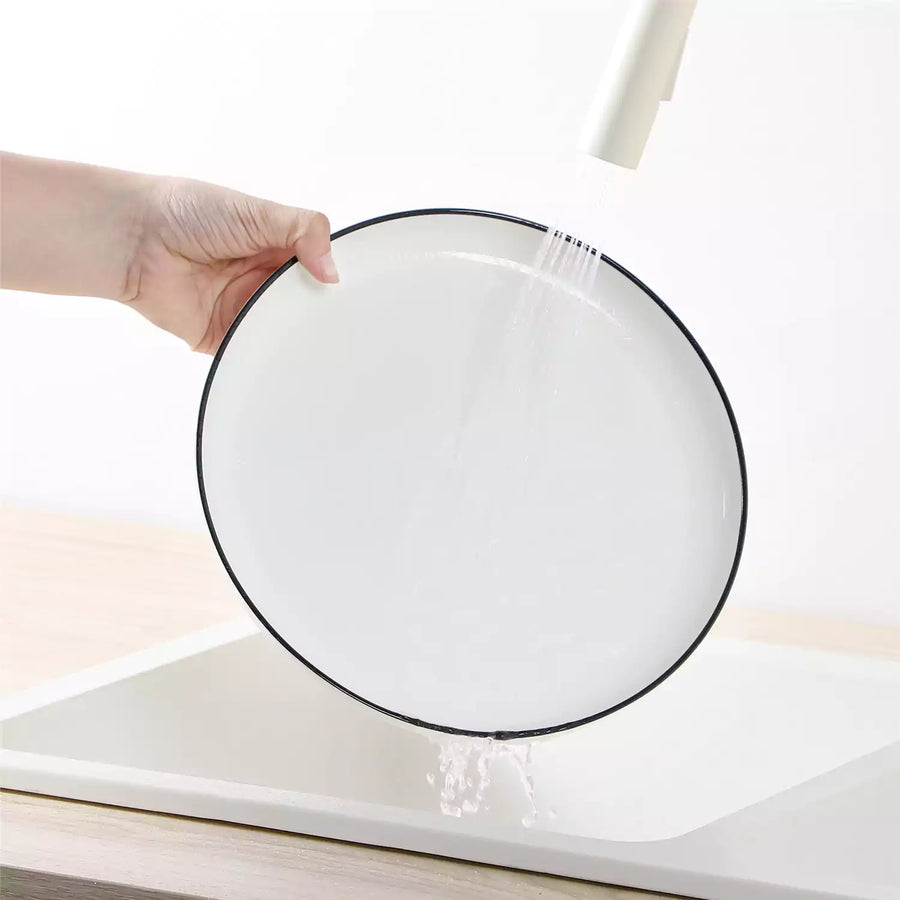
Porcelain has very low porosity and a smooth surface, so oils, sauces, and food colors are generally easy to remove. It is a practical option for snacks involving tomato sauce, berries, chocolate, or strongly colored seasonings.
Properly glazed stoneware can also resist stains effectively. Matte and textured glazes may show utensil marks or hold residue more readily than smooth glossy surfaces, although this depends on the finish.
Earthenware relies more heavily on its glaze because the underlying body is more porous. Plates with cracked, heavily crazed, or damaged glaze should be checked carefully before continued food use.
Chips, Scratches, and Breakage
Porcelain may look delicate, but well-made porcelain generally resists ordinary scratches and edge chipping. It can still crack or break if dropped because all ceramic tableware is brittle.
Stoneware is often thicker and can withstand frequent everyday handling. However, thickness does not make it unbreakable. A heavy stoneware plate may still chip when it strikes a countertop or another dish.
Rim design also affects durability. Thin exposed edges, irregular handmade rims, and plates packed tightly in a dishwasher may be more vulnerable regardless of material.

Which Material Suits Different Types of Snacks?
Fruit, Cookies, Toast, and Cake
Porcelain and stoneware both work well for dry snacks. Porcelain offers a lighter plate with a smooth surface, while stoneware provides a heavier, more casual feel. For these foods, plate size and rim shape usually matter more than porosity.
Pizza, Pastries, and Reheated Leftovers
Choose a plate specifically labeled microwave-safe if the food will be reheated. The material name alone does not confirm microwave compatibility.
Metallic rims, gold or silver details, and some decorative finishes are unsuitable for microwave use. Sudden temperature changes can also damage ceramic tableware, so avoid moving a very cold plate directly into intense heat.
Yogurt, Ice Cream, Dips, and Saucy Foods
A shallow bowl or snack plate with a raised rim is more practical than a completely flat plate. The edge helps contain sauces and makes the dish easier to carry.
A smooth, intact glaze is especially useful for oily, acidic, or deeply colored foods. In this situation, surface quality and plate shape matter more than whether the product is described simply as porcelain or ceramic.
Cheese, Nuts, and Shared Snacks
A wider plate provides enough space to separate crackers, cheese, fruit, and small condiments. Stoneware can create a relaxed, substantial presentation, while porcelain offers a lighter and more refined surface.
For shared snacks, look for enough usable space without choosing a full-size dinner plate that takes up unnecessary room.

Plate Design Can Matter More Than Material
A good snack plate should match the amount and type of food being served. Plates around 6 to 8 inches often provide enough space for an individual snack without feeling oversized. Larger portions may need a salad plate or shallow bowl.
Useful design features include:
- A gently raised rim to contain crumbs and sauces
- A flat center for cutting cake, fruit, or toast
- A comfortable weight for carrying and handling
- A stackable shape that saves cabinet space
- A smooth glazed surface that simplifies cleaning
- A design with replacement pieces available
These details often have a greater effect on daily use than broad assumptions about one material being more elegant or durable.

Check Microwave, Dishwasher, and Food-Use Instructions
Many modern porcelain and stoneware plates are suitable for microwaves and dishwashers, but compatibility must be confirmed for each product. The USDA advises using ceramic containers labeled for microwave use.
Hand-painted details, metallic decoration, and delicate finishes may require hand washing. Always follow the manufacturer’s care instructions rather than relying on the material name alone.
Decorative pottery should not be used for food unless it is clearly intended for food contact. The FDA warns that improperly fired lead-glazed traditional pottery may allow lead to migrate into food. Plates with new cracks, chips, or glaze damage should also be set aside unless the manufacturer confirms they remain suitable for food use.
Which Snack Plate Should You Choose?
Choose porcelain plates if you want a lighter plate with a smooth, low-absorption surface that is easy to clean. It is particularly practical for frequent snacks, desserts, fruit, and foods that may leave stains.
Choose stoneware plates if you prefer a thicker plate with more weight, texture, and a relaxed appearance. Properly fired and glazed stoneware can be a durable option for everyday use.
Choose earthenware plates for its decorative variety and traditional character, but check the glaze condition and care instructions carefully. It may require gentler handling than porcelain or mature stoneware.
For most households, well-made porcelain or glazed stoneware offers a useful balance of durability, easy cleaning, and everyday convenience. The final choice should reflect the plate’s size, shape, surface, weight, and care requirements.
FAQs
Q1. Can Porcelain Snack Plates Be Used Every Day?
Yes. Well-made porcelain is dense, low in porosity, and generally resistant to stains and utensil marks. It can be used for everyday snacks as long as the plate is handled properly and cleaned according to its care instructions.
Q2. Is Stoneware More Durable Than Porcelain?
Not in every case. Stoneware is often thicker and can feel more robust, while porcelain is typically harder and more resistant to scratching. Glaze quality, rim design, thickness, and manufacturing standards all affect durability.
Q3. Are All Porcelain and Ceramic Plates Microwave-Safe?
No. Always check the product label or manufacturer’s instructions. Plates with metallic decoration, damaged glaze, or finishes not rated for microwave use should not be placed in a microwave.
Q4. What Size Is Best for a Snack Plate?
A plate between 6 and 8 inches suits many individual snacks, including fruit, cake, cookies, and toast. Saucy foods or larger portions may be easier to serve in a shallow bowl or a slightly larger plate with a raised rim.