

If you cook a lot of quick weeknight meals, you already know that cleanup can be the most frustrating part. Glossy porcelain plates are often easier to clean after greasy meals because their smooth glazed surface is less likely to hold onto oily residue, helps reduce visible staining, and usually requires less scrubbing than scratched plastic or rougher finishes.
I started noticing this in my own kitchen after meals like roasted chicken, cheesy pasta, and takeout-style burgers at home. Some plates always seemed to come out with a faint greasy film, even after a full wash, while glossy porcelain usually looked cleaner with much less effort.
That difference matters when dinner is fast, messy, and repeated several nights a week. A plate that rinses clean more easily can make everyday cooking feel lower-effort from start to finish.

Why Some Plates Feel Harder to Clean After Oily Foods
Not all dinnerware surfaces behave the same way after greasy meals. Plates that have scratches, wear, or a rougher finish can make cleanup feel more annoying than it should.
With oily foods, the problem is not only the sauce or grease you can see. It's also the thin residue that stays behind and makes a plate feel slick, cloudy, or not fully clean even after washing.
In my experience, this is especially noticeable after meals with cheese, oil-based sauces, pan-fried foods, or anything with a buttery finish. That is when the surface of the plate really starts to matter.
Why Glossy Porcelain Is Easier to Clean
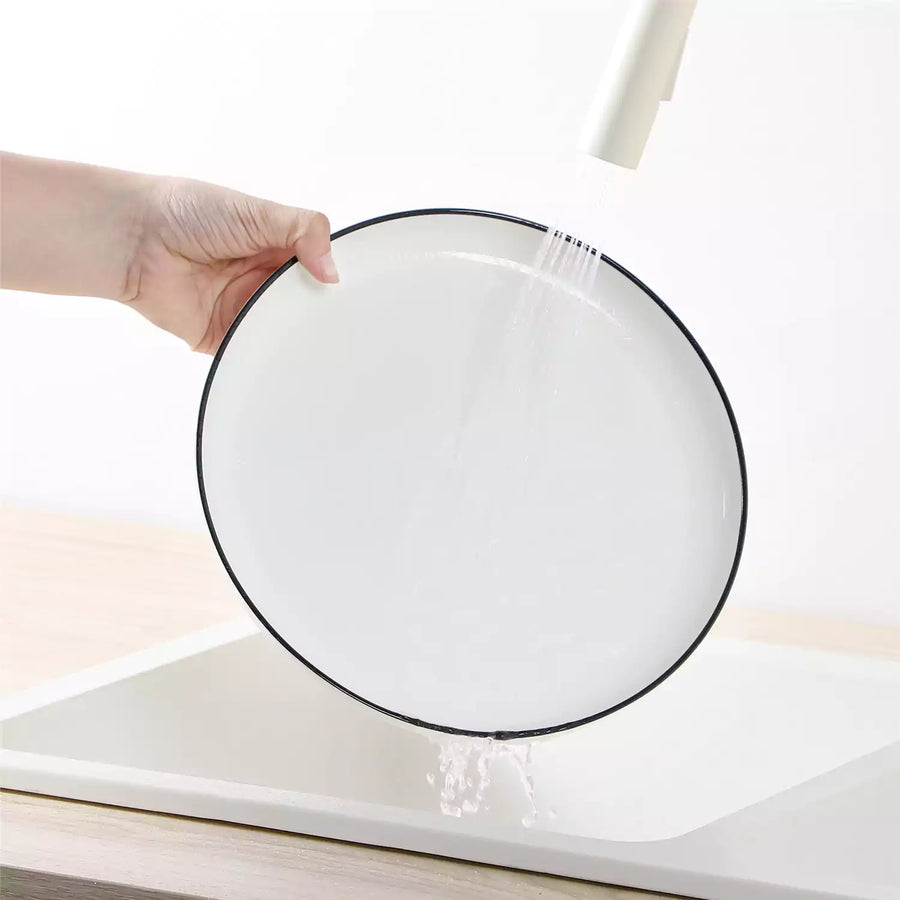
Glossy porcelain is typically finished with a smooth glaze that creates a dense, polished surface. Because that surface is less porous and less textured than many worn plastics or rougher finishes, oily residue is less likely to cling as stubbornly during normal washing.
In practical terms, that means:
- grease is easier to rinse away
- sauces are less likely to leave a dull film
- cleanup usually takes less scrubbing
- plates tend to come out of the dishwasher looking cleaner
This does not mean every porcelain plate performs identically, because glaze quality and long-term wear still matter. But in general, a well-made glossy porcelain plate is a strong everyday choice if easy cleanup is one of your priorities.
Glossy Porcelain vs. Other Common Dinnerware Surfaces
Here is a simple comparison for greasy weeknight meals:
| Material | Grease Cleanup | Residue Visibility | Scratch Risk Over Time | Everyday Convenience |
|---|---|---|---|---|
| Glossy porcelain | Usually easy | Low when fully cleaned | Moderate with normal care | High |
| Plastic plates | Often harder over time | Can hold onto oily film | Higher | Medium |
| Matte or rougher ceramic finishes | Can vary | May show residue more easily | Varies by glaze | Medium |
| Worn or scratched dinnerware | Often more difficult | Higher | Already compromised | Lower |
This is one reason glossy white porcelain stands out. It combines a smooth finish with a clean visual surface, so it's easier to tell when the plate is actually clean.
Why Plastic Plates Often Become More Frustrating to Wash
Plastic plates can seem convenient at first, especially for families or casual meals. But over time, scratches from utensils and repeated dishwasher use can make them harder to keep looking and feeling clean.
Once the surface becomes more worn, grease and food residue can seem to cling more stubbornly. That does not always mean the plate is unsafe, but it can make it feel less pleasant to use and harder to wash thoroughly without extra effort.
I ran into this with older everyday plates at home. Even after washing, I would sometimes hold one under the light and still notice a slightly cloudy or slick-looking patch. That was one of the biggest reasons I started paying more attention to surface finish.
The Advantage of a Smooth Glazed Surface
A smooth glazed porcelain surface helps in two ways.
First, it makes cleanup easier because oily residue is less likely to catch on texture or wear. Second, it makes results more visible. On glossy white porcelain, it's usually easier to see whether the plate has washed clean, which gives you more confidence when unloading the dishwasher.
That visual clarity is part of the appeal. A plate that looks bright, smooth, and fully clean after a greasy meal feels easier to live with day after day.

Less Scrubbing, Less Friction in Your Routine
One reason this matters beyond dishwashing is that cleanup affects how sustainable your meal routine feels. When dinner creates a frustrating sink full of greasy plates, the mental cost of cooking at home feels higher.
By contrast, low-maintenance dinnerware can make weeknight meals feel easier overall. If plates rinse faster, wash more cleanly, and need less checking after the dishwasher cycle, the entire process feels lighter.
For me, the biggest benefit was not that glossy porcelain made cleanup disappear. It was that cleanup felt more predictable. I did not have to wonder which plate would still need rewashing or extra soap after an oily meal.
A Good Fit for Busy Weeknight Meals
Glossy porcelain is especially practical if your weeknight meals often include:
- pasta with oil- or cream-based sauces
- pizza and side salads
- burgers or sandwiches with sauces
- roasted vegetables with olive oil
- sheet-pan dinners
- rice bowls with protein and dressing
These meals are convenient and satisfying, but they also tend to leave behind residue that is more noticeable on lower-performance dinnerware surfaces.
What to Look for If Easy Cleaning Is Your Priority
A Smooth Glossy Glaze
This is the biggest feature behind easy washing and a cleaner-looking finish.
Durable Everyday Construction
Choose porcelain that is designed for daily use, not only for occasional entertaining.
Dishwasher-Safe Convenience
Easy cleanup matters most when the plates also perform well in regular dishwasher cycles.
A Style You Will Use Often
White porcelain works well because it feels timeless, clean, and easy to match with different table settings.

Frequently Asked Questions
Q1: Are Glossy Porcelain Plates Easier to Clean Than Plastic Plates?
Often, yes. A smooth glazed porcelain surface is usually easier to rinse and less likely to show lingering greasy film than scratched plastic.
Q2: Does Glossy Porcelain Resist Grease Completely?
Not completely. Grease still needs to be washed off, but it's often less stubborn on a smooth glazed surface than on more worn or textured materials.
Q3: Is White Porcelain a Good Choice for Everyday Meals?
Yes. It is versatile, works for casual and more polished settings, and usually makes it easier to see whether the surface is fully clean.
Q4: Can Glossy Porcelain Go In the Dishwasher?
Many porcelain dinnerware sets are dishwasher-safe, but it is always best to check the manufacturer’s care instructions.
Q5: What Kind of Meals Make This Difference Most Noticeable?
Greasy or sauce-heavy meals such as pasta, pizza, burgers, roasted dishes, and other weeknight comfort foods tend to show the biggest difference.
Find Your New Everyday Dinnerware
If greasy weeknight meals are part of your regular routine, glossy porcelain plates can be a practical upgrade. Their smooth glazed surface is often easier to clean, less likely to hold onto visible residue, and better suited to the kind of everyday meals that leave dinnerware looking messy fast.
The result is not just cleaner plates. It is a lower-friction cleanup routine that makes cooking at home feel easier to keep up with.
If easy cleaning is high on your list, look for dinnerware with a smooth glossy finish, durable everyday construction, and a style you will actually enjoy using every day. MALACASA glossy white porcelain dinnerware is designed with that balance of function and simplicity in mind.

About Emma Carter
Emma Carter is a home dining and kitchenware writer focused on practical tableware, healthy meal routines, and everyday cooking. She explores how the right dishes and serving pieces can simplify meal prep and make daily routines more enjoyable. Her work connects cookware, tableware, and healthy living, helping readers create routines that are both useful and beautiful at home.
Expert writer at MALACASA