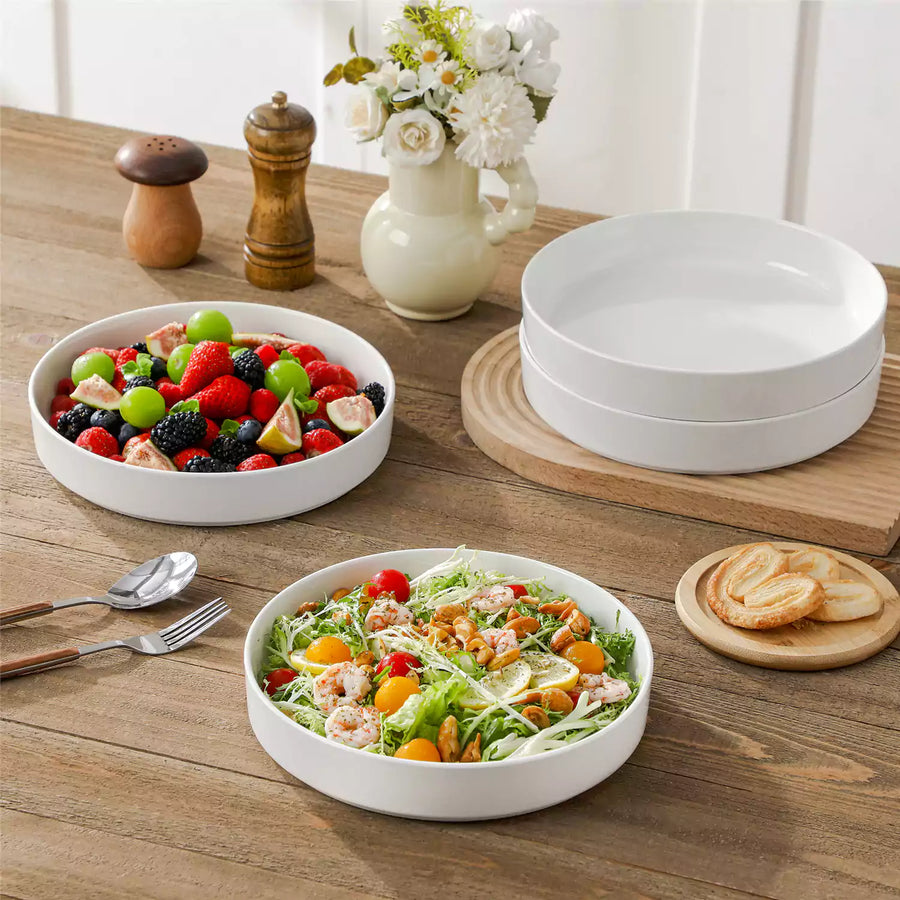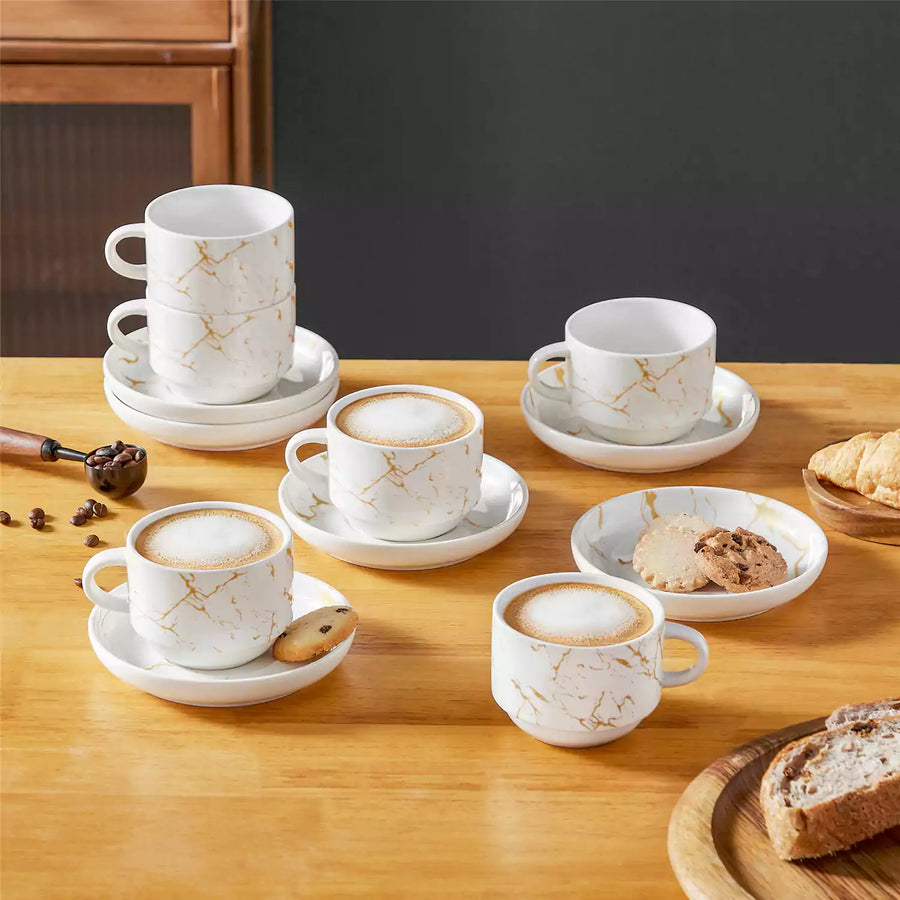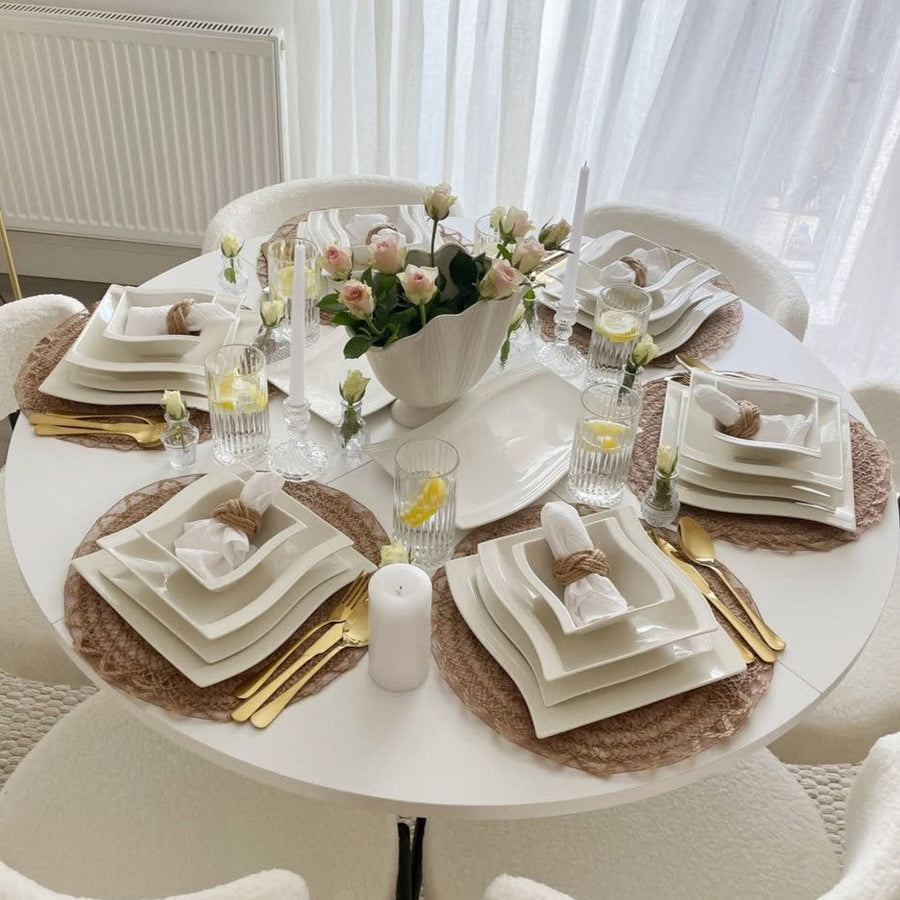


A minimalist porcelain dinnerware set should look good on the table and give you the plates and bowls you actually use. Choose round shapes for a classic look, square plates for a geometric setting, or gentle curves for a softer feel. White and ivory keep the palette simple, while a narrow border or subtle marble pattern adds definition. Our Leah, Elvira, and Blance sets each serve six, with different configurations for everyday meals and entertaining.
Compare Three Minimalist Porcelain Dinnerware Sets
These three MALACASA options suit households that need six coordinated place settings, whether for daily use or regular guests. Their main difference is how the pieces are distributed: two bowl types, soup plates with cereal bowls, or plates with matching cups and saucers.
| Set | Shape and Color Options | Dinner Plate Size | What Each Person Gets | Main Reason to Choose It |
| Leah 24 Piece | Round with straight edges; ivory white or black trim | 10.25 inches | Dinner plate, salad plate, pasta bowl, cereal bowl | Separate bowls for pasta and cereal |
| Elvira 24 Piece | Leaf-inspired outline; white | 10.25 inches | Dinner plate, salad plate, soup plate, cereal bowl | Curved styling with both soup plates and cereal bowls |
| Blance 30 Piece | Square; ivory white or marble grey | 10 inches | Dinner plate, dessert plate, soup plate, cup, saucer | Geometric styling with coordinated tea or coffee service |
Leah: Round Dinnerware With Two Bowl Types
If pasta, grain bowls, and cereal are regular meals, the Leah 24 Piece set gives each person both a 9.2-inch pasta bowl and a 5.8-inch cereal bowl, alongside dinner and salad plates.
That combination gives you a wider dish for pasta and a smaller bowl for breakfast, without adding cups you may already own. Ivory white works well with changing napkin colors and seasonal decorations. Black trim adds contrast and pairs naturally with dark flatware or a black accent elsewhere on the table.
Elvira: Gentle Curves Without a Busy Pattern
If plain round plates feel too conventional, the leaf-inspired outline of our Elvira 24 Piece set adds detail through shape while keeping the color palette white.
Each setting includes dinner and salad plates, an 8.25-inch soup plate, and a 5.1-inch cereal bowl. Choose this configuration when you prefer serving soup in a shallow dish and want separate bowls for breakfast. Plain linens leave the curved edges visible; heavily patterned placemats can make that detail harder to notice.
Blance: Square Dinnerware With Matching Cups and Saucers
For a more geometric table, the Blance 30 Piece set combines square dinner, dessert, and soup plates with six cups and six saucers. The cups hold 7 ounces, a useful detail if you prefer a smaller tea or coffee serving.
Choose ivory white for a simpler surface or marble grey as the table’s main pattern. The matching drinkware is useful for smaller tea or coffee servings. If you prefer large mugs, prioritize the plate and bowl mix when choosing your set.

Check Meal Fit, Storage, and Value Before Buying
Before choosing between similar-looking sets, compare bowl shapes, storage fit, handling, and the number of complete settings you need.
Match Bowl Shapes to Your Usual Meals
Use a recent week’s meals as your checklist. A wide, shallow bowl suits pasta and mixed meals you want to spread out; a deeper bowl is more convenient for cereal with milk. If noodle soup is a frequent meal, prioritize a deeper soup bowl with a stated capacity that fits your usual serving.
Bowl diameter is not bowl capacity. A wider dish may still hold less liquid than a narrower, deeper one. When capacity matters, use the stated volume rather than estimating from a photograph or diameter alone.

Measure the Spaces Your Dishes Must Fit
Measure the usable depth of your cabinet with the door closed, then compare it with the largest plate’s dimensions. For square plates, check both width and length. Allow space to lift a stack out without catching its edges on the cabinet opening.
Also check the clearance above the dishwasher’s plate rack. For microwave reheating, compare the plate footprint with the interior and turntable. A square plate’s corners need room throughout the rotation, even when its side length appears to fit. For a microwave-safe plate, check that it turns freely before heating food.
Consider the Weight You Will Carry
Compare individual piece weights when available. For example, a Blance dinner plate weighs approximately 1.77 pounds, so carrying several together feels different from lifting one empty plate.
If lighter handling matters, compare that figure with a plate you already own and find comfortable. Carry smaller stacks when setting the table, and store frequently used dishes on a shelf you can reach without stretching.
Compare Complete Settings and Useful Pieces
Buy enough settings for the largest group you regularly serve, allowing for dishes that may still be waiting to be washed. A six-person set can suit a smaller household that hosts regularly. If you rarely have guests, a smaller set may fit your routine and storage better.
Compare price per complete setting before price per piece. Divide the set price by the number of people it serves, then compare the contents. A cup and saucer count as two pieces, but they do not replace the two bowls you might need for everyday meals.
Style a Modern Table Around the Dinnerware
Build the setting around one noticeable detail: the dish outline, the finish, or an accent color. Keep the other elements simple so the table feels coordinated without looking crowded.
- For white round dinnerware: Add a natural linen napkin, clear glass, and a wooden serving board. The different textures bring warmth without requiring a patterned plate.
- For curved white dinnerware: Use plain linens and a low arrangement of greenery. Leave some tabletop visible around each setting so the outline has room to show.
- For square or marble-look dinnerware: Keep napkins and placemats solid-colored. Repeat an existing grey or dark accent in one other element, such as the napkin, rather than adding several new patterns.

Set out only the dishes needed for the meal. A dinner plate, glass, napkin, and appropriate flatware can be enough for a one-course supper; extra layers make more sense when you are actually serving additional courses.

Keep the Finish Looking Its Best
Use a soft cloth or nonabrasive sponge with mild detergent for handwashing. In the dishwasher, position dishwasher-safe pieces so their rims do not knock against one another during the cycle.
Avoid sudden temperature changes, such as pouring cold water onto a hot plate. Microwave-safe does not establish oven or broiler suitability; follow the instructions and temperature limits for the exact item and intended appliance.
When stacking, lower plates into place rather than sliding them across the surface below. Use soft separators for dinnerware stored between occasional uses, and keep stacks low enough to lift comfortably.
Minimalist Porcelain Dinnerware Questions Answered
Q1. Is Porcelain Different From Ceramic?
Porcelain is a type of ceramic. The broader category also includes stoneware and earthenware, so a label that says only “ceramic” does not identify the exact material. When comparing porcelain and other ceramics, use the specific material, dimensions, and care instructions rather than treating all ceramic dishes alike.
Q2. Does Minimalist Dinnerware Have to Be Matte?
No. Glossy, satin, and matte finishes can all suit a minimalist table. Gloss reflects more light, while matte has a softer appearance. Choose the effect you prefer, but assess durability and cleaning requirements separately; a finish name alone does not establish scratch resistance or appliance compatibility.
Q3. Can Different Shades of White Dinnerware Work Together?
Yes. Compare the pieces side by side under the lighting where you eat. If a warm ivory and a cooler white look mismatched together, separate them by function, such as ivory place settings with a white serving platter, instead of alternating shades within every plate stack.
Q4. Can I Buy a Single Replacement Plate Later?
Replacement options depend on the collection and current stock. Keep the collection name and item details, then check whether the matching piece is sold individually or in a multipack. If it is unavailable, contact us before ordering a similar-looking plate from another range.
Q5. What Should I Check When My Dinnerware Arrives?
Check the piece count, inspect rims and surfaces for chips or cracks, and place each dish on a flat surface to check for rocking. Compare the color and size with your order. Photograph any damage and keep the packaging while contacting us for help.