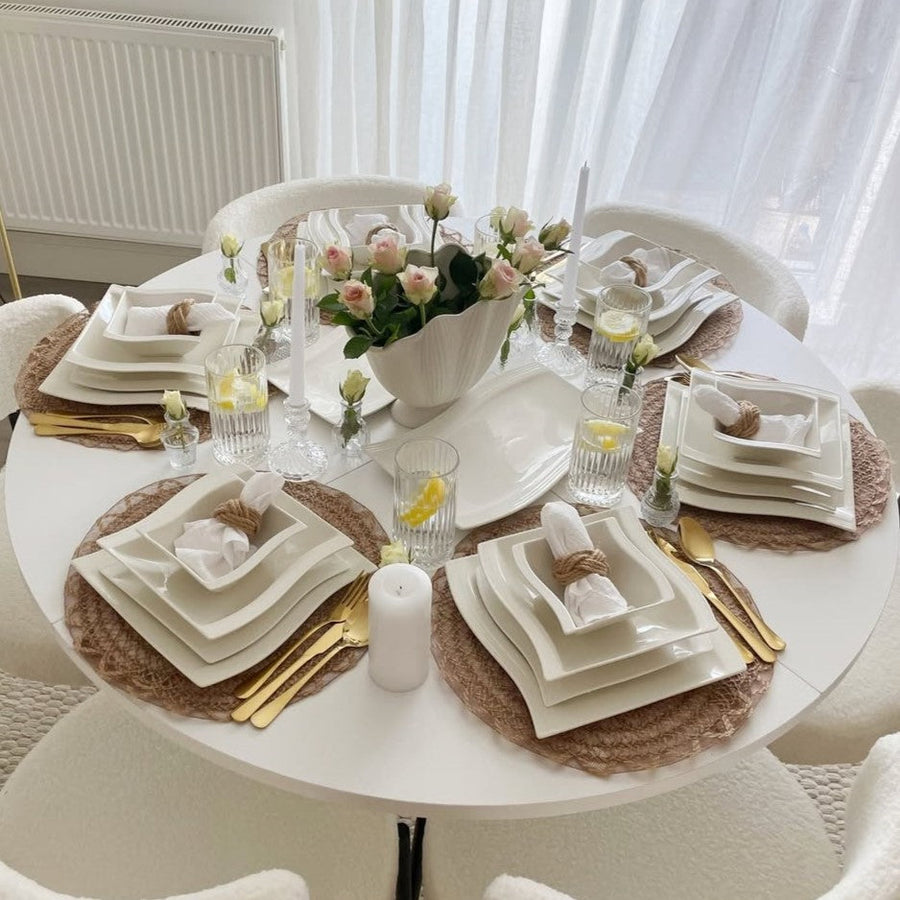


Choosing between a handled serving tray and a flat platter depends less on appearance and more on how you plan to serve. A tray is usually used to transport food or beverages from one location to another, whereas a platter is more about presentation and accessibility for guests. Both are useful serving pieces, but they offer different benefits at the table.
A ceramic serving tray can be used to carry drinks, snacks or ready-to-serve dishes, and a ceramic platter can offer a larger serving space for communal meals. Understanding handles, usable surface, balance, and storage can help you select the right format for your serving routine.
A Tray and a Platter Solve Different Parts of Serving
The main purpose of a handled serving tray is to transport and contain. Raised edges can help to keep cups, glasses, plates or smaller dishes in the serving space while being carried. Handles also provide secure handholds, which can be helpful when transporting multiple items from the kitchen to the dining room.
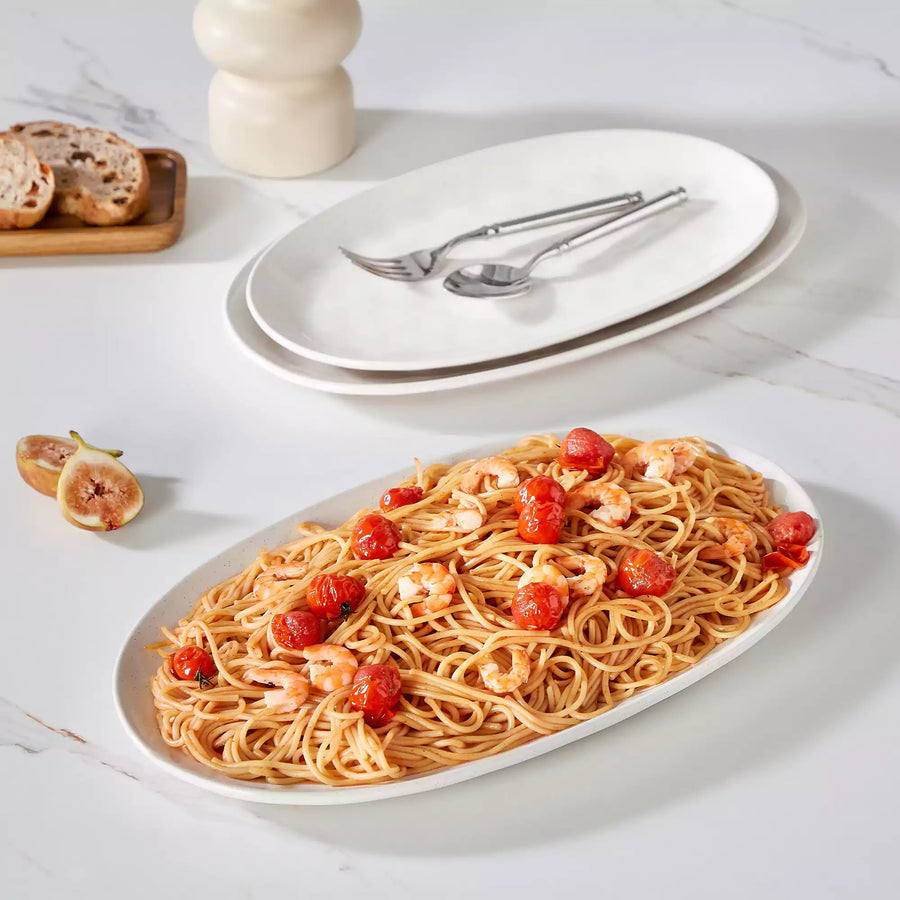
By comparison, a flat platter is primarily designed for presentation and tabletop placement. The open surface allows for easy display of food in an appealing way and allows guests to access the food from several sides. When comparing the two, think about whether you need to carry the food first or display it for most of its serving time.

Choose Handles When the Carrying Route Is the Priority
Handles are especially helpful when the path from the kitchen to the table is long or includes turns, doorways, or stairs. A handled serving tray will provide a place for your hands to grip, and can help to make the carrying motion more controlled. Before buying, check whether the handles provide enough clearance for your hands and whether their shape feels comfortable when the tray is empty. You should also consider what you normally carry. A few small bowls or a single serving dish present different balance challenges than drinks in glasses.
A rectangular serving tray might be particularly useful for placing multiple drinks side by side or transporting multiple small dishes. Its overall size should still fit through the spaces you normally serve from, however. Handles can be wider or longer than the food surface, so check the carrying route as well as the tray.
Choose a Flat Platter When Food Access Is the Priority
A flat platter makes sense when presentation and guest access matter more than transportation. The lower profile leaves more of the food exposed and makes it easier for guests to move toward the center or edges without having to move around high tray walls or handles. This may be useful for sliced foods, roasted vegetables, sandwiches, pastries, fruit, and other shared dishes.
A ceramic platter also provides you with greater flexibility when you're setting up food on an open surface. You can arrange the food on the platter in the kitchen and then set it on the dining table, buffet, or kitchen island. If you regularly serve food family-style, a ceramic platter can therefore provide a simple presentation-to-table solution.
Compare Drinks, Snacks, Appetizers, and Shared Mains
The format may depend on the type of food or drink you are serving. A handled serving tray is often useful for drinks as the primary job is to move a number of cups or glasses. Coffee, tea, water, or cocktails can be arranged on a tray and served efficiently in one trip.
Either format can work for snacks and appetizers. A tray might be useful if you intend to move around the room and serve food to guests, and a platter might be better if the appetizers are going to stay in one place. A platter is a great option for serving small bites of food, such as sandwiches, cheese, fruit, pastries, and more.
A ceramic platter is a better choice for shared mains. Large portions of roasted vegetables, sliced meats, baked items, or other shared dishes can be placed on the surface instead of in a carrying tray. If your main concern is bringing the finished dish to the table and leaving it there, the platter format may fit the task more naturally.

Measure Usable Surface Inside the Handles and Rim
Avoid selecting serving pieces by their external size alone. The overall size of a handled serving tray may include the size of the handles, and the size of a platter may include the outer rim. Neither measurement indicates the exact amount of room available for food or cups.
If products are compared, check the interior or usable dimensions if they are available. If the serving tray is rectangular, measure the area in the middle between the handles and inside the raised edges. Consider whether your typical plates, bowls, cups or serving dishes fit in that space. When choosing a set of serving platters, compare the usable surface of each piece rather than relying only on its largest exterior measurement.
You can explore different serving formats and sizes through MALACASA serving dishes when comparing options for everyday meals and entertaining.
Check Grip, Balance and Loaded Weight
Handles should be checked prior to purchase, particularly when planning to carry a ceramic serving tray. Start by considering the position and shape of the handles. There should be sufficient clearance between your hands and the tray or food. Test the empty piece first, if possible, and consider how the weight will be distributed when the tray is loaded.
Balance is also crucial. A tray of several glasses can have a different weight than a tray with a single casserole dish. Look for a design that allows your typical load to sit centrally rather than forcing you to compensate with one hand. There is no universal weight limit that applies to every serving tray, so follow the manufacturer's care and handling guidance instead of assuming a particular load capacity.
If you are shopping online, look at the size, material details, construction of the handle, and the manufacturer's directions. If the item will regularly be moved while full, prioritize the handling characteristics rather than choosing solely on appearance.
Plan Table Footprint, Cleaning, and Storage
The difference between a tray and a platter becomes apparent when the food is placed on the table. Handles need more clearance around the food item, and this can cause a tray to consume more usable table space than the food space indicates. This matters on smaller dining tables or crowded buffet surfaces.
A flat platter could have a more efficient footprint since the surface area is concentrated within the outer rim. In some cases, several platters can be stacked, depending on the shape of the platters and on the instructions for storage by the manufacturer. A serving platter set can be helpful if you need to serve different sizes for appetizers, main course, desserts or fruit and want them to be coordinated.
The purchase decision should also consider cleaning and storage. Think about the material and finish of the item and how it fits into your cleaning routine, the difficulty of washing the handles and whether it fits in the cabinets. Ceramic pieces can be substantial, so measure shelf height and available stacking space before purchasing a large set.

Concluding Thoughts
The decision depends on how the serving piece will be used. If carrying, gripping and controlled transport is a priority, then a handled serving tray should be used. Use a flat platter if presentation, access to food and efficient tabletop placement are more important. Looking at the usable surface, carrying route, balance, and storage requirements will help you choose a serving piece that fits the way you actually serve.
Serving Tray and Platter Questions
Q1: Is a Handled Serving Tray Better for Drinks?
A serving tray with handles can be useful to carry several drinks at once, as the handles offer a clear grip. Choose one with enough surface area for your glasses and enough handle clearance for a comfortable grip.
Q2: Should a Platter Be Used for Appetizers?
When appetizers are going to stay on the table, a flat platter can be handy because it has an open surface that allows guests to easily reach the food. If you're bringing appetizers around the room, a tray might be easier to use.
Q3: Are Handles Necessary on a Serving Tray?
Not always. Handles are most useful when carrying is a significant part of serving. An open platter might be more functional if the piece is going to be displayed primarily on the table.
Q4: Can Serving Platters Be Nested or Stacked?
Some platters are stackable, depending on the shape, rim, foot and instructions from the manufacturer for storage. Do not assume that all ceramic platters will fit together safely; inspect the product design instead.
Q5: Can One Piece Serve as Both a Tray and Platter?
There are some low-profile designs that can do both, but there may be compromises. Handles can enhance transportation, but can also decrease the continuous presentation area. Think about the most commonly used function before you select it.