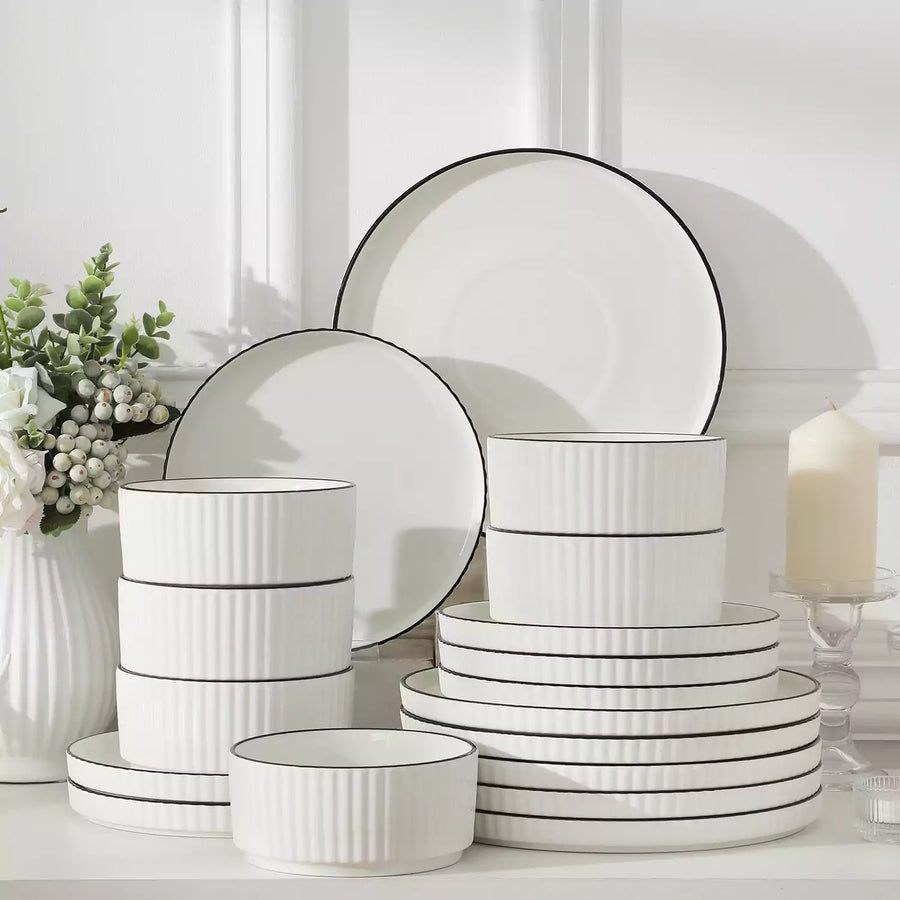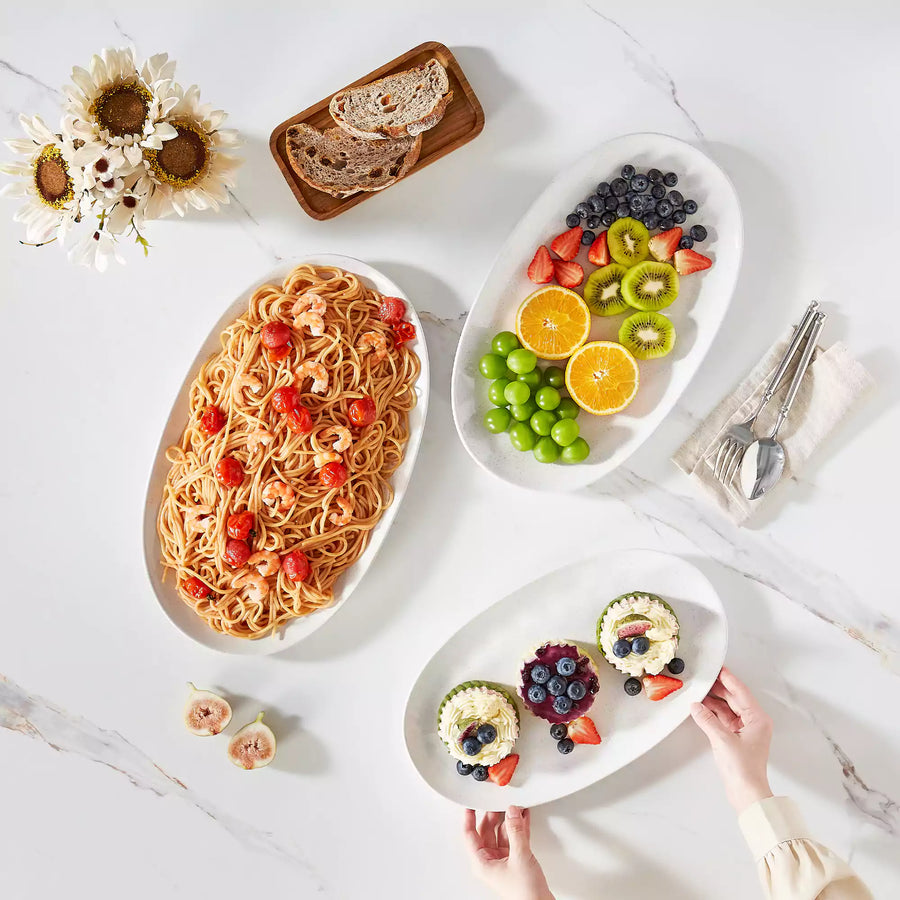


Dinner plates developed over centuries as people changed how they made tableware and served meals. Ancient dishes could hold shared food, while later dinner services coordinated plates with serving vessels for formal meals. Trade spread materials and designs, and expanding production brought more choices into homes. The history of dinner plates connects practical needs with craftsmanship, social status, and everyday habits.
How Dinner Plates Developed Over Time
Surviving objects and records show different developments across regions:
| Period | Region | Development |
| Fourth century BCE | Greek communities in southern Italy | Decorated fish plates served seafood and may have held shared portions |
| Medieval period | England | Bread trenchers provided eating surfaces alongside other types of dishes |
| Fourteenth to sixteenth centuries | Trade between China and Europe | Chinese porcelain arrived in Europe, with imports expanding in the sixteenth century |
| Early eighteenth century | Saxony, Germany | Meissen opened in 1710 and developed elaborate matching porcelain services |
| Mid-to-late eighteenth century | Staffordshire, England | Refined creamware offered fashionable tableware at a lower production cost than porcelain |
Early Plates and Shared Food
A terracotta fish plate at the Walters Art Museum dates to the mid-to-late fourth century BCE. Fish decorate its surface, and a depression sits at its center. The museum suggests it may have been a communal serving platter, possibly with dipping sauce in the middle. An ancient plate could serve several diners, rather than hold one person’s meal.
In medieval England, diners also used bread trenchers: slices of stale bread that acted as plates. Wooden platters and metal dishes provided other eating surfaces. These examples show why the history of plates includes more than fired clay.
Understanding the Ceramic Materials
Porcelain is a type of ceramic. The main ceramic material categories also include earthenware and stoneware. Earthenware has a porous body and commonly receives a glaze; stoneware is dense and generally fired hotter than earthenware. Porcelain uses a refined body that can appear translucent in thin sections. All three remain in use today.

How Chinese Porcelain Changed Dinnerware
Chinese porcelain became an important part of international trade. Its fine body, painted decoration, and unfamiliar qualities made it especially desirable in early European collections.
Chinese export porcelain reached Europe in the fourteenth century and was initially treated as a rare luxury. Trade expanded in the early sixteenth century as Portuguese merchants developed routes to Asia. Chinese workshops increasingly made pieces for Western customers.
Demand also influenced design. Buyers wanted familiar vessel shapes and personalized decoration, so overseas orders helped shape what potters produced. The history of porcelain dinner plates therefore involves both ceramic skill and exchange between makers and customers.
How Dining Customs Shaped Matching Dinner Services
European formal meals created demand for coordinated plates, dishes, and serving vessels for different foods.
At Meissen, matching porcelain dinner services developed in the early eighteenth century for grand multi-course meals. Coordinated decoration unified a large table, while different vessel shapes served different foods.
Shared serving pieces and individual plates worked together: vessels presented food, and plates held guests’ portions. This division helps explain why a service contained different shapes and sizes.
How European Production Expanded Access to Dinner Plates
European porcelain factories added local production to an established import trade. Potters also developed ways to offer fashionable tableware at lower costs.
In eighteenth-century Staffordshire, refined creamware became an important alternative to expensive porcelain. Josiah Wedgwood improved its body and glaze, creating cream-colored earthenware that could compete through design and decoration while costing less to produce.
Changes in factory organization and transport also mattered. More efficient production helped makers supply their wares, while improved roads and canals connected potteries with distant customers. Manufacturing and distribution expanded access to coordinated tableware alongside changes in ceramic materials.
What Dinner Plates Reveal About Culture and Status
Historical plates can record who commissioned them, what their owners valued, and how they wanted to be seen.
Identity and Belonging
Some Chinese export services carried European coats of arms. These personalized designs connected the tableware with a particular family or customer. Later American commissions included patriotic imagery, such as the eagle. Here, the meaning comes from identifiable decoration and its historical setting.
Fashion and Social Recognition
Royal association could also influence taste. Wedgwood’s improved creamware gained the name Queen’s ware following Queen Charlotte’s patronage in 1766. A relatively affordable ceramic could carry fashionable associations as well as serve a practical purpose.
An owner’s chosen decoration could make an ordinary household object personal. Understanding a historic plate therefore starts with its imagery, commission, and use, as well as its material.
Bring Useful Dinnerware Traditions to Your Table
During the twentieth century, many Western households moved toward simpler dinner services as domestic routines changed and elaborate meals became harder to manage without servants. Coordinated tableware remained useful, with fewer specialized pieces needed for everyday dining.

You can apply that practical approach today: choose dinner plates for your usual meals, then add serving pieces you will use. When mixing and matching plate sets, repeat a color or border detail to give different pieces the visual connection of a coordinated service.
Compare our dinner plates by their eating area, shape, and finish, and check how they fit your storage space. Follow each piece’s care instructions for microwave, oven, and dishwasher use. A useful set should suit both the food you serve and the work of putting it away.

Dinner Plate History Questions Answered
Q1: Why Is Porcelain Called China?
The name reflects its connection with China. In seventeenth-century Britain, china referred to imported porcelain. As European production developed, the word also came to describe locally made wares. Its everyday meaning is broad, so it does not always identify a precise ceramic composition.
Q2: Is Fine China the Same as Bone China?
No. Bone china contains bone ash in its ceramic body. Fine china is a broader description and does not, by itself, establish that ingredient. Check the stated material when comparing dinnerware rather than assuming that the two names describe the same composition.
Q3: Why Were Some Historic Plates Displayed Instead of Used?
Rare materials, skilled decoration, and costly commissions made some plates valuable possessions. Displaying them allowed owners to show their taste and wealth. Objects could have both practical and decorative roles, so display did not always mean that a plate was never used for dining.
Q4: What Is the Difference Between a Plate and a Platter?
A plate generally holds an individual serving, while a platter is usually larger and presents food for sharing. Historical terminology can overlap, however. An object described as a plate may have served several diners, so its name alone does not establish its original use.
Q5: Is Blue-and-White Dinnerware Always Porcelain?
No. Blue-and-white describes decoration, which can appear on different ceramics. Delftware, for example, is tin-glazed earthenware. A painted pattern or white surface does not establish the material; check the maker’s description to identify the composition of a modern piece.