

Luxury dinnerware is often associated with high prices, elaborate decoration, or famous labels, but price alone does not make a dinnerware collection look luxurious. A truly refined set is one that is distinguished by small details that are easy to miss at first glance. The forms are balanced, the surfaces are consistent, the rims feel comfortable, and all the pieces work together as a cohesive collection.
When you are looking for an elegant dinnerware set, porcelain dinnerware collections, fine china sets, or modern dinnerware sets, knowing what to look for can help you identify quality without the brand name or the price tag.
Luxury Is a Combination of Design, Finish, and Consistency
A luxurious table setting usually feels intentional and thoughtfully arranged. The pieces don't have to be fancy or costly. Rather, their proportions, finishes, colors and construction work together. When the shape is well thought out and the surface is well finished, a simple white plate can be more elegant than the more ornate option.
It is also important to be consistent. Plates should have clean, balanced shapes, bowls should stack neatly, and the handles of mugs should feel like they belong. When considering luxury dinnerware, consider not only decoration, but also if the entire collection shows attention to detail.

Proportion and Silhouette
The shape of each piece plays a major role in how refined the dinnerware looks. Examine the rim of a plate and the eating surface, the curve of a bowl, the height of a cup, and the form of the foot ring. Proportions are well balanced, giving a sense of visual harmony.
A plate that is extremely wide but has a tiny usable center can look dramatic but may not be practical. Likewise, a mug that has an oversized handle might look unbalanced. The most beautiful designs tend to be consistent throughout the dinner plate, side plate, bowl, cup and serving pieces.
Glaze Depth, Color, and Surface Consistency
The quality of the glaze can be a huge factor in the look of porcelain. A good surface should look smooth, intentional, and well finished. Under good lighting, check the plate for any obvious pinholes, rough areas, uneven glazing or distracting inconsistencies.
But consistency doesn't always mean that each piece has to look the same. There can be slight variations in tone and pattern in handmade and reactive-glaze collections. Those variations may add to character and craftsmanship. The important thing is to know if the variation is intentional or if it is a manufacturing error.
When looking into porcelain choices, you can also check out specific porcelain dinnerware collections at MALACASA to compare finishes, shapes and coordinated designs.
Edge Finish and Tactile Comfort
Luxury is something you can feel as well as see. Run a finger carefully along the rim of a plate or cup. A refined edge should feel smooth and comfortable, not sharp, rough or unfinished. This is especially important when consuming food from a plate or a cup.
Check the handle joints, the undersides of plates, and the areas where different parts meet. Smooth transitions indicate good workmanship. If the edge feels rough or uncomfortable against the lips, the piece will feel less refined.

Weight Balance Rather Than Maximum Weight
More weight does not necessarily mean more quality. Quality dinnerware should be heavy enough to hold up but not heavy enough to be cumbersome to lift, carry or wash. Balance is key.
A dinner plate should be easy to hold in the hand and a bowl should be heavy enough and have a good base to stand on the table. Mugs should not be too heavy when filled, but they should not be too light either. The best luxury dinnerware often gives a reassuring sense of solidity while remaining practical to handle.
This is especially crucial when comparing fine china sets or porcelain collections. A lightweight piece can feel premium if its proportions and balance are excellent, while an unnecessarily heavy piece can feel inconvenient.
Decoration Alignment and Pattern Continuity
While decoration can certainly affect the cost of a dinnerware set, it is the execution that is more important. Examine the accuracy of the patterns, even borders around the edge and consistent alignment of repeated patterns between pieces.
Gold or platinum accents may require hand washing and are often not microwave-safe. Some decorated pieces may need gentler washing and may not be microwave-safe. Luxury should be judged not just by decoration but by appearance and usability.
How Well the Pieces Work Together
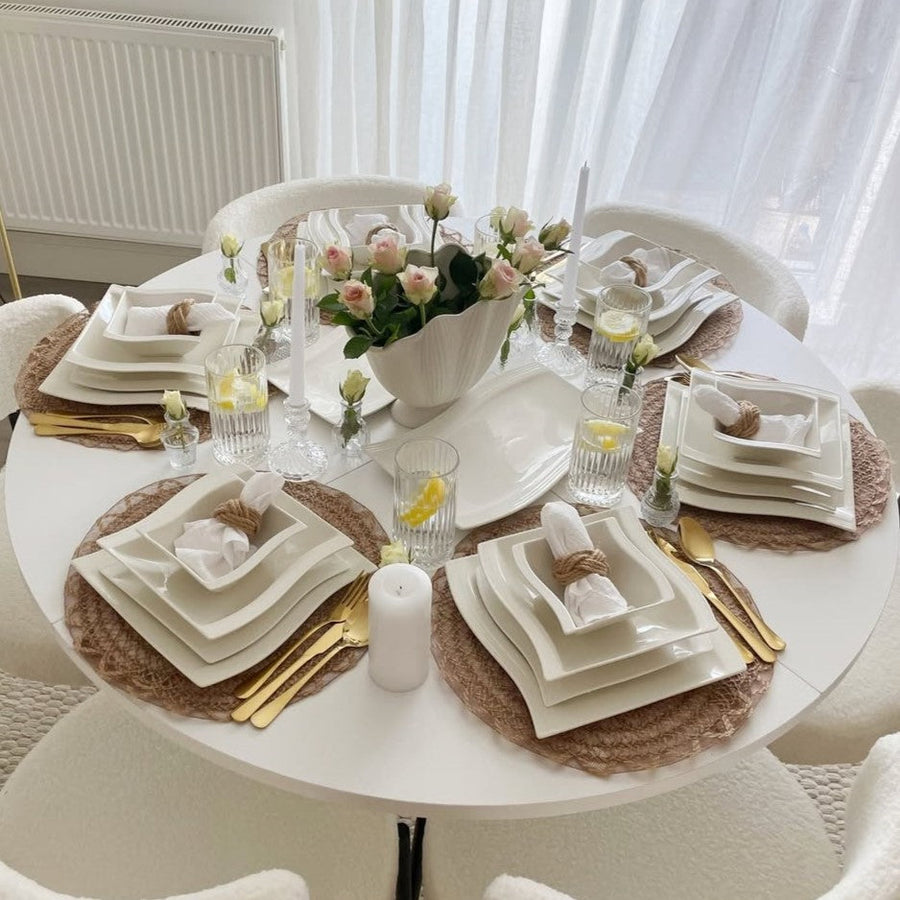
A high quality collection should look unified when all the place setting is put together. Think about whether the plates fit together, if bowls fit together, and if colors and finishes have a common design theme.
It is not necessary that all the pieces of an elegant dinnerware set be the same. Sometimes, the more different the shape, the more interesting the table, as long as the proportions and finishes are complementary. This concept is applied in modern dinnerware sets, where the plates, bowls, and cups have clean lines and slight variations.
Stacking is another useful test. Dinnerware that stacks securely and doesn't wobble or take up too much cabinet space is designed well.

Craftsmanship Details That Also Improve Daily Use
Those things that make dinnerware look luxurious can also make it easier to use. Smooth surfaces tend to be easier to clean, well-shaped bowls are more stable and rims that are well designed can make serving and eating more comfortable.
Consider nesting and storage as well. The collection is easier to organize if the bowls stack securely and plates have sensible profiles. Pieces should also be functional enough to be used for daily meals and not just for show.
Availability of replacement is another quality signal that is not considered. A well-designed set is not as easy to use if there is no way to replace individual plates, bowls, or mugs. When researching the best dinnerware brands, look beyond reputation and investigate whether individual pieces or additional place settings remain available.
A Quality-Inspection Checklist Before You Buy
When purchasing luxury dinnerware, examine product photos carefully and not just promotional photos. Search for transparency of rim, underside, glaze, handles, and profile. Read specifications for dimensions, materials, piece count, and use.
Care instructions deserve equal attention. Check whether the pieces are dishwasher- and microwave-safe, particularly if they include metallic decoration. Check the return policy in case the finish or proportions are different when you see it in person.
Finally, consider your replacement strategy. Ask whether individual pieces can be purchased later and whether the collection is likely to remain available. If a set offers better construction, reasonable care requirements, and reliable replacement options, it may provide better long-term value even at a higher price.
Common Questions About Luxurious Dinnerware
Q1: Does Porcelain Always Make Dinnerware Look Luxurious?
While porcelain can give a sophisticated look, shape, glaze, finishing, balance and consistency are also crucial. A good porcelain collection can be a luxurious affair without being too showy.
Q2: Does Heavier Dinnerware Mean Better Quality?
Not necessarily. Quality dinnerware should be comfortable to hold, feel solid and heavy, and be stable. Too much weight can make it more difficult to use.
Q3: Does Gold Trim Make a Dinnerware Set Look More Expensive?
While gold trim can add a touch of luxury, it is not all created equal and not all used the same way. It should be even and well-positioned, and purchasers should be aware of the extra care needs.
Q4: Is Handmade Variation a Sign of Poor Quality?
It is not a rule that all handmade or reactive-glaze dinnerware be the same color, texture or glaze. The key difference is between intentional variation and unintentional defects.
Q5: Can Everyday Dinnerware Still Look Luxurious?
Absolutely. Thoughtful proportions, smooth finishes, comfortable handling, coordinated pieces, and practical durability are the keys to everyday luxury. The best collection is one that is elegant and fits into your everyday life.