

The most common table setting mistakes are putting utensils in the wrong order, adding pieces the meal does not need, and leaving too little room to eat. Start with the menu, arrange one complete place setting, and leave space for serving dishes before adding decorations. A few familiar placement rules make the table easy to use, whether you are serving a weeknight dinner or hosting friends.
Start With a Basic Place Setting
For a conventional Western-style meal, use this layout as your starting point. Other dining traditions may call for different arrangements.
| Item | Where It Goes | When You Need It |
| Dinner plate or main-course bowl | Centered in front of the chair | Choose the dish that suits the main course |
| Dinner fork | Left of the plate | For food eaten with a fork |
| Dinner knife | Right of the plate, blade facing inward | When the meal needs a knife |
| Soup spoon | Right of the knife | When serving soup |
| Water glass | Above the knife, toward the upper right | For water |
| Napkin | Left of the fork or on the plate | At each seat |
| Bread plate | Above the forks, toward the upper left | If serving bread on individual plates |
Build the setting around what you will serve. A bowl of soup and bread needs a different arrangement from a roast dinner with a separate salad course.
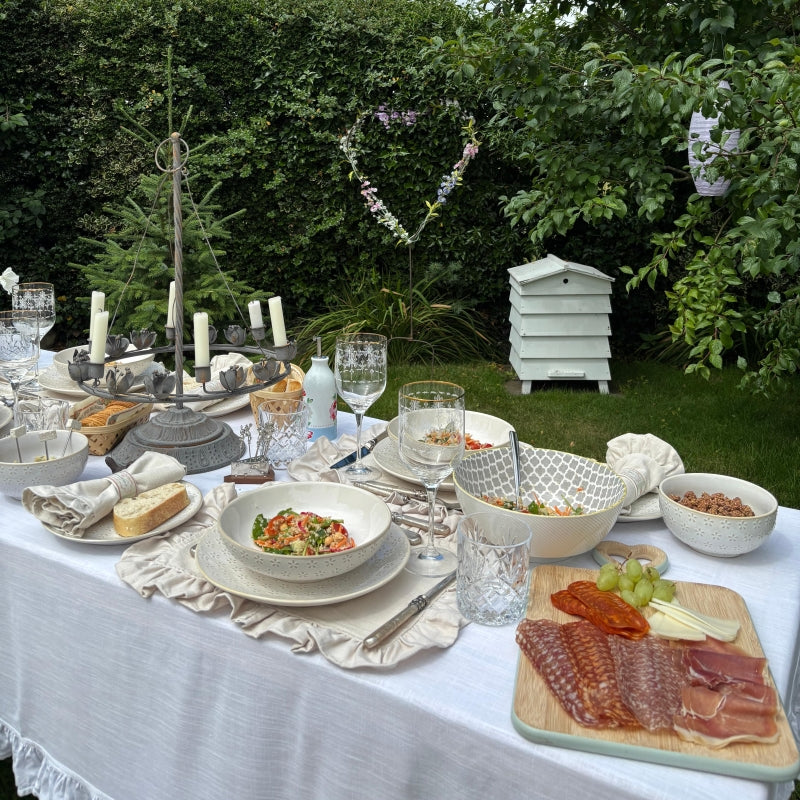
Keep the napkin easy to reach, either on the plate or beside the forks. A fork resting on the napkin is also a common casual arrangement. Avoid placing the napkin beneath a stack of dishes that guests must lift to remove it.
Mistake 1: Setting Out Every Piece You Own
A full dinnerware collection gives you choices, but putting every piece on the table can leave guests wondering what comes next. A soup bowl suggests a soup course; a second fork suggests another dish that needs it.
Set out only the utensils you will use. Keep dessert dishes and coffee cups nearby until you need them.

For example, a casual chicken dinner with vegetables served on the same plate may need just a dinner plate, fork, knife, napkin, and water glass. If salad comes first, add a salad plate and fork, then clear the used pieces before the main course.
Count dishes by course as well as by guest. Six people having separate salad and main courses need six suitable plates for each course unless you plan to wash and reuse them. When adding a dinnerware set for guests, check the quantity of each dish rather than relying on the total piece count.
Mistake 2: Arranging Cutlery Without Checking Course Order
Putting forks on the left and knives on the right is a useful start. For a meal with several courses, the order within each group matters too.
Place utensils in outside-in order, with the first utensil needed farthest from the plate. If salad comes before the main course, the salad fork sits outside the dinner fork. If salad follows the main course, its fork belongs closer to the plate.
Keep knife blades facing the plate. Line up the handles neatly and leave enough space to pick up each utensil without disturbing its neighbor.
Mistake 3: Mixing Up Glass and Bread Plate Positions
A glass set between two seats can be confusing. Place each water glass above its own knife so it clearly belongs to that setting. If wine is being served, add the wine glass to the right of the water glass.
A simple memory aid is bread on the left, drinks on the right. Use it from the seated guest’s perspective.
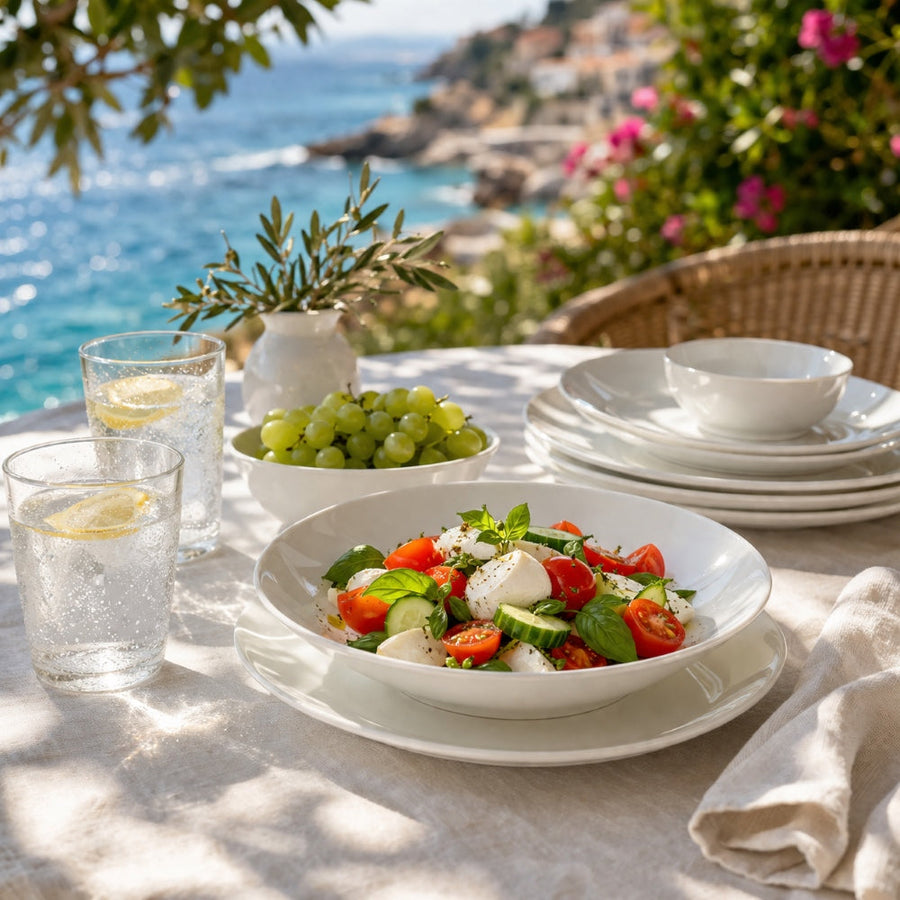
Match the drinkware to the beverage. A tumbler or stemmed glass works for water, while hot tea needs a cup intended for hot drinks.
For a relaxed meal, set one water glass and add other drinkware when needed. There is no reason to place both red and white wine glasses at every seat if you are serving only one wine.
Mistake 4: Filling the Table Before Allowing Room for Food
A table can look spacious with empty plates and feel crowded as soon as serving bowls arrive. Plan for the meal at its busiest point.
Place your largest platter and serving bowls on the table during setup. Leave their serving utensils alongside them. Then sit in a chair and check that you can move your arms, lift your glass, and reach your napkin without shifting another setting.
Measure the full place setting, not just the plate. When choosing dinner plates, compare their width with the space available for cutlery and glassware too. Square plates and wide rims can change how much usable space remains.
If shared dishes do not fit comfortably, serve food from a counter or sideboard. Keep a clear landing spot for a platter being passed around the table, and give each shared dish its own serving utensil.
Check decorations from a seated position too. Lower or move any centerpiece that blocks the person opposite you or interferes with passing dishes.

Mistake 5: Treating Styling Preferences as Etiquette Rules
Tablecloth color, matching dishes, and decorative folds allow room for personal taste. Focus on how the arrangement works before deciding how formal it looks.
Choose Table Linens That Fit Comfortably
White is a traditional formal choice, but colored or patterned linens can also suit an elegant table. Bright colors are not automatically a table setting mistake.
Center the cloth and check how it hangs at every seat. Avoid excess fabric that bunches in guests’ laps or catches as they move their chairs. A square cloth can also be used on a round table when the resulting drape is intentional and comfortable.
For a rectangular table, calculate the drop on each side as (tablecloth width − table width) ÷ 2. A 60-inch-wide cloth centered on a 40-inch-wide table drops 10 inches on each side. Check the end drop separately using the two lengths.
Coordinate Dishes Without Matching Everything
Matching every item is optional. When mixing dinnerware patterns, repeat a color across the dishes or linens to make the arrangement feel connected. For example, patterned side plates can work with plain dinner plates in a coordinating shade.

Check One Complete Setting Before Guests Arrive
Finish one place setting with the dishes, cutlery, and glasses the menu needs. Test it from the chair, then repeat the arrangement around the table. Add serving pieces before choosing the final amount of decoration.

The best correction for many table setting mistakes is a small adjustment: move a glass, remove an unused spoon, or make space for a shared bowl. Aim for a table where guests can find what they need and enjoy the food comfortably.
Practical Table Setting Questions Answered
Q1. Do You Need Charger Plates for a Dinner Party?
No. Charger plates are optional presentation pieces placed beneath course dishes. You can create a complete dinner-party setting without them. If you use chargers, make sure they leave enough room for cutlery and glasses, and serve food on suitable plates or bowls.
Q2. Where Do Dessert Utensils Go?
Bring them out with dessert, or place them horizontally above the dinner plate before the meal. In a traditional arrangement, the dessert fork’s handle points left and the spoon’s handle points right, with the spoon above the fork. Set only the pieces the dessert needs.
Q3. Do You Need a Separate Plate for Salad Served With Dinner?
No. Salad can share the dinner plate when it is served with the main course. A separate plate is useful if gravy, sauce, or salad dressing would run into the other food. Choose based on the dishes being served and the space available.
Q4. Should a Steak Knife Replace the Dinner Knife?
Yes, when the main course needs a steak knife, it can take the dinner knife’s place immediately to the right of the plate, with its blade facing inward. There is usually no need to set both for a simple steak dinner.
Q5. Can You Use Paper Napkins at a Dinner Party?
Yes. Paper napkins work well for a casual dinner party. Choose ones large enough for the meal, provide a fresh napkin at every seat, and keep extras nearby. Cloth napkins are another option when you want a more formal look.