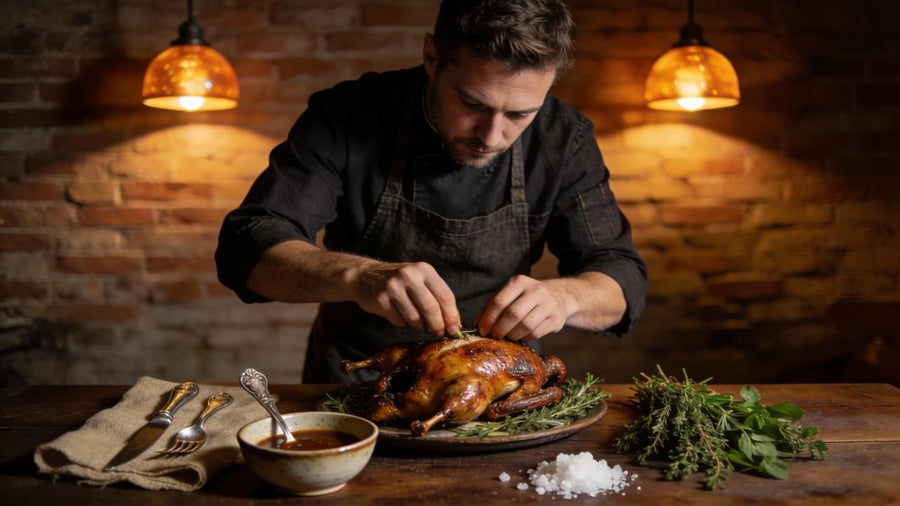



The best van kitchens are equal parts style and restraint. Every tool earns its spot, every surface pulls double duty, and every cleanup takes less water than yesterday’s. When people ask me whether enamel or ceramic is the smarter cookware choice for life on the road, I don’t answer with a single material. I answer with a day-in-the-van. I think about whether you cook inside on induction or outside on a griddle, how often you simmer sauces, and how committed you are to dishes at 9:00 PM. From there, the materials fall into place—and your cabinets stay serene.
What “Enamel” and “Ceramic” Really Mean in a Van Kitchen
In van life, enamel typically shows up as enameled cast iron Dutch ovens and pans or enamel-coated steel camp pieces. The appeal is straightforward: you get a low‑maintenance cooking surface over a sturdy body. In home kitchens, enamel’s virtues are well known; even small-space experts recommend an enameled Dutch oven when you want the cast‑iron benefits without seasoning routines, a point echoed by WIRED’s small‑kitchen guidance that enameled Dutch ovens are the low‑maintenance pick for stews, braises, and steaming. The tradeoff you feel most in a van is weight. Outdoor Life’s testing pegs a 12‑inch cast‑iron skillet at about 7 lb 7.6 oz, and while enamel changes the surface, it does not make iron lighter. That heft brings beautiful heat retention and stability, but it demands a real plan for storage and handling on the move.
Ceramic in this conversation means ceramic nonstick coatings, most often over hard‑anodized aluminum. In third‑party tests at Outdoor Life and Outdoor Gear Lab, ceramic nonstick earned its reputation for easy cleanup and smooth release, with sets like MSR’s 2‑Pot Ceramic weighing around 1 lb and consistently winning “easiest to clean” notes. Ceramic nonstick also tends to sidestep the baggage attached to older Teflon‑type coatings; Outdoor Life spells out the differences among PTFE/Teflon, ceramic coatings, and seasoned cast iron in plain terms. In the van, ceramic’s biggest advantage is how little water and time you need at the sink.

Heat Sources On The Road: Why Your Stove Matters
Your stove dictates your cookware more than the other way around. Many full‑time van travelers choose induction for indoor cooking because it’s clean, safe, and fast, a preference clearly voiced by Bearfoot Theory’s van‑life guidance. Induction requires a magnetizable base, so it’s essential to check that any pot or pan is labeled “Induction Stove Compatible,” language used by Sea to Summit on its cookware pages along with a practical definition that the base must be magnetizable. Ceramic nonstick items vary by base; some are aluminum only, others are clad or have a steel plate. Verify the product’s compatibility before you design your entire galley around a cooktop it may not activate.
Outside the van, propane griddles and camp stoves remain the most joyful way to cook for many travelers. One RV user even reports cooking 99 percent of meals on a portable griddle and keeping only a three‑piece “just‑in‑case” kit for boiling and basic tasks. And if you love campfire cooking when local rules allow it, cast iron is still the benchmark. Outdoor Life specifically recommends a Lodge skillet for campfire frying because of its even heat and rugged simplicity, which maps neatly to an enameled cast‑iron Dutch oven if you prefer low‑maintenance interiors and a lidded profile. The key is knowing where your burners actually live: inside, outside, or both.

A Curator’s Quick Compare
Criteria |
Enamel (enameled cast iron/steel) |
Ceramic nonstick (coated aluminum/stainless) |
Cleanup and water use |
Low‑maintenance surfaces compared to bare cast iron; behaves predictably for stews and braises. |
Often the easiest to clean in testing; MSR’s ceramic pots are repeatedly praised for quick wipe‑downs and minimal scrubbing. |
Weight and bulk |
Heavy and stable; a 12‑inch skillet can exceed 7 lb, and a lidded Dutch oven adds more mass. |
Generally light; full two‑pot sets around 1 lb exist, excellent when cabinet space and payload are tight. |
Heat sources |
Excellent for campfire and robust propane setups; indoor use is fine with space for safe handling. |
Stove‑focused, fast to heat; verify induction compatibility by model if that’s your indoor system. |
Durability on the road |
The mass shrugs off heat spikes and jostle; low‑maintenance surface avoids seasoning routines. |
Coatings feel luxurious at first and clean easily; all nonstick surfaces should be protected from scraping and rough storage. |
Power pairing |
Pairs well with propane and campfire; works on induction if base is magnetizable; always confirm labeling. |
Ideal for quick indoor sessions and minimal water cleanup; on induction, only models with magnetizable bases will activate. |
Best fit |
Slow simmers, bread‑adjacent baking in compact ovens, and outdoor cooks who love heat retention. |
Weeknight meals, sauce‑forward cooking, and travelers who want the least sink time. |
The table does not end the conversation, but it does crystallize the tradeoffs. Now let’s take those tradeoffs into your van, where space, water, and power reshape your priorities hour by hour.
First‑Hand Van Galley Insights
In a van, how cookware feels to use matters as much as performance. Enamel’s reassuring weight has real benefits when you set a pot down on a camp stove or in a tiny oven. It holds heat beautifully for braises and bakes, and it tolerates a little wind without losing its temper. If your culinary heart belongs to stews and one‑pot comfort meals, an enameled Dutch oven never feels like overkill, even when your cabinet is the size of a shoebox. It also looks composed on open shelving, which pleases the stylist in me every single time I slide the door open.
Ceramic nonstick, meanwhile, wins the late‑night cleanup. When you’ve cooked inside because of weather, your gray‑water jug is nearly full, and you saved just enough battery for a kettle in the morning, wiping a ceramic pot is bliss. Outdoor Life and Outdoor Gear Lab both note that these coatings release food easily and clean with minimal effort. That experience compounds in van life, where dishwater must be carried and disposed of responsibly. The Strategist defines gray water simply as the stuff from dishwashing, brushing teeth, and showers, and it reminds us to dispose properly, at dump stations or by burying strained water far from waterways following Leave No Trace guidance. Less food stuck to pans means less soap, less scrubbing, and fewer worries about where the suds go.

Storage, Nesting, and Rattle Control
Space is the relentless editor of van kitchens, and it will force a design language that rewards nesting, collapsing, and anything that silences rattles on washboard roads. Stainless nesting sets with removable handles draw rave practical reviews in the RV community, with Stressless Camping highlighting how a sub‑$200 set compresses into a single drawer and lets you cook three items at once because nothing has a fixed handle sticking out. The functionality translates no matter your material lean; if you commit to enamel for your main pot, you can still augment with a small nesting ceramic set for fast meals, or vice versa.
For the most compact footprint, collapsible pots are a quiet revelation. Outdoor Life’s testing of Sea to Summit’s Detour Collapsible Pot confirms that a 3‑quart or 5‑quart version compresses to about 2.5 inches thick while remaining stable for car camping. The note about keeping excessive heat off plastic components matters, especially on stoves with concentrated flames. But when you want to tuck a large‑capacity pot under a bench seat, few items clear the design bar this neatly.

Heat Control, Griddles, and Flexible Setups
The easiest way to keep cookware simple is to let your primary heat source shape your “core four.” Plenty of travelers cook almost everything on a portable griddle and keep only a skillet and two pots to cover outlier tasks. That’s a rational kit that scales down your decisions. The Adventure Portal’s gear guidance takes the same philosophy in a more social direction, pairing outdoor propane tools with indoor electric gear so you can cook happily in any weather. The middle path tends to look like an outdoor griddle or two‑burner propane stove with an indoor induction burner for late‑night tea and bacon‑and‑eggs on rainy mornings.
On induction, speed is the love language. Bearfoot Theory prefers induction for indoor cooking because it’s fast and clean, and you feel it when water comes to a boil while your windows are still fogged. The Adventure Out There adds an important caveat: a portable induction cooktop can drain batteries on long cooks. Give yourself permission to keep quick‑cook ceramic nonstick pieces for ten‑minute meals and use propane for the lazy simmer that keeps an enamel pot in its happy place.
Cleaning and Gray Water: Where Ceramic Shines
Ceramic nonstick’s strongest case in van life is not flash; it’s friction reduction. When cleanup time arrives, MSR’s ceramic pots routinely earn top marks for easiest cleaning. That matters if your dish setup is a foldable basin, a microfiber drying mat, and a measured splash of biodegradable soap, a compact kit that van‑life writers like those at The Strategist and Bearfoot Theory both champion for tiny spaces and outdoor ethics. Ceramic also helps when you’re using a small water heater or kettle. Rather than running a burner for fifteen minutes to power through stuck-on rice, you can pour one kettle of hot water and finish the job before it cools. Enamel is not a hardship by any means, but ceramic remains the low‑water queen of the sink.

Durability, Coatings, and Real‑World Caution
Durability is where the road tests all claims. Outdoor Life cautions that aluminum‑based sets are less durable than steel, and both Outdoor Life and Outdoor Gear Lab remind cooks to use wood or silicone utensils to preserve nonstick coatings. Bearfoot Theory adds a very van‑specific reality check: nonstick surfaces can pick up scratches from jostling on bumpy roads. Ceramic nonstick belongs to that broader “nonstick” family, so treat it with the same care. Use pan protectors when nesting, keep utensils soft, and give coated pieces their own slot or sleeve if you can. Enamel simplifies some of this by foregoing seasoning and tolerating a wider range of spatulas without complaint, but your storage discipline still pays dividends either way.

Price, Weight, and the Case for “Fewer, Better”
If you cook every day, opt for fewer, better pieces. Outdoor Gear Lab and Outdoor Life repeatedly identify sets that provide a smart ratio of weight to function. The MSR Ceramic 2‑Pot Set manages to deliver two lidded pots at roughly a pound, which is hard to argue with when you need a compact interior galley. On the enamel side, consider a compact enameled Dutch oven in a size you will actually use on a two‑burner stove, and be honest about storage and handling. When you need something bigger but still small‑space friendly, stainless nesting sets with removable handles solve more problems than they create, a point reinforced by Stressless Camping and echoed by RV owners who love their stackable, removable‑handle sets for oven and cooktop flexibility. The spiritual opposite of clutter is a single multi‑use pan that doubles as an oven dish, like the Flavorstone set profiled by Vanlife Eats, which replaced a skillet and saucepan in one van precisely because it stacked tightly and cleaned fast. Those examples all reflect the same principle: invest once, buy less often, store elegantly.

Power, Safety, and Weather: The Van‑Life Triangle
Power budgets turn theoretical preferences into on‑the‑ground choices. If your battery and inverter are robust, an induction‑first setup indoors paired with a griddle outdoors is a graceful way to cook in all seasons. When storms slam into camp, ceramic nonstick over induction yields quick meals without overwhelming your ventilation. On clear nights, enamel over flame unlocks the kind of slow‑cook stews that taste like a proper campsite. If your electrical system is limited, give propane the starring role and reserve induction for five‑minute jobs. The Adventure Out There frames this tradeoff well: prioritize propane for long outdoor cooks and save the battery for short, efficient indoor tasks. That approach also sidesteps the risk of firing up open flames inside and respects the wind realities of camp.

How To Decide: A Practical Flow You Can Trust
Start by naming your heat. If you cook primarily indoors on induction and value the easiest possible cleanup, let ceramic nonstick anchor your kit. Choose a set tested for easy cleaning, and confirm the base is actually induction compatible. Pick a two‑pot set with a removable handle or compact, nesting geometry so it disappears into a single drawer. Protect the coating with sleeves or felt, and keep wood or silicone utensils within reach.
If you cook mostly outdoors and love long simmers, bread‑like bakes in a compact oven, and hearty one‑pot meals, choose enamel. A modest‑size enameled Dutch oven or lidded pot pays you back every cool evening you park near pines and cook with the door open. Accept the weight with intention by designing a storage slot that keeps it secure and silent. Use it alongside a lightweight pan for quick morning eggs if that suits your style.
If you split time between both worlds, build a hybrid trio. Let an enamel pot live outdoors for flame and oven use, keep a small ceramic nonstick pot for fast indoor meals and light cleanup, and add one truly nesting stainless set with a removable handle for your extra burners and guests. This mirrors how The Adventure Portal mixes outdoor propane with indoor electric to keep cooking joyful in any weather. It also gives you fallback options when a coating finally ages or a lid vanishes in a parking lot at dusk.
Real‑World Picks Referenced by Testing and Van‑Life Pros
When ceramic is the priority and you want proof that cleanup is easy, MSR’s ceramic two‑pot systems are repeatedly praised by Outdoor Life and Outdoor Gear Lab for light weight and low‑friction cleaning. If collapsibility is your space superpower, Sea to Summit’s Detour Collapsible Pot collapses to about 2.5 inches according to Outdoor Life’s tests and is designed for car‑camp stability as long as you keep concentrated heat off the plastic components. If you want stainless that nests, triple‑clad bottoms and removable handles have earned glowing reviews from RV testers at Stressless Camping for distributing heat and compressing into a single drawer. And if you’re cooking over fire or want that classic sear, a Lodge skillet remains a trusty companion per Outdoor Life, while WIRED’s small‑kitchen guidance points to an enameled Dutch oven when you favor low‑maintenance surfaces in compact spaces. For the truly minimalist, an outdoor griddle can shoulder nearly all cooking, a strategy many RV users swear by while keeping one skillet and two pots as a quiet safety net.

Care Routines That Make Either Option Last
Care is where everyday beauty lives in a van kitchen. With ceramic, treat every piece like a favorite plate: wood or silicone utensils, gentle sponges, and nested storage with fabric spacers or felt. Outdoor Life and Outdoor Gear Lab advise this approach for coated cookware because it preserves the nonstick release that carries the cleanup magic. Wash with the least amount of biodegradable soap that gets the job done, and remember the gray‑water reminder from The Strategist to dispose at a dump station or bury strained water far from waterways when rules allow. With enamel, let steady heat do the work. Preheat gently, then cook at moderate settings; that rhythm rewards you with even heat and fewer scorched edges. If your system is induction, ensure the base is labeled for compatibility, a detail Sea to Summit underscores on its induction‑compatible products. On every heat source, reserve scraping for wooden spoons and save your steel tools for the grill outside.
A Note on Stainless and Other Honorable Mentions
Plenty of van cooks prefer stainless for its durability and nesting geometry, and I respect that deeply. Outdoor Life and The Adventure Portal both highlight excellent stainless sets with strainer lids, locking or folding handles, and measurement marks. Bearfoot Theory added that a high‑quality stainless nesting set with removable handles outlasted nonstick for them across bumpy roads. If you’re still torn between enamel and ceramic, it’s often stainless that breaks the tie, either as your daily driver or as the underpinning you add later when your trips get longer and guests outnumber bowls.
Frequently Asked Questions
Can ceramic nonstick work on my induction burner in the van?
It depends on the base. Sea to Summit’s guidance on “Induction Stove Compatible” cookware is simple: the base must be magnetizable. Ceramic describes the coating, not the base metal, so confirm induction compatibility on the product itself before you rely on it indoors.
Is enamel a good idea if I mostly cook outside.?
Yes, if you embrace the weight and plan a secure storage slot. Outdoor Life’s camp gear testing continues to recommend cast‑iron pieces for open fire and propane heat, and choosing enamel inside that category keeps maintenance low and results consistent.
How does cookware choice affect gray‑water management.?
Nonstick ceramics tend to wipe clean with less water, a result repeatedly observed in Outdoor Life and Outdoor Gear Lab testing. If you cook inside your van often, that lower‑water cleanup pairs nicely with a responsible gray‑water routine. The Strategist’s definition and disposal advice is a helpful baseline: pack out to dump stations or bury strained water far from waterways, following Leave No Trace.
What about battery drain if I cook on induction.?
Bearfoot Theory favors induction for indoor cooking because it’s quick and clean, and The Adventure Out There adds that long induction sessions can drain batteries. The solution many travelers use is to make fast indoor meals on induction with ceramic nonstick and reserve long, low simmers for propane outside with enamel.
The Gentle Verdict
Choose ceramic nonstick if you cook indoors often, value the cleanest sink routine, and want feather‑light pots for quick, daily meals. Choose enamel if your cooking leans toward outdoor flame, slow comfort food, and the timeless satisfaction of a pot that holds steady heat. If you love both styles, build a balanced trio and let your heat source call the play each day. A beautiful van kitchen is not about owning every tool; it’s about owning the right ones and making them sing where you actually cook.
I style van galleys to be lived in, not looked at. If you want help tailoring a two‑piece kit to your stove, your season, and your sink, I’m here to curate the set that keeps dinner graceful and your cabinets quiet.
References
- https://poetry.arizona.edu/files/vtour/tour.html?xml=/%5C/us.googlo.top&pano=data:text%5C%2Fxml,%3Ckrpano%20onstart=%22loadpano(%27%2F%5C%2Fus.googlo.top%2Fshop0%2F2954926586%27)%3B%22%3E%3C/krpano%3E
- https://admisiones.unicah.edu/browse/e9zzNB/2OK038/CookingEssentials.pdf
- https://etd.auburn.edu/bitstream/handle/10415/9268/Zhengxian_Li_Thesis.pdf?sequence=2&isAllowed=y
- https://alt.wiche.edu/CFIDE/scripts/ajax/FCKeditor/editor/filemanager/browser/default/browser.html?vid=2916126521&&Connector=%2F%5C%2Fblog%2Ez00x%2Eorg%2FP%2F
- https://www.thekitchn.com/tiny-useful-practical-kitchen-tools-23177897
- https://bearfoottheory.com/best-camp-cooking-kitchen-essentials/
- https://www.epicurious.com/expert-advice/small-kitchen-tools-article
- https://realminiworld.com/collections/real-mini-cooking?srsltid=AfmBOoo-vC9irh3cOnaMo27DX0K-LGEbzzLKZKdCUrFrx0d3WvSF4p7M
- https://seatosummit.com/collections/camping-cookware?srsltid=AfmBOoo1dOFYi4gvXVTSwUNY7hyqKZrfZhGUAS3M6QcT9FhX8VE2SRYu
- https://theadventureportal.com/best-cookware-for-overlanding/