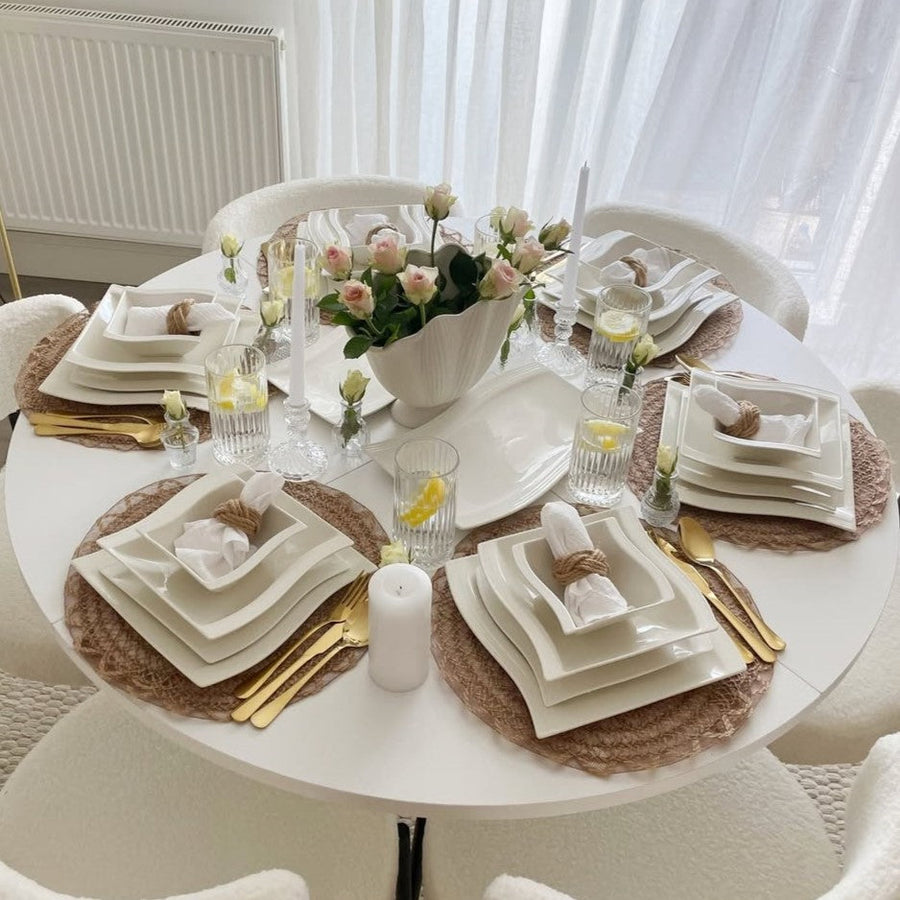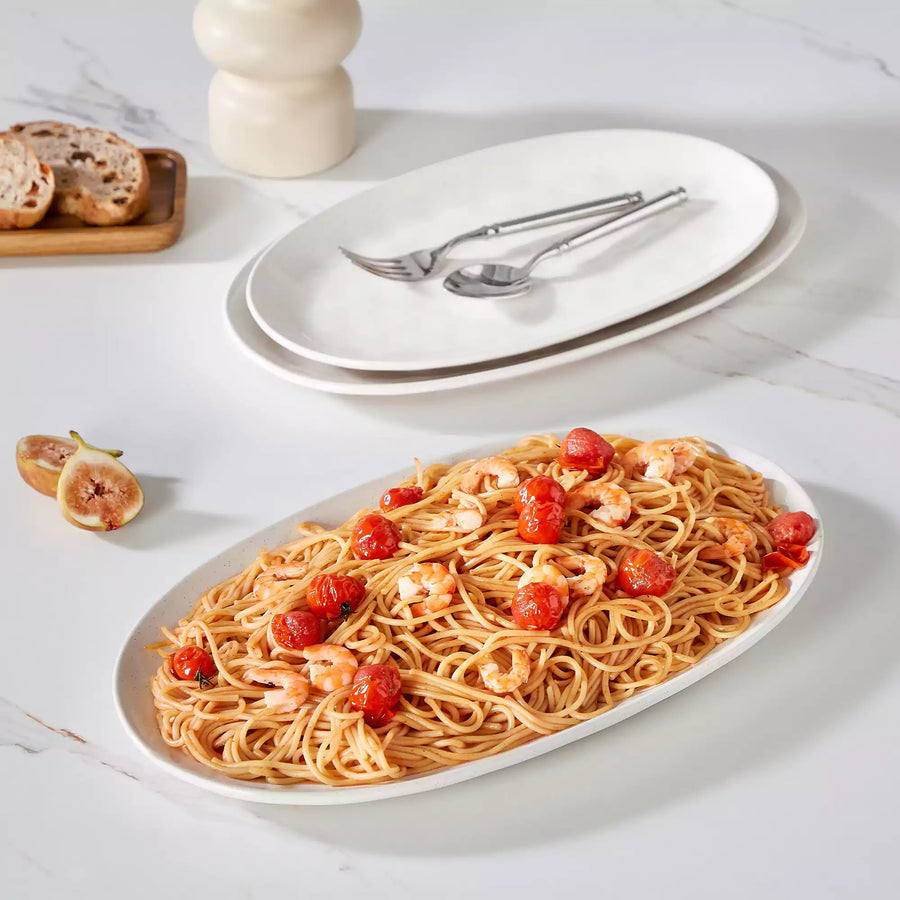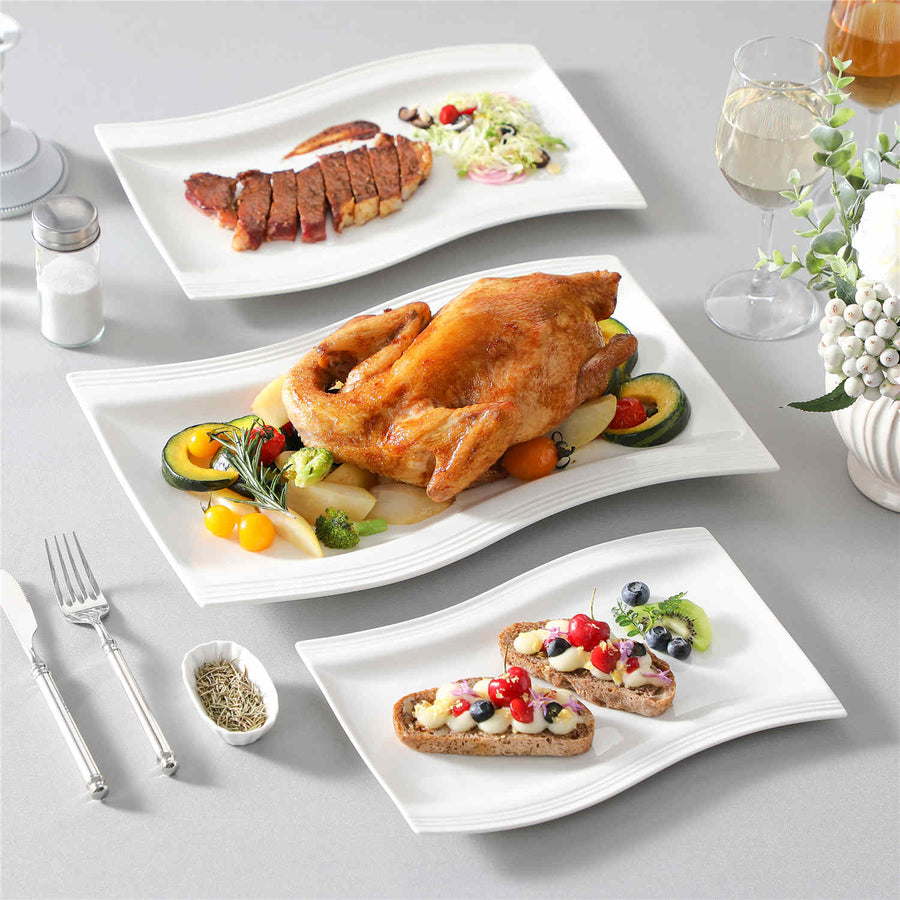


The right commercial dinnerware must fit your menu, withstand daily service, and remain practical to replace. Start with the pieces each dish requires, then compare materials, weight, stackability, care limits, and total cost. Before placing a bulk order, test each option through plating, carrying, washing, and storage. A plate that looks attractive online may cause daily problems if it crowds the pass, slows the dish area, or creates unstable stacks.
Commercial Dinnerware at a Glance
Use these priorities to narrow the options before comparing individual collections.
| Decision | What to Check | Why It Matters |
| Menu fit | Usable area, rim, depth, portion size, sauce control | The outside diameter does not show how much food the plate holds |
| Service flow | Weight, grip, balance, stack height, tray fit | Staff handle each piece repeatedly during a shift |
| Cleaning and heat | Dish-rack fit, drying, dishwasher and appliance limits | Shape and care requirements affect speed and safe use |
| Durability | Chips, scratches, thermal stress, and impact | Each service style creates different wear |
| Supply and cost | Case quantity, lead time, replacement options, freight | Purchase price covers only part of the operating cost |

Start With the Menu and Service Style
Choose restaurant plates around the food and its route through service. List the vessels required by your menu and identify pieces that can serve more than one purpose. A coupe dinner plate may handle entrées and composed salads, while a shallow pasta bowl can suit pasta, grain dishes, curries, and sauced mains. A compact core assortment also simplifies storage and purchasing.
Measure the usable plating area alongside the outside diameter. A wide rim can reduce the space available for food, and a steep coupe edge changes how sauces and garnishes sit. Test the actual portion with the intended flatware, garnishes, and sides. For covered service, confirm that cloches or plate covers clear the food and sit securely.
Service style changes the priorities:
- Fine dining may prioritize refined profiles and course-specific presentation.
- Cafés and casual restaurants benefit from versatile shapes and compact stacks.
- Buffets and banquets need stable stacks and fast resets.
- Outdoor service may favor lighter, break-resistant materials with suitable temperature limits.
In the United States, state and local rules determine what food-service businesses may use. Food-contact surfaces should remain durable, nonabsorbent, smooth, and easily cleanable under the FDA Food Code model. Check the requirements that apply to your location before approving a material or finish.
Compare Commercial Dinnerware Materials
Material affects appearance, weight, heat response, breakage, and care. Match these properties to the operating environment.

| Material | Practical Strengths | Points to Verify | Common Fit |
| Porcelain | Smooth glazed surface, neutral presentation, broad style range | Rim chips, weight, thermal and appliance limits | Plated service, cafés, restaurants, hotels, events |
| Stoneware | Substantial feel, visual texture, useful heat retention | Weight, stack height, glaze variation, cutlery marks | Casual dining, bistros, presentation-led menus |
| Bone china | Thin profile, light handling, refined appearance | Price, care requirements, suitability for service volume | Fine dining and formal service |
| Melamine | Lightweight and highly break-resistant | Microwave restriction, heat limits, scratching | Casual, buffet, family, and outdoor service |
Properly glazed porcelain provides a smooth, low-absorption surface, although exposed rims can chip under impact. Stoneware adds texture and character, while its weight and stack height require closer testing. Bone china offers a light, refined profile; confirm the care requirements of the exact collection.
Melamine is useful where low weight and resistance to breakage matter. Avoid microwaving melamine tableware. Heat food in cookware identified as microwave-safe, then transfer it for service. Retire pieces that become deeply scratched, cracked, or difficult to clean.
Test Samples in Your Actual Workflow
A practical test reveals problems that specifications and photographs cannot show. Run each candidate through a normal shift or realistic simulation.
- Plate the real menu. Check portion size, sauce movement, garnish space, color contrast, and utensil access.
- Carry a loaded tray. Assess weight, balance, grip, and contact between adjacent rims.
- Use the pass and dining table. Confirm that plates fit trays, covers, service stations, and the available table space.
- Run the complete wash cycle. Check rack fit, water pooling, drying, marking, and handling when the piece is hot or wet.
- Build a full stack. Measure its height and stability on shelving and service stations.
- Check approved appliances. Follow the instructions for microwaves, ovens, warming equipment, and dishwashers. “Dishwasher safe” does not describe every commercial high-temperature or chemical cycle.
- Inspect repeated-use results. Look for chips, scratches, glaze changes, rocking bases, and trapped residue.
Invite kitchen, service, and dish-area staff to evaluate the samples because each team sees different failure points.
Plan Quantities Around Peak Demand and Replenishment
Seat count alone does not determine how many restaurant plates to buy. Build the quantity for each item from four components:
Opening quantity = pieces needed at peak service + pieces still in the wash cycle + pieces used for prep or staging + safety stock
Calculate this separately for dinner plates, side plates, bowls, cups, and serving pieces. A 60-seat restaurant may need very different quantities of pasta bowls and dessert plates because their order rates differ.
Set safety stock from breakage, supplier lead time, delivery frequency, and seasonal volume. Track losses by item after launch and adjust reorder points. Operating data produces a more useful par level than a fixed plates-per-seat rule.
Compare total cost over the expected service period. Include:
- Initial unit and case price
- Freight and handling
- Breakage and replacement frequency
- Storage space required by the stack
- Staff effort created by heavy or awkward pieces
- Full-pattern replacement if a collection is discontinued
An inexpensive plate that is difficult to replace or fails frequently can cost more over time than a higher-priced option with steady supply.
Choose a Style That Can Be Repeated Consistently
Color and shape should support the full menu. White and ivory provide a flexible base, while dark, patterned, or textured dinnerware can strengthen a distinct concept across several courses.

View candidates under dining-room lighting and photograph them with representative dishes. Matte and dark finishes may show cutlery marks more readily, while reactive glazes can create intentional variation. Decide how much variation fits the concept.
Prioritize stackable shapes for core place settings and reserve unusual forms for signature dishes. Our dinnerware collection includes porcelain, bone china, and stoneware options that can be compared by service size, color, and piece type before creating a shortlist.
Confirm Supply Terms Before a Bulk Order
Confirm the details that affect daily use and future purchasing:
- Material, dimensions, weight, and care instructions
- Case quantity, minimum order, price tiers, and freight terms
- Lead time and continued availability of individual replacement pieces
- Expected color or glaze variation between batches
- Sample availability and the process for reporting damage or defects
- Relevant food-contact documentation and market-specific use limits
Confirm the intended application and care limits for every item under consideration. Restaurants, retailers, and event organizers can submit the required products and quantities through our wholesale inquiry for a tailored quote.
Commercial Dinnerware FAQs
Q1. What Size Dinner Plate Should a Restaurant Use?
Choose the size around the actual portion, usable plating area, table space, and service equipment. A wide rim can make two plates with the same outside diameter hold very different amounts of food. Test the completed dish before standardizing the size.
Q2. Are Coupe or Rimmed Plates Better for Restaurants?
Coupe plates maximize usable area and create a contemporary presentation. Rimmed plates give servers a defined gripping area and help frame portions. Test both with actual food, flatware, trays, and plate covers; the better shape is the one that performs smoothly in service.
Q3. What Does Open-Stock Dinnerware Mean?
Open-stock dinnerware allows individual piece types to be purchased separately. Restaurants can replace dinner plates or bowls without buying complete place settings. Confirm which pieces are available individually and record their reorder lead times.
Q4. When Should a Restaurant Plate Be Removed From Service?
Remove plates with chips, cracks, crazing, deep scratches, or other damage that makes the surface unsafe or difficult to clean. Train staff to separate damaged pieces during clearing and washing, then record the loss by item.
Q5. Can a Restaurant Mix Different Dinnerware Materials?
Yes. A restaurant can use porcelain for core service, stoneware for selected dishes, or melamine in suitable breakage-prone areas. Keep the visual language coordinated and confirm that each piece fits its own heating, washing, storage, and handling conditions.
Build a Dinnerware Program That Can Keep Up With Service
The best commercial dinnerware supports the menu and moves efficiently through service. Narrow the options by material and style, verify them in the real workflow, and compare their total operating costs. Record the approved product details and reorder point for every piece so future purchasing stays consistent.