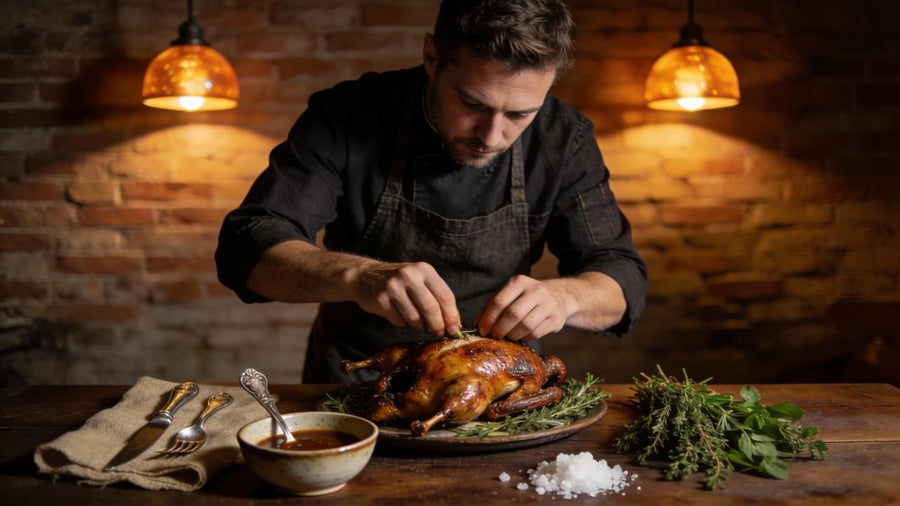



There is a particular sound that tells you dinner is going to be memorable: the delicate crackle when a knife breaks through fried chicken crust, followed by a pause as the steam escapes. As a tabletop stylist who also cares deeply about how food eats, not just how it looks, I lean on one technique when I want that shattering crunch to survive the journey from kitchen to table: double-frying.
Plenty of excellent recipes from home cooks, food stylists, and culinary schools achieve beautiful results with a single fry. CJ Eats Recipes, Taste of Home, the Institute of Culinary Education, and others all demonstrate that with good brining, smart coatings, and the right temperature control, you can get juicy chicken with an impressive crust. Double-frying does not replace those fundamentals; it amplifies them. It is the technique I reach for when I want chicken that stays crisp through a leisurely dinner, looks gorgeous on a platter, and tastes freshly fried even after a few minutes of conversation and passing plates.
In this guide, we will walk through how to build that kind of crust—backed by what recipe developers and food scientists know about batters, starch, and temperature—and then adapt it to a double-fry rhythm that fits real life at the dinner table.
Why Double-Fry At All?
Most classic fried chicken recipes follow a single, well-managed fry. CJ Eats Recipes fries drumsticks or thighs at about 350°F for 8 to 12 minutes, monitoring that the oil stays in a 325 to 350°F band and the meat reaches 165°F. Taste of Home’s crispy fried chicken uses oil at 375°F, cooking each side for around 7 to 8 minutes until the juices run clear and the internal temperature confirms doneness. Those time and temperature ranges line up with other sources like buttermilk fried chicken guides from culinary schools and general recommendations gathered by Delivisor: oil in roughly the 325 to 375°F window, total fry time somewhere around a dozen minutes or more, depending on cut size.
If those recipes work so well, why add a second fry? The answer is less about making something possible and more about tightening the performance. Double-frying gives you three practical advantages. First, it separates cooking the meat through from crisping the crust, so you are less likely to overcook the interior while chasing the deeper color that Chef Lachlan Sands at the Institute of Culinary Education describes as “almost a chocolate brown” for truly crisp poultry skin. Second, it gives you a built-in holding period: you can cook the chicken almost completely, rest it on racks while you finish setting the table, then refry briefly right before serving. Third, the second pass through hot oil drives off extra surface moisture and re-inflates the tiny air pockets created by leaveners like baking powder, which several sources identify as key to a flaky, crunchy coating.
You can see a similar logic in industrial research on coated and fried chicken meat published on Academia. In that study, coated chicken is partially fried, then finished in a hot oven and stored frozen. While the exact process is different from home double-frying, the principle is the same: use more than one heat treatment to balance juiciness, crispiness, and shelf life. At home, we are not storing chicken for weeks, but we can still borrow the idea of a “cook, rest, crisp” cycle to keep the experience at the table consistently pleasurable.

Start With Juicy, Well-Seasoned Chicken
Choosing Cuts For Flavor, Forgiveness, And Plating
For double-frying, I favor cuts that can tolerate a bit of extra time in hot oil without drying out. Delivisor’s guide on crispy fried chicken notes that dark meat—thighs and drumsticks—stays moister and is more forgiving than breast meat, with typical frying times around 12 to 25 minutes depending on size. Taste of Home’s recipe uses an entire chicken cut into even pieces, which is a smart move for uniform cooking and offers a nice balance of white and dark meat on a platter.
From a styling perspective, bone-in thighs and drumsticks are ideal anchors. They stack attractively on a large, low platter, their rounded shapes catching the light on every craggy edge, while smaller pieces like wings tuck into gaps and make the pile look generous rather than chaotic. Breast pieces can be included for guests who prefer them, but for a first experiment with double-frying, building your batch around dark meat gives you a wider margin of error.
Brining, Buttermilk, And Flavor Foundations
Nearly every serious fried chicken source comes back to one premise: start the flavor inside the meat, not just in the crust. CJ Eats Recipes uses a milk brine with salt, garlic, black peppercorns, and bay leaves, explaining that the lactic acid in dairy breaks down proteins and collagen, helping the meat become more tender and receptive to seasoning. A buttermilk fried chicken framework from the Institute of Culinary Education echoes this, describing how soaking chicken in an acidic buttermilk marinade for several hours tenderizes and adds tang while also helping flour cling to the surface.
Delivisor gets more specific with a simple formula: about a cup of buttermilk or milk plus an egg and a generous spoonful of mixed spices, with marinating times from as short as 10 to 15 minutes in a pinch up to 12 to 24 hours for maximum flavor, kept in the refrigerator at or below 40°F. Taste of Home adds that buttermilk, or milk acidified with lemon juice or yogurt, can be used for up to 48 hours, with the caution that going much longer risks mushy texture as the acids keep breaking down proteins.
In my own kitchen, combining those perspectives leads to a very workable pattern for about 3 to 4 lb of chicken. I reach for roughly 2 cups of buttermilk (in line with culinary school style ratios), a tablespoon or so of hot sauce if I want a gentle background heat, a teaspoon each of garlic powder and onion powder, and enough kosher salt that the liquid tastes pleasantly seasoned but not harsh. For a weeknight dinner, I am happy with a 2 to 3 hour soak, which matches the lower end of what CJ Eats and Delivisor find effective. For weekend entertaining, I often marinate overnight so that by the time the chicken hits the oil, it is deeply seasoned before we even talk about breading.
Dryness Is The Quiet Hero
Before you bread or fry, the surface of the chicken needs to be dry enough that flour clings instead of sliding and steam does not sabotage your crust. Taste of Home emphasizes patting chicken dry with paper towels and even letting it sit uncovered in the refrigerator so the skin dries slightly; they note that this helps the batter and flour adhere and makes the coating less likely to fall off. ICE’s crispy chicken skin tips take the same principle further, warning that moisture on the skin leads to steaming instead of crisping and recommending drying thoroughly before adding a thin smear of vegetable oil for roasting.
I treat this drying step as part of tabletop prep. Once the chicken comes out of the marinade, I let excess liquid drip off, then blot it and set the pieces on a wire rack over a sheet pan while I finish setting the table: laying out napkins, choosing a platter, arranging small bowls for pickles or dipping sauces. That half hour of gentle air-drying pays off in the pan and on the plate.

Designing The Crunch: Flour, Cornstarch, And Those Craggy Bits
Coating Styles And The Textures They Create
Different recipes structure the coating in different ways, but they all target the same goal: a well-adhered, textured shell that stays crisp. Taste of Home relies on an egg, water, and flour batter that evenly coats each piece, followed by a roll in seasoned flour. They define this batter-plus-flour method as distinct from a simple flour coating and note that batters like this help the breading stick instead of sliding off.
CJ Eats Recipes uses a seasoning mix built from flour, cornstarch, and baking powder, along with salt, peppers, garlic and onion powder, cayenne, and smoked paprika. A portion of that mix is thinned with cold water to make a wet batter. The chicken goes from brine to wet batter to the dry seasoning mix, and CJ specifically recommends spooning some of the brine into the flour mixture and rubbing it together to form “craggily bits” that cling to the chicken and create extra texture.
On Seasoned Advice (the Cooking StackExchange community), a discussion of KFC-style crunch recommends self-rising flour or adding about a teaspoon of baking powder per cup of all-purpose flour. During frying, that baking powder releases carbon dioxide, which puffs the coating and makes it more flaky and crisp. The same answer suggests lightly moistening the flour with milk or water and shaking it so it forms small clumps—another path to those prize crunchy fragments that stick to the chicken.
Batter-centric recipes, such as David Leite’s tested batter-fried chicken, take yet another approach, using a loose, pourable batter (thinner than pancake batter, closer to a thick dressing) that stays fairly fluid even after chilling. Testers report that this yields a delicately crisp, evenly browned shell when fried at carefully controlled temperatures around 300 to 325°F.
A concise way to see how these fit together is to look at components and outcomes side by side.
Coating style |
Key components (from sources) |
Texture and best use |
Seasoned flour only |
All-purpose flour plus spices; sometimes baking powder in the flour as on Seasoned Advice |
Light, crisper crust; good if you prefer a thinner shell and classic diner-style fried chicken |
Batter then flour |
Egg–water–flour batter, followed by seasoned flour as in Taste of Home |
Robust, well-adhered crust ideal for larger pieces and crowd-pleasing “bucket” style |
Flour–cornstarch–baking powder mix |
Flour with a notable portion of cornstarch and a little baking powder, seasoned as in CJ Eats and Hot N’ Krispy–style guides |
Extra-crispy, deeply craggy crust that stays crunchy longer; my favorite for double-frying |
Thin batter only |
Loose batter tested in batter-fried chicken recipes like the one on Leite’s Culinaria |
Delicate, shattery shell that is beautiful for smaller pieces or a more refined presentation |
For double-frying, I reach almost automatically for the flour–cornstarch–baking powder route. Hot N’ Krispy’s guide (via Housing Innovations) gives a simple starting point: 1 cup flour and 1/2 cup cornstarch, bolstered with paprika, garlic powder, onion powder, and salt and pepper. Seasoned Advice’s baking powder guidance folds in neatly here: about a teaspoon of baking powder per cup of flour adds the gas-generation power you want for a crust that puffs and re-crisps well on the second fry.
Cornstarch, Baking Powder, And The Architecture Of Crunch
CJ Eats explains crisply why cornstarch is such a powerful addition: mixed with flour, it interferes with gluten development, which makes the crust less chewy and more brittle in the best way, and it contributes to a golden color. Baking powder, they note, reacts in hot oil to create tiny air bubbles that further lighten the coating.
The StackExchange answer on KFC-like breading reaches the same conclusion from a slightly different angle, emphasizing that baking powder’s carbon dioxide production during frying expands the coating, making it flakier. Combine that with purposely creating clumps in the seasoned flour and you end up with a shell that has built-in ridges and pockets where hot oil can bubble, crisp, and then drain away.
From a tactile standpoint at the table, this is what makes your chicken audible. When guests can hear a piece crackle as someone bites down, the experience becomes almost theatrical. On a wide ceramic platter, those irregular ridges catch light differently than a smooth surface, which is exactly what you want if you care about how this dish photographs and feels across the room.
How The Double-Dredge Supports The Double-Fry
Most of these sources, even when they are not doubling the fry, already use some form of double-dredge. Seasoned Advice explicitly recommends dipping the chicken in buttermilk, dredging it in flour, returning it to the milk, and dredging again for a thicker crust. Taste of Home effectively does the same with an egg–flour batter followed by seasoned flour. CJ Eats moves from brine to wet batter to a thoroughly massaged dry mix that includes those “craggily bits.”
For double-frying, that layered coating becomes your insurance policy. It gives you enough structure that the crust stays attached through two trips into hot oil and the rest in between. After the second dredge, I like to let the coated chicken rest on a rack for at least 10 to 15 minutes. Delivisor notes that letting breaded chicken rest for 15 to 30 minutes helps the coating hydrate and adhere; that same resting time fits neatly into the rhythm of double-frying. While the coating is bonding, you can finish your table: set out stacks of small plates to catch bones, arrange dipping sauces in low bowls, and place a heatproof trivet where the platter will live.

Frying Twice: A Practical Roadmap That Respects The Science
Temperatures And Timing Within Proven Ranges
Look across the fried chicken sources and a clear temperature band appears. CJ Eats aims for oil that settles between 325 and 350°F once the chicken is in. Delivisor recommends keeping the oil in roughly the 340 to 375°F range, with about 335 to 350°F as a practical target. Taste of Home sets their deep-frying oil at 375°F. Professional-style buttermilk fried chicken recipes from the Institute of Culinary Education keep things in the 325 to 350°F neighborhood as well.
When I double-fry, I simply use the low end of that shared range for the first fry and the higher end for the second, always staying within the boundaries those sources already endorse. The first fry happens around 325°F, which gives the meat time to cook through gently without scorching the crust. The second fry happens closer to the 350 to 375°F zone described by Delivisor and Taste of Home, but it is brief, just long enough to drive off surface moisture and deepen the color.
In terms of total time, nothing radical changes. The sources collectively show that bone-in pieces generally need somewhere between 12 and 18 minutes of actual frying time, with specifics like CJ Eats’ 8 to 12 minutes at 350°F, Taste of Home’s 7 to 8 minutes per side at 375°F, Hot N’ Krispy’s 5 to 7 minutes per side depending on cut, and Leite’s batter-fried tests where drumsticks took around 14 minutes and thighs about 17. With double-frying, you distribute that total across two passes rather than one continuous one. The first fry takes the chicken close to done, checking with a thermometer until you see temperatures approaching the safe 165°F mark in the thickest part. After a rest on a rack, the second fry is more about finishing and texture than cooking the interior.
Crucially, multiple sources stress using thermometers. CJ Eats recommends an infrared thermometer for the oil and a probe thermometer for meat; Delivisor and the Institute of Culinary Education echo the value of monitoring both oil and internal temperatures; Taste of Home also insists on hitting 165°F at the thickest point. For a double-fry, I treat the thermometer as a nonnegotiable tool, just like choosing heavy cookware or the right platter.
Oil Choice, Pan Choice, And Crowd Control
On oil, there is strong agreement. CJ Eats favors neutral, high-smoke-point oils like avocado, canola, vegetable, or grapeseed. Taste of Home suggests canola and safflower. Delivisor names peanut and coconut oil as particularly good for high-heat frying. Buttermilk fried chicken recipes from culinary schools talk about peanut, canola, or vegetable oil in heavy pots. The Hot N’ Krispy guide even suggests a blend of lard and vegetable oil when you want flavor and crispness together, though it notes that any neutral high-smoke-point fat will work.
Heavy-bottomed cookware comes up repeatedly: CJ Eats recommends a cast iron pan, Dutch oven, or heavy-bottomed wok, and buttermilk fried chicken recipes from the Institute of Culinary Education point to Dutch ovens and sturdy pots for heat retention. Delivisor and Taste of Home emphasize avoiding overcrowding the pan, both to prevent dangerous oil boil-over and to keep the temperature from dropping below the crispness sweet spot, since oil that dips under about 325°F tends to make chicken greasy and soggy.
In practice, that means choosing a pot that holds enough oil to come at least a third of the way up the chicken (or deeper for deep-frying), leaving at least a couple of inches between the oil surface and the rim, and adding only a few pieces at a time. The remaining pieces wait on a rack, not piled in a bowl, which also happens to look more composed if a guest wanders into the kitchen for a preview.
A Real-World Double-Fry Scenario
Imagine a Saturday evening gathering: six to eight guests, eight thighs and eight drumsticks marinated since morning in a buttermilk mixture guided by the formulas described earlier. An hour before dinner, the chicken comes out of the refrigerator, is patted dry, and double-dredged in a seasoned flour, cornstarch, and baking powder mixture inspired by CJ Eats and Hot N’ Krispy. The coated pieces rest on a rack while the oil slowly heats to about 325°F in a deep Dutch oven.
The first fry happens in batches. Pieces go in, skin side down when that applies, and stay relatively undisturbed, taking advantage of Chef Lachlan’s advice from the crispy chicken skin article not to fuss too much so the Maillard reaction can do its work. As each batch nears 165°F and reaches a good golden color, it comes out onto a clean rack set over a sheet pan. At this point, you could serve as-is and still have excellent single-fried chicken.
For the double-fry payoff, though, you give the chicken time. While the first fried batches rest, you lower the oven to a warm holding temperature if you want, say around 250°F as Taste of Home suggests for maintaining crispness between batches, and slide the rack in for a short hold. In that window, you turn fully to the table: lining a wide, matte platter with a linen napkin if you want to catch crumbs, placing a small bowl for discarded bones within easy reach, pouring drinks.
Just before everyone sits down, the oil is reheated closer to the high side of the established range. You work quickly now: a short second fry in small batches until the crust deepens from golden to a darker, almost chocolate brown in places, echoing ICE’s color cue for crisp poultry skin. Since the interior is already cooked, the second fry is brief. The chicken goes straight onto the serving platter, where those double-fried ridges hold up through toasts, stories, and second helpings.
Tabletop Styling: Serving Double-Fried Chicken With Intention
Fried chicken is casual food, but there is no reason the presentation has to feel careless. The choices you make about platters, bowls, and even the way you deal with drips can either preserve the crust you worked for or quietly undo it.
A wide, low platter or shallow serving bowl is your best ally here. Deep bowls trap steam; the underside of the top layer gets soft and the pieces on the bottom begin to stew in their own heat. A ceramic platter with a gentle lip allows air to move around the chicken and gives you a broad canvas for arranging pieces. I like to place larger thighs in the center, leaning them slightly, then tuck drumsticks and wings around, with a few pieces laid on their side so guests can see both the burnished crust and the clean line of bone. Neutral glazes—soft white, pale gray, muted stone—let the caramel tones from paprika, cayenne, and browned flour pop without visual noise.
Function matters as much as aesthetics. A small bowl near the platter for bones, another for pickles or quick slaw, and a ramekin of flaky salt for last-second seasoning all make the experience smoother. Sides like mashed potatoes, coleslaw, and mac and cheese, which Taste of Home recommends as classic partners, look particularly good in slightly taller dishes that visually “brace” the central platter. If you want a brunch spin, a stack of waffles on a separate plate with a small pitcher of maple syrup nods to the chicken and waffles tradition they mention, but keep syrup on its own; you worked hard for that crunch, and a flood of liquid on the serving platter will undo it.
Even reheating and serving leftovers can benefit from intentional tableware. Both CJ Eats and Taste of Home suggest using an oven or air fryer rather than a microwave to recrisp chicken, with oven temperatures around 350 to 375°F and times of roughly 8 to 20 minutes depending on method. Placing reheated pieces back on a wire rack set over a small sheet pan while you bring them to the table keeps air flowing and prevents the bottom from getting soggy again. Transferring them to a fresh plate or platter only when you are ready to eat keeps the presentation appealing even on day two.
Leftovers, Storage, And Food Safety
From a food-safety standpoint and a crunch standpoint, the guidance is mercifully aligned. CJ Eats, Taste of Home, and Delivisor all suggest storing leftovers in airtight containers in the refrigerator for around 3 to 4, sometimes up to 5, days. Taste of Home adds a simple but important styling-minded tip: let the chicken cool before covering the container, so steam does not get trapped and soften the crust unnecessarily.
Reheating methods also converge. Taste of Home recommends reheating in a 350°F oven for about 15 minutes, then briefly increasing to 400°F to finish crisping the skin, or using an air fryer at 350°F, flipping frequently until 165°F internal temperature is reached. CJ Eats suggests an air fryer or conventional oven at 375°F for 8 to 10 minutes, again emphasizing that you are chasing crispness and a hot interior rather than just blasting with heat. Delivisor similarly encourages oven or brief refrying instead of microwaving, noting that dry heat preserves crunch where steam destroys it.
The industrial study on coated and fried chicken meat adds an interesting perspective here. Coated chicken stored at freezing temperatures lost moisture more slowly than uncoated pieces, and consumers preferred coated samples despite slightly higher lipid oxidation, especially when frozen with proper packaging to limit oxygen. For a home cook, that translates into reassurance: a well-made coating not only pleases the palate but also offers a bit of protection for texture and juiciness in the short term. You are not freezing for months, but your carefully built crust is doing more than just looking pretty.
FAQ: Double-Frying And Everyday Life
Do I truly need to double-fry to get great fried chicken?
No. The recipes from CJ Eats Recipes, Taste of Home, Leite’s Culinaria, and the Institute of Culinary Education all produce excellent results with a single, well-managed fry. They rely on good marinating or brining, thoughtfully designed coatings that often include cornstarch or batter, and careful control of oil temperature around 325 to 375°F, with internal meat temperatures reaching 165°F. Double-frying is a refinement rather than a requirement. I reach for it when I need the crust to hold for longer—say, for a party where people will be eating over an hour or more—or when I want an especially dramatic crunch. For a quick family dinner, a single fry using their techniques is often exactly right.
Is double-fried chicken much greasier?
It does not have to be. The same principles these sources outline to avoid greasy single-fried chicken apply here. Keeping oil in the proper temperature range (CJ Eats’ 325 to 350°F, Delivisor’s 340 to 375°F, Taste of Home’s 375°F) means the coating fries rather than absorbing oil. Not overcrowding the pot, as all three stress, helps the oil recover quickly between batches. Coatings that feature cornstarch and appropriate batter solids, like those from CJ Eats or the industrial research on wheat flour and modified corn starch batters, tend to absorb less oil and crisp more efficiently. If anything, a short, hot second fry in clean oil can actually leave the surface feeling less greasy by driving off residual moisture and letting excess fat drip away on the rack afterward.
Can I double-fry boneless pieces or wings?
Yes, but keep their smaller size in mind. Delivisor’s timing notes and Leite’s batter-fried tests both show that smaller or thinner pieces cook faster, and double-frying does not change the basic safety target of 165°F internal temperature. For boneless strips or smaller wings, the first fry will be shorter, and the rest between fries becomes even more important so the juices can settle. The second fry should be brief, just enough to re-crisp the exterior. Following the coating and temperature guidance from these same recipes—good adhesion, cornstarch and baking powder for crunch, oil in the recommended range—keeps the crust intact even through two dips in the fryer.
A platter of double-fried chicken is where function and beauty quietly agree: a crust engineered for resilience, resting on dishes chosen to keep it that way. When you marry what trusted recipe developers and culinary educators know about brining, coating, and temperature with a deliberate double-fry rhythm, you get chicken that looks as irresistible as it tastes, and a table that invites people to linger long after the last audible crunch.

References
- https://dev.housing.arizona.edu/hot-n-krispy
- https://covidstatus.dps.illinois.edu/hot-n-krispy
- https://www.academia.edu/4291004/Coated_and_fried_chicken_meat
- https://bartable.bart.gov/featured/get-your-fried-and-hot-chicken-fix-these-local-spots
- https://www.ice.edu/blog/buttermilk-fried-chicken-recipe
- https://digital.library.ncat.edu/cgi/viewcontent.cgi?article=1370&context=theses
- https://scholarworks.uark.edu/cgi/viewcontent.cgi?article=1985&context=etd
- https://vtechworks.lib.vt.edu/bitstreams/39b38db6-96c8-4a5e-8a58-81666708ddd8/download
- https://etd.ohiolink.edu/acprod/odb_etd/ws/send_file/send?accession=ohiou1350954055&disposition=inline
- https://do-server1.sfs.uwm.edu/niche/!W166281D80/journal/W27883D/fried+chicken+recipes+for+the+crispy+crunchy+comfortfood+classic.pdf