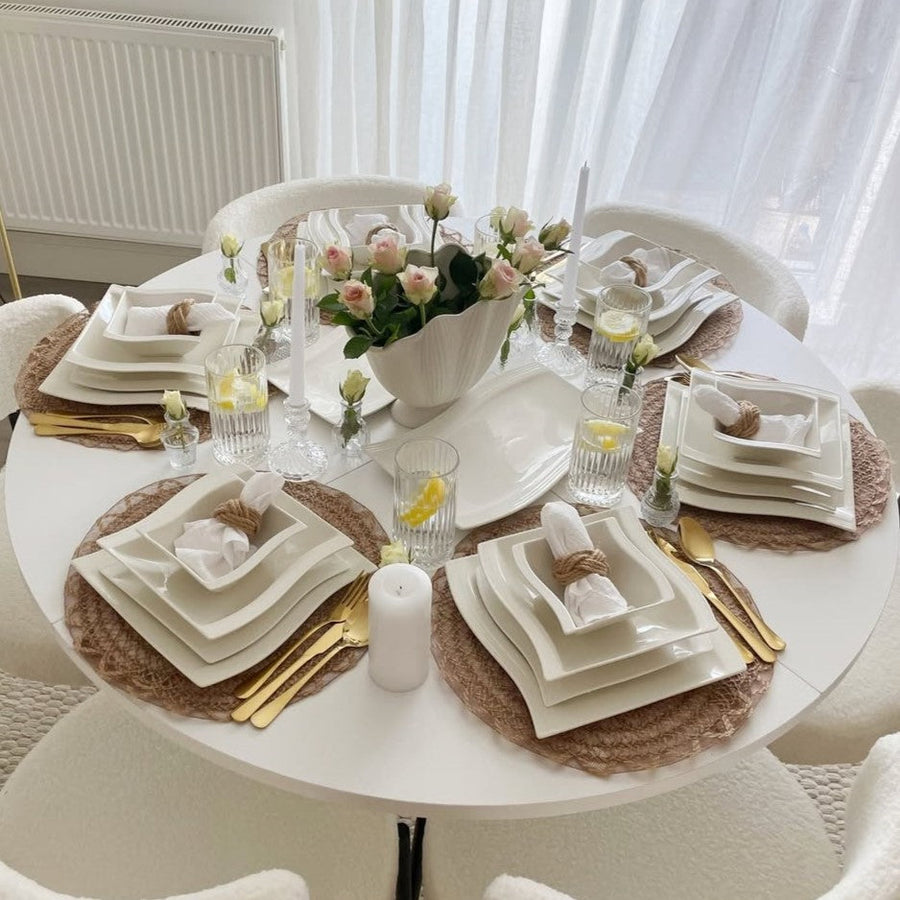


When selecting the perfect serving platter, it's not just about aesthetics; it's about finding a piece that truly complements your table. The proper size improves presentation, makes food easier to serve, helps prevent spills, and gives guests enough room to take a portion without disturbing the arrangement. From holiday dinners to family dinners to dessert displays for a celebration, knowing the size of the platter can keep you from overcrowding your presentation or wasting table space.
When buying large serving platters, think about the size of the food you will be serving as well as how you will be using the platter all year long. Serving platters, such as those available at MALACASA, come in different sizes for everyday meals and entertaining, making it easier to find one that fits your style of serving.

Why Serving Platter Size Matters More Than It Looks
Many people select a platter for its appearance, but it is the usable surface area that is important. Too small and food is pushed into a compacted pile, too large and food looks like it's scarce.
When the food is sized appropriately, it will look better because there will be sufficient visible space around the edges. This border will prevent sauces from spilling over the edge, help prevent crushing of garnishes and make serving utensils easier to use. It also enables guests to take pieces without disturbing the whole arrangement.
Another factor to consider is weight. A meat, vegetable, and juice-filled ceramic serving platter can get quite heavy when full. It's just as crucial to choose a size that's easy to transport from the kitchen to the dining table as it is to fit all the food.
Measure the Food Footprint Before Measuring the Platter
Measure the finished dish, rather than the dimensions of the platters. Consider the size of the cooked and plated food.
A roast chicken, for instance, might need about 12 inches of surface area when it is decorated, and a decorated cake or lasagna might need even more. After estimating the food footprint, add at least 1 to 2 inches of clearance around every side. This additional space allows for serving utensils, collects sauces and provides a neat presentation.
Don't forget garnishes, herbs, lemon slices or decorative vegetables in your measurements. They add to the overall footprint and should not extend beyond the edge of the platter.

Selecting a Large Serving Platter for Roast Chicken, Turkey and Sliced Meats
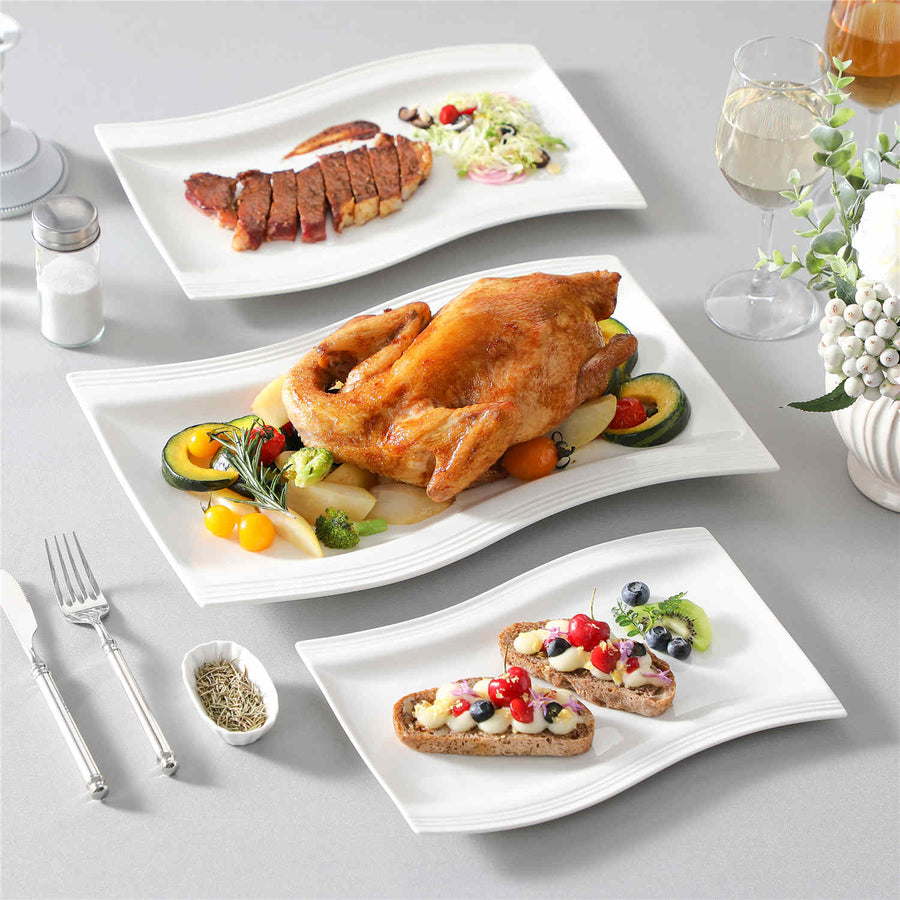
Roasts need one of the largest serving surfaces as they involve more than just the meat. A whole chicken, turkey breast, beef roast, or pork loin will likely contain herbs, vegetables, gravy, or resting juices.
A platter that is approximately 16 to 18 inches long should be large enough for a whole chicken, the vegetables around it, and the carving area. Platters over 20 inches may be needed for larger holiday turkeys.
Sliced meats also have the advantage of having more room, as it will be harder to serve if they are cut too tightly together. Place slices so that they overlap slightly, but leave room for garnish and any sauce. If you are using large serving platters, always take into account the weight of the loaded platter before lifting, particularly if the platter is sturdy ceramic.
The Size of a Platter for Appetizers and Party Bites
Food on a platter for appetizers should be sufficient to not require guests to reach awkwardly across the table. Use about 6 to 8 appetizer servings per person for shorter events; increase to 12 for cocktail parties where appetizers are served instead of a meal.
Don't fill the plate with various foods. This enhances the look and helps to avoid flavor contamination.
If you have dips, olives or nuts, allow space for small bowls instead of cramming them into the food display. A serving platter set is also a great option for many hosts because it allows them to keep various categories of appetizers separate, yet still put them together to make a lovely buffet display.
How Many Servings of Family-Style Mains Does a Family Need?
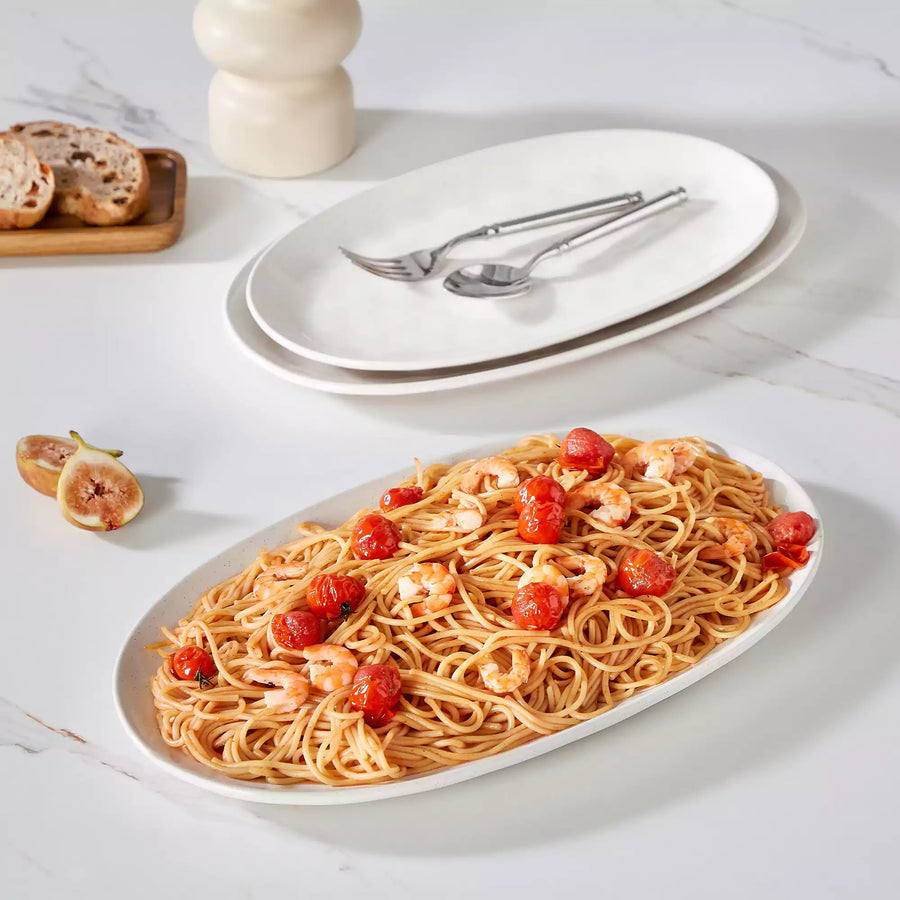
Family meals may need larger serving areas than single servings. Pasta, roasted vegetables, rice dishes, grilled fish and shared entrees are not piled up on the platter but spread out horizontally.
Try to cover about 70-80% of the surface with the material, leaving visible borders around the edges. This will ensure that the food doesn't slip during transport and will look elegant.
Deeper-rimmed plates are better for saucy pasta dishes. Fish fillets are wide enough to rest mostly flat and vegetable medleys are more attractive when served in a single layer rather than stacked.

Choosing the Right Size for Cakes, Cookies, and Desserts
Desserts require a different approach because presentation often matters as much as serving capacity.
One centerpiece cake is best surrounded by plenty of space that is clearly visible on the platter. The empty space will naturally help to highlight the dessert and make it easier to slice.
The cookies, pastries, brownies and petit fours are best served in neat rows. Allow for a little space between pieces so that guests can take one piece without disturbing the others. For desserts, a white platter is a popular choice as it allows the colors of the frostings, fruit, and chocolate decorations to stand out without being overpowered by the color of the platter.
Will the Platter Fit Your Table, Cabinet, Sink, and Dishwasher?
Don't just measure your dining table before buying new serving platters.
Make sure the platter will:
- Install in your kitchen cabinets.
- Fit comfortably in your sink to wash your hands.
- If it's dishwasher safe, install your dishwasher.
- Go through doorways and around corners easily when fully loaded.
- Provide adequate space at the dining table for other serving dishes.
Many buyers find their perfect platter works great at dinner, but isn't so easy to put away after dinner. Measuring first avoids the frustration.
One Oversized Platter or Two Medium Platters?
While an oversized platter makes a great impression at holiday time and formal dinners, it's not always the most practical option.
Two medium platters may offer more versatility. They are easier to transport, fill at parties, and fit in cabinets and dishwashers. They also enable food to be served at either end of a long table, which helps to minimize the crowding around one serving area.
However, if you are serving whole roasts or hosting large gatherings on a regular basis, you may want to consider purchasing one additional large platter and a versatile platter set to serve most occasions.
A Quick Serving Platter Size Checklist Before You Buy
Read through some practical questions before buying. Measure the finished food rather than guessing. Leave 1 to 2 inches of space around the edge of the dish. Try to estimate how many people you will serve and if the platter will be too heavy when it is full. Test to make sure it fits your dining table, storage cabinets, sink, and dishwasher.
Last but not least, consider whether one large platter or several medium platters will better suit your entertaining style. These simple measurements will make it easier to choose large serving platters and ensure years of use.
FAQs
Q1: Which Is the Most Suitable Serving Platter for a Whole Chicken?
Most whole roast chickens will fit on a platter that is about 16-18 inches long, with room for garnishes and serving area.
Q2: Is a Ceramic Serving Platter Good for Everyday Use?
Yes. A ceramic serving platter is a durable, attractive and suitable platter for everyday meals and special occasions.
Q3: Should Appetizers Be Crowded Together?
No. Small spaces between foods make it easier to serve, more visually appealing, and will not allow flavors to blend.
Q4: Can a White Plate Be Used for Every Meal?
Yes. A white platter will work with almost any type of food and will make colorful dishes look great.
Q5: Should I Invest in a Serving Platter Set?
A set of serving platters can be used for various meal sizes and occasions for entertaining, and can be used to create a coordinated table presentation.