

Backyard game day is not gentle on dinnerware. Guests balance plates on folding chairs, barbecue sauce slides toward the edge, kids run through the patio door, and a breeze hits the food table right when someone reaches for another wing.
That is why choosing eco friendly dinnerware is not just about avoiding single-use waste. The right pieces need to hold hot food, stay steady in real outdoor conditions, clean up without drama, and still look good when the table has been used hard.
For the main serving area, ceramic and porcelain often make the most sense. They bring weight, structure, a smooth glazed finish, and a table-ready look that paper plates and flimsy plastic rarely deliver.
Key Takeaway: The best eco friendly dinnerware for backyard game day should be reusable, slightly rimmed, easy to clean, practical to store, and strong enough for BBQ, sauces, guests, and repeat hosting.

Why Backyard Parties Need Stronger, Reusable Dinnerware
Indoor dinnerware has it easy. It sits on a stable table and rarely has to survive wind, grass, folding chairs, sticky hands, and people eating while standing.
Outdoor party food is harder on plates and bowls. Wings, ribs, beans, pasta salad, chips, dips, grilled meats, and saucy sides all need more support than a thin disposable plate can offer. A weak plate may bend under brisket, leak sauce onto someone’s lap, or slide across the patio before halftime.
That is why practical eco friendly dinnerware should do more than sound sustainable. It should be something you actually reuse because it works: steady in the hand, useful for real portions, dishwasher-friendly, and good-looking enough for the next cookout, birthday, patio dinner, or game day.
Ceramic, Porcelain, Melamine, or Bamboo: What Works Best Outdoors?
Different materials solve different outdoor problems. A smart host does not need one material everywhere; the main question is where the food will be served, who will use it, and how much cleanup you want later.
|
Material |
Best For |
Watch Out For |
|
Ceramic / Porcelain |
Hot foods, BBQ mains, saucy sides, polished outdoor hosting, repeat use |
Heavier than plastic and breakable on hard patios |
|
Melamine |
Kids’ areas, poolside zones, casual lightweight use |
Not ideal for microwave heating; check care instructions |
|
Bamboo / Composite |
Dry snacks, picnics, light casual meals |
May stain, warp, or need more careful washing |
|
Disposable Paper / Plastic |
Emergency backup or very large casual crowds |
Bending, waste, weak structure, and less polished presentation |
For backyard hosts who want one reusable setup for game day, patio dinners, and family cookouts, Malacasa’s ceramic and porcelain outdoor dinnerware set options fit naturally. They give the main serving area a smooth glazed finish, enough visual weight for the table, and pieces that still feel useful after the party ends.
Melamine or bamboo can still have a place in the mix, especially near pools, stone patios, or kids’ zones. But for hot food, sauces, and a table that needs to look pulled together, ceramic and porcelain are usually the stronger starting point.
How to Choose Plates, Bowls, and Serving Pieces for Game Day Food
Start with reusable party plates that match how people actually eat outside. A useful plate should hold a main and two sides without forcing everything into a pile. If the plate is too small, guests grab another one for chips, dessert, or saucy food, which only creates more cleanup.
Shape matters. A slightly raised rim is better than a completely flat plate for BBQ food because it helps contain slaw, beans, sauces, chips, and grilled items when guests eat from a lap, side table, or folding chair. The plate should also feel steady in one hand and rigid enough for hot, heavy food.
Bowls need the same realism. Tiny snack bowls are fine for nuts or candy, but they are too shallow for chili, pasta salad, fruit, dips, saucy vegetables, and layered game day snacks. Medium-depth bowls give guests room to scoop without pushing food over the edge.
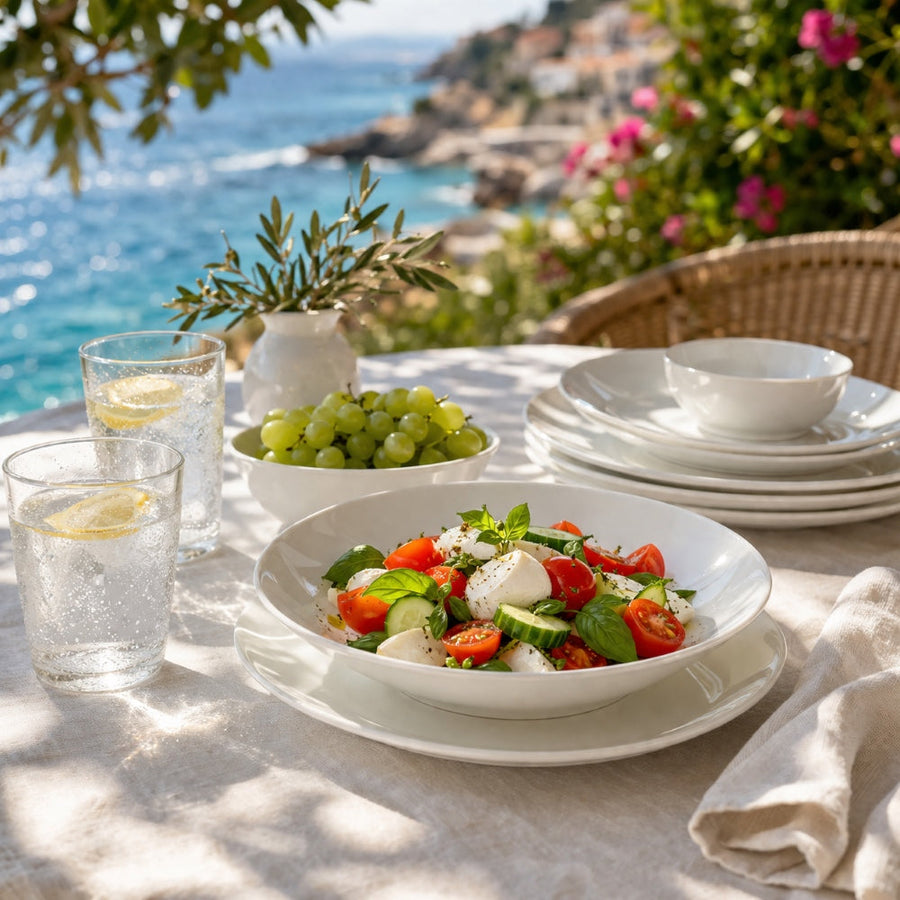
Stoneware pasta bowls for hosting are especially useful because they sit between a plate and a deep bowl. The wide surface makes food easy to serve and see, while the rim helps keep sauces, salads, and loose toppings under control.
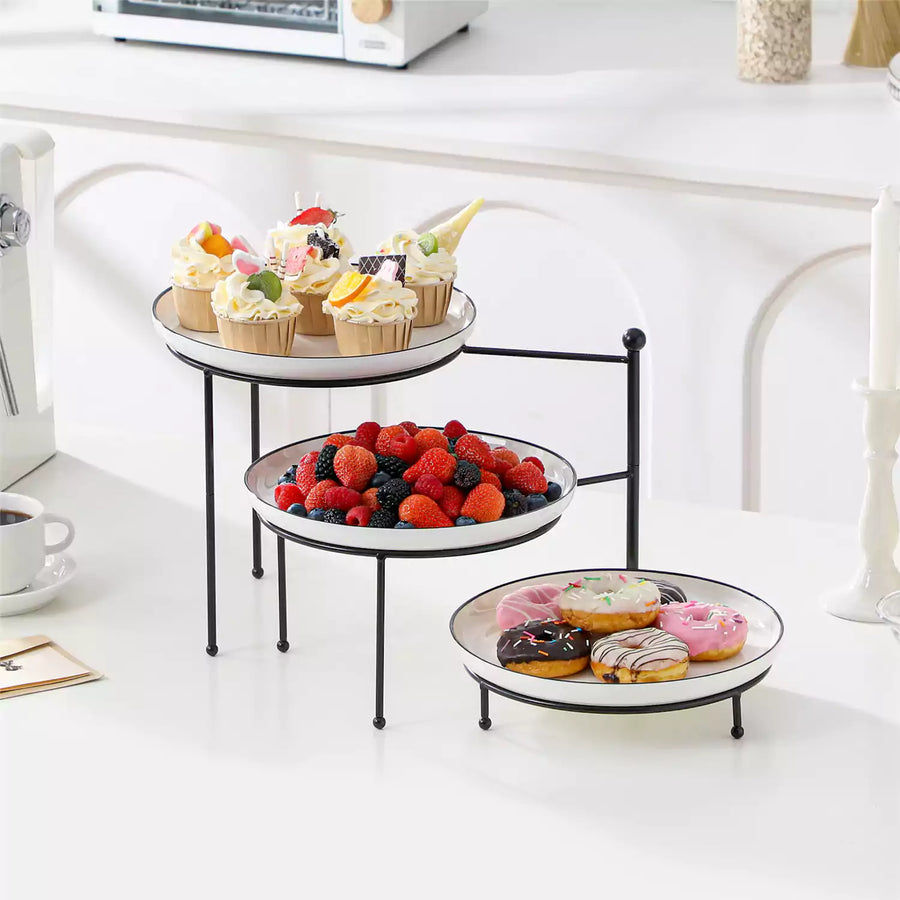
Serving pieces finish the system. Most backyard game day tables need one wide platter for mains, one deep bowl for sides, and one or two smaller bowls for dips, toppings, or snack refills. Coordinated platters and bowls also keep the spread from turning into a mix of foil trays, plastic tubs, and takeout containers.

How Many Reusable Plates and Bowls Do You Need?
Do not plan outdoor dinnerware by headcount alone. Outdoor parties create extra plate use.
Guests go back for seconds. Kids abandon plates. Saucy foods make people want a clean surface. Dessert often needs another plate. For buffet-style hosting, a practical rule is to prepare about 1.5 plates per guest.
|
Guest Count |
Plates |
Bowls |
Serving Pieces |
|
4–6 guests |
8–10 |
4–6 |
2–3 |
|
8–10 guests |
12–15 |
8–10 |
3–4 |
|
12+ guests |
18+ |
12+ |
4+ |
The number does not have to be perfect. What matters is building a buffer. A good outdoor dinnerware set should match real guest behavior, not just the RSVP count. For larger parties, keep your strongest, best-looking pieces on the main serving table and use lighter reusable pieces as backup in high-traffic areas.
What Makes Outdoor Dinnerware Easy to Clean, Stack, and Reuse?
Cleanup starts before the first guest arrives. The easiest sustainable party tableware is chosen with the end of the night in mind.
Dishwasher-safe pieces should be the baseline. After a backyard party, nobody wants to hand-wash a sink full of plates while trash bags sit by the back door. A smooth glazed surface also helps with barbecue sauce, cheese dip, ranch, grease, and oily dressings.
When you receive or inspect a set, run your fingers across the eating surface and inner curve. It should feel smooth, not chalky or rough. A rougher surface may hold stains and grease more stubbornly. For a quick real-world check, rinse a small spot of oily dressing or sauce from the surface and see whether it wipes away cleanly.
Also check how the pieces dry. Some plates trap water around the base after a dishwasher cycle, leaving you with clean but wet dishes. A well-finished foot ring makes pieces easier to dry and put away.
Storage matters just as much as washing. Stackable plates and nesting bowls make reusable dinnerware easier to reach for again. The cleanup test is not finished when the dishes are clean. It is finished when they are dry, stacked, and back in the cabinet without a wrestling match.

Eco Friendly Dinnerware Buying Checklist
Before buying eco friendly dinnerware for backyard game day, check:
- Can the plate hold a main and two sides?
- Does it have a slight rim for sauces, beans, slaw, and grilled food?
- Does the bowl have enough depth for dips, chili, pasta salad, or layered snacks?
- Does the surface feel smooth and easy to rinse?
- Is it dishwasher-safe?
- Does it stack neatly in your cabinet?
- Can you use it beyond one party?
- Do you have extra plates for seconds, dessert, and abandoned plates?
- Are heavier pieces best for the main serving area?
- Do you need lighter reusable pieces for poolside, kids’ areas, or stone patios?
A good game day setup should not feel fragile or fussy. It should let guests serve themselves, keep messy foods under control, and make the table look intentional without turning the party formal.
FAQs
Q1: Is Ceramic Dinnerware Good for Outdoor Parties?
Yes. Ceramic dinnerware works well outdoors when used on stable tables because it has weight, a polished look, and a smooth glazed surface that handles hot foods, sauces, and cleanup better than many disposable options.
Q2: How Many Reusable Plates Do I Need for a Backyard Party?
Plan for about 1.5 plates per guest because people often take a fresh plate for seconds, dessert, or saucy foods.
Q3: Is Melamine Better Than Porcelain for Outdoor Use?
Melamine is lighter and less breakable, so it can work near pools or kids’ areas. Porcelain feels more premium and is usually better for hot foods, presentation, and main-table hosting. Always follow the product’s care instructions.
Q4: What Plate Shape Works Best for BBQ Food?
A slightly rimmed plate is better than a flat plate because it helps hold slaw, beans, sauces, chips, and grilled foods when guests eat while standing or sitting outside.
Q5: What Should I Avoid When Choosing Eco Friendly Dinnerware?
Avoid hand-wash-only pieces, rough glazes, plates that are too flat for sauces, bowls that do not stack, and sets that are too small for real party portions.
Q6: Can I Mix Ceramic Dinnerware With Lighter Reusable Pieces?
Yes. A smart outdoor setup can use ceramic or porcelain on the main food table and lighter reusable pieces near poolside areas, kids’ zones, or hard patio surfaces.

About Emma Carter
Emma Carter is a home dining and kitchenware writer focused on practical tableware, healthy meal routines, and everyday cooking. She explores how the right dishes and serving pieces can simplify meal prep and make daily routines more enjoyable. Her work connects cookware, tableware, and healthy living, helping readers create routines that are both useful and beautiful at home.
Expert writer at MALACASA