

Most individuals are confronted with the choice of ceramic and stoneware when purchasing dinnerware. Although these terms are commonly used interchangeably, they describe different materials that have varying strengths and aesthetic values. When you are equipping a family kitchen or creating a set of special occasion dinnerware, the distinction between Ceramic and Stoneware Dinnerware can help you make the decision. This detailed comparison will compare the two in terms of durability, style, safety, usability, and value so that you can decide which one is more suitable for your needs.
What is Ceramic Dinnerware and how is it made?
Ceramic dinnerware is a blanket term that covers a range of clay-based tableware. It is made of natural materials, molded into plates, bowls, and mugs, and fired in a kiln at high temperatures to make it hard and strong.
Types of Ceramic Dinnerware Beyond Stoneware
Ceramics are of various types, which include:
Earthenware: It is fired at lower temperatures (1,000°C–1,150°C) and is more porous and usually bulkier. It is rustic in nature but more likely to chip.
Porcelain: It is fired at very high temperatures (1,200°C–1,450°C) and has a fine, delicate look, but is surprisingly strong and commonly used in fine dining.
Bone China: A type of porcelain that contains bone ash, making it translucent and lightweight.
Stoneware is a type of ceramic dinnerware, but it is stronger than earthenware and less fancy than porcelain.
Typical Materials and Firing Temperatures
Dinnerware is usually composed of clay, kaolin, quartz, and feldspar. It is mostly dependent on the firing process:
- Ceramics that are low-fired (such as earthenware) are more porous.
- Vitrified and non-porous High-fired ceramics (such as porcelain and stoneware) are more durable and water-resistant.
What is Stoneware Dinnerware?
Stoneware dinnerware is a particular kind of ceramic that is fired at mid-high temperatures (1,200°C–1,300°C), resulting in a dense, strong, and non-porous material.
Manufacturing Process and Material Composition
Stoneware is made of a special clay which contains naturally occurring fluxes. After being formed, it is fired at a high temperature to melt the particles together, creating a stronger and slightly thicker version of ceramic. Its natural color, which is usually gray, beige, or brown, is also improved by the firing.

The Difference between Stoneware and Other Ceramics
Stoneware is:
- Less porous
- More chip-resistant
- Heavier
In comparison to porcelain:
- Stoneware is coarser and thicker in look
- Porcelain is thinner and is commonly used on formal occasions
Stoneware dinnerware sets are perfect to use on a daily basis because they are durable and informal.
Look and Beauty: Ceramic vs. Stoneware Dinnerware
The aesthetic value of your table setting contributes significantly to the meal. Ceramic and stoneware are available in many styles, but the difference is in texture and finish.
Texture, Glazing, and Color Choices
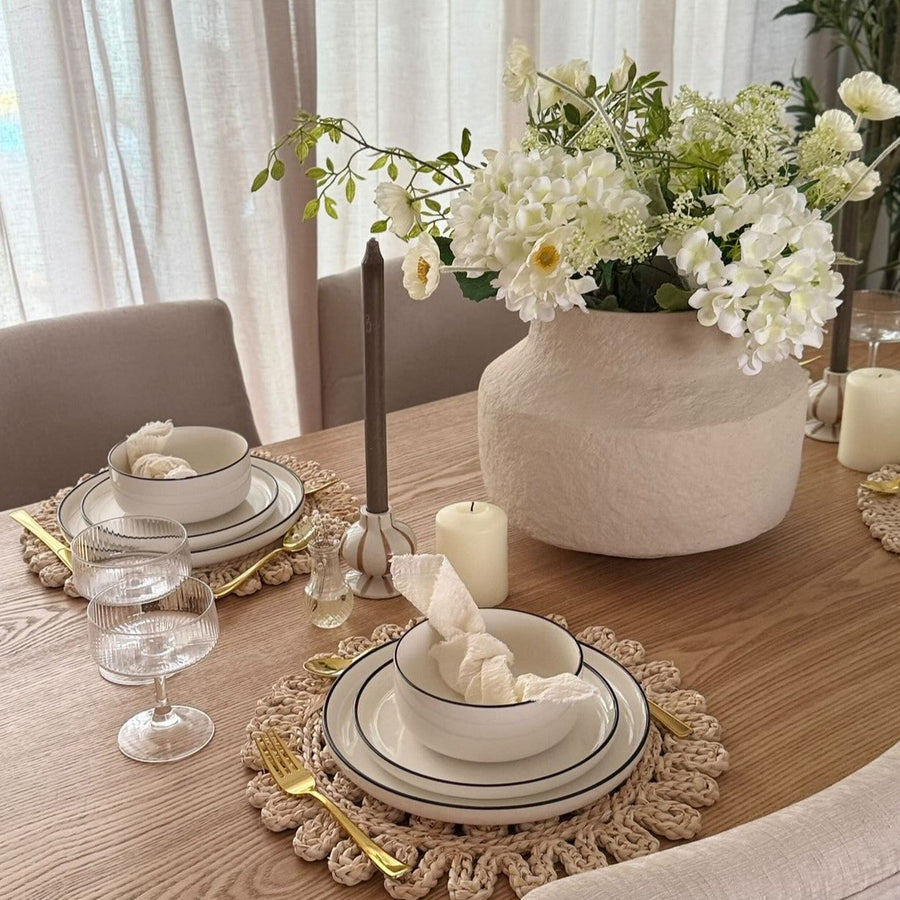
- Ceramic dinnerware is usually smooth and glossy, with elaborate hand-painted decorations and bright colors.
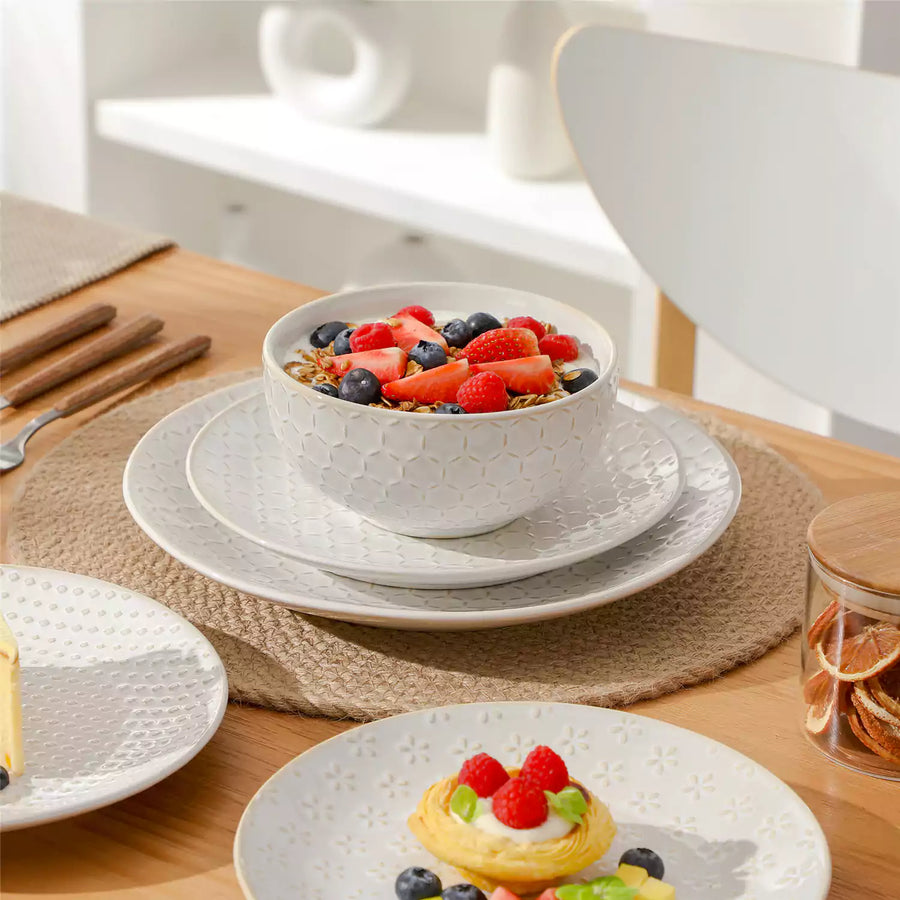
- Stoneware dinnerware is more earthy and has a semi-matte glaze with a slightly textured surface, and may be reactive-glazed to give an artisanal look.
Durability is also influenced by glazing; some ceramic glazes can craze or stain with use, whereas stoneware glazes are high-fired and more durable.
Modern and Traditional Best Styles
- Ceramic dinnerware sets are very versatile and can be used in modern and traditional decoration, depending on the glaze and design.
- Stoneware dinnerware sets are more casual and rustic and would be perfect in a farmhouse, Scandinavian, or boho theme.
Durability and Strength: What Dinnerware is More Durable?
Durability is a key factor when comparing Ceramic vs Stoneware Dinnerware, particularly in families or those who entertain regularly.
Chipping and Cracking Resistance
Stoneware, being dense in composition, is inherently more resistant to Chipping, Cracking, and Thermal shock (exposed to sudden temperature changes). Ceramic dinnerware, particularly low-fired types such as earthenware, can be more prone to chipping unless glazed and handled carefully.
Daily Use Long-Term Performance
Stoneware dinnerware sets are more durable than simple ceramic sets, especially in everyday use. Nevertheless, porcelain ceramics of high quality may be as durable as stoneware and have a sleeker look.
Ceramic and Stoneware Dinnerware: Heat Resistance and Daily Use
Safety of Microwave, Oven, and Dishwasher
Stoneware is typically microwave, oven, and dishwasher safe, due to its high firing and non-porous quality. Ceramic may also be microwave- and dishwasher-safe, although this varies with glaze, thickness, and material. Manufacturer instructions should always be checked.

Hot or Cold Meals Suitability
Ceramic and stoneware are both good insulators of heat. Stoneware keeps food hot longer, perfect with soups and casseroles. Ceramic (particularly porcelain) is excellent for serving chilled food in a fancy way, such as desserts or salads.
Weight and Handling: Ceramic vs. Stoneware Dinner Plates
Family, Senior, and Kid-Friendly Usability
Stoneware dinnerware is heavier, and this makes it durable, but may be cumbersome to children or seniors. Dinnerware sets made of ceramics, particularly porcelain, are generally lighter and more manageable.
Storage and Stackability
Stoneware is heavier, and it takes up more space in the cabinets, and may cause more wear through stacking. Ceramic, particularly thin-bodied ceramic, is more compact to stack and can be more easily stored for smaller kitchens.
Eco-Friendliness and Safety of Stoneware and Ceramic Dinnerware
Lead-Free and Non-Toxic Glazes
Both stoneware and ceramic may be safe when produced correctly. Seek glazes that are lead-free and cadmium-free. Trustworthy brands will reveal the materials used, particularly in ceramic dinnerware sets that are to be used in food.
Production and Disposal Sustainability
Both stoneware and ceramic are natural clays that can last decades, which makes them environmentally friendly in terms of durability. Certain stoneware can be more energy-intensive to fire, but both are preferable to plastic in the long-term environmental impact.
Value and Price Points
Short-Term Price vs. Long-Term Value
Simple ceramic sets (particularly earthenware) are generally cheaper initially. Stoneware dinnerware sets are slightly more expensive but more durable and resilient in the long run.
More expensive ceramics, such as porcelain dinnerware, can be more expensive but offer both beauty and durability in a single package.
Best Picks for Every Day or Special Occasions
Stoneware is most suitable when hosting a daily meal, potluck, or informal gathering. Formal dinners, holidays, and entertaining are often served on ceramic (particularly porcelain).
Best Uses: When to Use Ceramic or Stoneware Dinnerware Sets
The best material to use in your tableware depends on your lifestyle and eating habits.
Daily Family Meals
Stoneware dinnerware sets are luminous here because:
- Chip resistance
- Weight and strength
- Casual appeal
Perfect for breakfast, lunch, dinner, and all in between.
Holiday Dining or Entertaining Guests
Ceramic dinnerware sets, especially porcelain or bone china, are ideal:
- Fine dining tables
- Holiday dinners with a theme
Their smooth finish and elegant designs are memorable.

Final Comparison: Ceramic vs. Stoneware Dinnerware
Comparing ceramic vs stoneware dinnerware, each has its own advantages and disadvantages. Ceramic dinnerware is versatile in style, from inexpensive earthenware to high-end porcelain. It is usually lighter and easier to manage and thus suitable for families or formal occasions. But it is not durable in all types. Stoneware dinnerware, on the other hand, is characterized by its durability, resistance to chipping, and good heat retention. It is more solidly constructed, with an artisanal touch, ideal for daily use. Although it is usually of mid-range price, its durability and ease of maintenance offer great long-term value, particularly in casual dining.
Durability vs. Style: Your Final Decision
The decision between Ceramic and Stoneware Dinnerware depends on your priorities. Stoneware dinnerware sets are the most suitable option in case you require durable, functional, and family-proof plates. In case you are more inclined to elegant, lightweight, or artistically designed tableware, high-quality ceramic dinnerware sets, such as porcelain or bone china, may be more appropriate on your table.
Either way, both are long-lasting and beautiful when chosen wisely. Seek non-toxic glazes, think about your lifestyle, and invest in quality that will make your daily dining a pleasure.