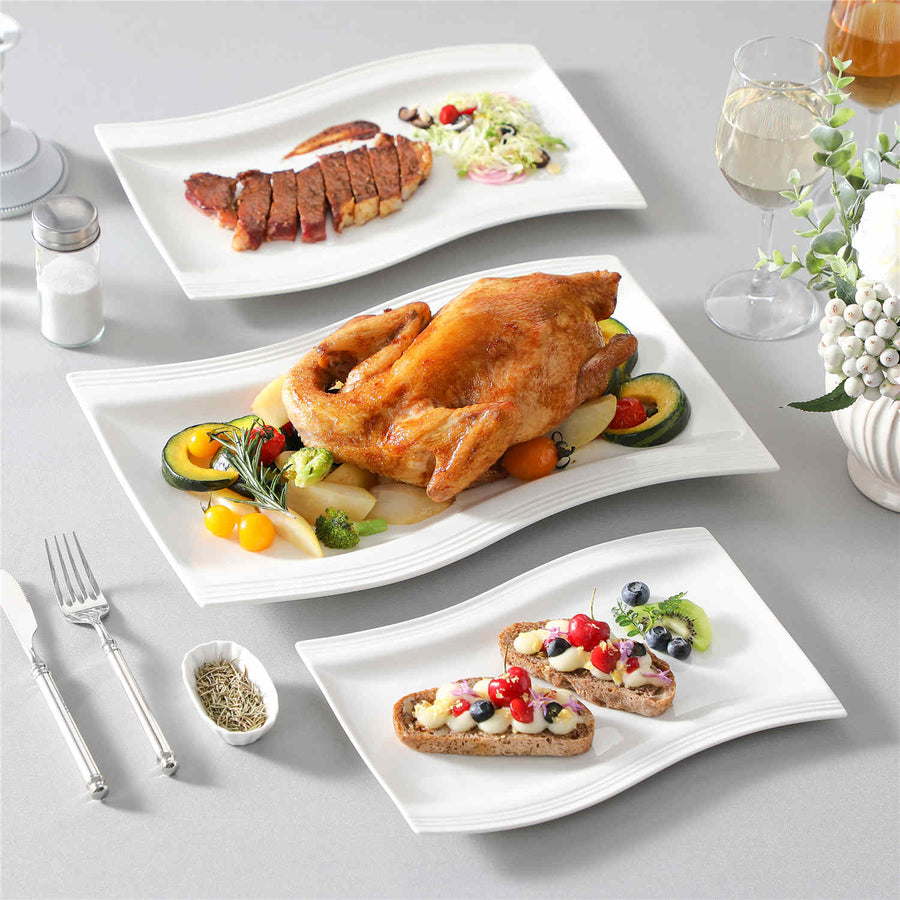


The most useful dessert plates fit the portions you serve, leave enough open space for clean presentation, and work with your everyday storage and cleanup routine. For many homes, a plate between 7 and 8.5 inches is the most versatile choice. Size is only the starting point, though. Material, rim shape, weight, finish, and set quantity all affect how often you will actually use the plates.
Start With the Right Dessert Plate Size
Most dessert plates measure roughly 6 to 9 inches (15 to 23 cm) across. The right size depends on the dessert and how much room it needs around the edges.
| Plate Diameter | Best For | What to Consider |
| 6–7 inches (15–18 cm) | Cookies, macarons, small pastries, and compact cake slices | Easy to fit on crowded tables, but limited space for sauces or a side scoop |
| 7–8 inches (18–20 cm) | Cake, pie, tarts, fruit, and most single-serving desserts | A practical everyday range with enough room for a neat border around the food |
| 8–9 inches (20–23 cm) | Layer cake, dessert with ice cream, plated fruit, garnishes, and tasting portions | Offers more presentation space and can also serve appetizers or light snacks |
The outside diameter does not tell the whole story. A wide rim can leave less usable space than a smaller coupe plate with gently raised edges. Compare the flat center area with the desserts you serve most often. Leave room for a fork and add more space for sauce, fruit, ice cream, or several components.
Choose a Material That Fits Daily Use
Material affects weight, appearance, storage, and care. Construction quality and finish also influence how a plate performs in daily use.
| Material | Practical Strengths | Points to Check |
| Porcelain | Smooth surface, refined profile, and a neutral background for many desserts | Check the care guidance for the plate and its decoration |
| Stoneware | Substantial feel and a relaxed, handcrafted look | Often heavier; reactive or matte glazes may show marks differently from glossy finishes |
| Glass | Visually light and easy to mix with other tableware | Tempered and non-tempered glass behave differently; inspect edges for chips before use |
| Melamine | Lightweight and convenient for patios, picnics, and casual outdoor serving | Follow the manufacturer’s temperature and microwave restrictions |

For a set used several times a week, prioritize handling and cleanup. Consider whether the weight feels comfortable when carrying a full stack. Smooth glazed surfaces are generally easier to wipe clean than heavily textured designs. Metallic trim, decals, hand-painted elements, and specialty glazes may require special care. Follow the instructions for the individual set because performance varies by construction and decoration.

Match the Shape and Rim to the Dessert
Plate shape changes both presentation and control. Choose the profile according to what tends to move, drip, or leave crumbs.
- Coupe or gently curved plates provide a broad usable surface and suit cake, pie, cookies, and tarts.
- Plates with a defined rim help contain sauce, melted ice cream, fruit juice, and loose crumbs.
- Square or rectangular plates can organize several small pastries or tasting portions, although the corners take up more cabinet and table space.
- Textured or sculpted plates add visual interest to simple desserts. Keep the food-contact area practical for cutting and spooning.
Also look at the transition between the center and edge. A steep slope can push a cake slice inward, while a completely flat plate offers less protection from runny toppings. For mixed use, a shallow curve or modest rim provides a useful balance.

Coordinate Dessert Plates With Your Tableware
Dessert plates can match the dinner set or introduce a controlled contrast. For a coordinated setting, repeat the same color, edge profile, or finish. For a mixed setting, keep one feature consistent and vary another. Pair ivory dessert plates with patterned dinnerware, repeat a marble detail across different shapes, or combine matte and glossy pieces from the same color family.
White and ivory are flexible choices because they work with colorful fruit, chocolate, caramel, and bright sauces. Darker plates create stronger contrast with pale desserts, while patterned plates work best when the food itself has a simple shape and limited decoration.

Check Storage, Cleanup, and Set Quantity
A plate can look ideal online and still be inconvenient in the kitchen. Check these practical details before choosing a set:
- Cabinet fit: Compare the diameter with shelf depth and available stacking height.
- Stacking profile: Raised textures, uneven edges, and deep foot rings can make a stack taller or less stable.
- Dishwasher fit: Make sure the diameter, rim, and spacing work with your dishwasher rack.
- Handling: Consider the weight of the full set, especially if plates are stored above shoulder height.
- Replacement options: A continuing collection is easier to expand when you add place settings later.
Start with one plate per regular diner. Add two to four extras if you entertain often, run the dishwasher less frequently, or want replacements available for accidental damage. Sets of four suit smaller homes, while six or more provide more flexibility for guests.
Get More Use From Each Plate
Dessert plates can also serve fruit, toast, side salads, sandwiches, appetizers, after-school snacks, or bread beside a meal. This flexibility matters when cabinet space is limited. A medium-to-large dessert plate offers enough room for savory foods while remaining smaller than a dinner plate. Our porcelain dessert plates include shapes and finishes suited to desserts, appetizers, and sides.
Before buying, picture the plate in three situations: an ordinary snack, your most frequently served dessert, and a meal with guests. A design that works in all three settings is likely to earn its cabinet space.
Dessert Plate Selection and Use FAQs
Q1. Are Dessert Plates and Salad Plates the Same?
They often overlap in size and can serve the same foods. Product names vary by collection, so use the actual diameter and usable center as your comparison. Both types commonly work for desserts, salads, appetizers, and snacks.
Q2. Can Dessert Plates Go in the Oven?
Use a dessert plate in the oven only when its instructions specify oven use and provide a temperature limit. Avoid sudden temperature changes. Decorative trim and decals may have separate heat restrictions.
Q3. Can a Dessert Plate Be Used to Serve a Whole Cake?
A dessert plate is sized for individual portions and is usually too small for a whole cake. Present the cake on a stand or serving platter, then transfer each slice to a dessert plate. Choose the larger end of the dessert-plate range for tall slices and accompaniments.
Q4. When Should Dessert Plates Be Placed on the Table?
For a multi-course meal, clear the main-course dishes before bringing out dessert plates. At a casual buffet or dessert table, plates can be stacked beside the food. Keep forks or spoons close to the plates so guests can choose both at the same time.
Q5. How Should Decorative Dessert Plates Be Stored?
Stack them only when their shape and finish allow stable contact. Place soft plate separators between textured, painted, or metallic-trimmed pieces, and keep stacks low enough to lift comfortably. Give irregular shapes extra shelf space so their raised edges do not carry the weight of other plates.
Choose for the Desserts You Actually Serve
The best dessert plate is the one that fits your usual portions and your kitchen routine. Choose the diameter from the food outward, then check the usable center, rim, weight, care instructions, stackability, and set quantity. A versatile shape in a practical size will support everyday snacks, relaxed dinners, and special desserts without requiring separate tableware for every occasion.